

Why Didn't Fixing My Hormones Fix My Symptoms?
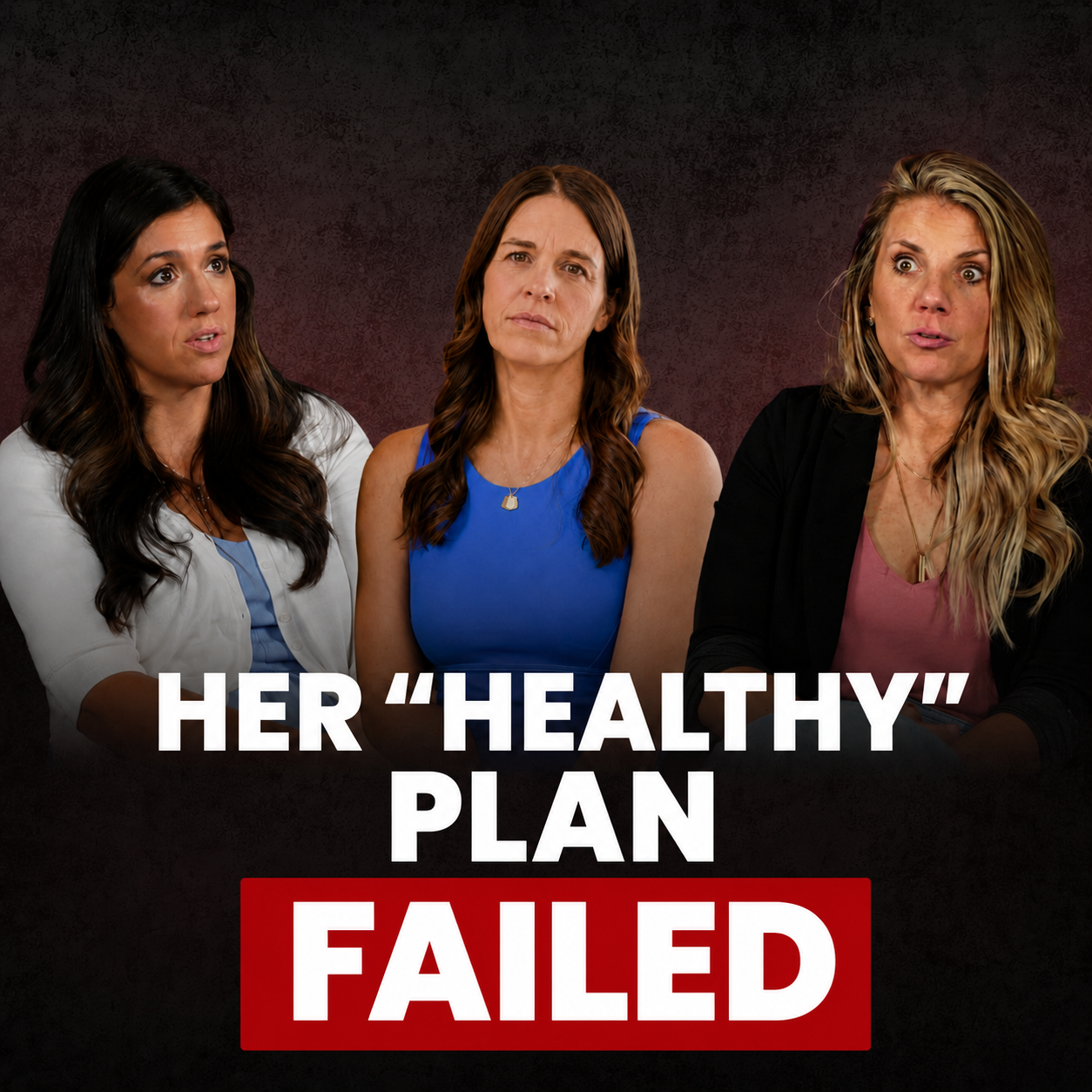
Hormone therapy fails when the gut and immune system are still inflamed. FitMom's practitioners call this the order of operations: functional health coach Erin Trier started on hormones first, stayed stuck for months, and only moved after gut and immune testing — an MRT panel — revealed food and chemical reactivity nobody had checked. Fix the terrain first, then hormones actually hold.
Erin Trier is a functional health coach, a mom of four, and a former client of Liz Roman and Becca Chilczenkowski. She spent years inside functional medicine chasing hormones before anyone looked at her gut. This is the full conversation, transcribed.
Doing everything right and still stuck? That’s usually an order-of-operations problem, not a discipline problem.
Apply for a Root Cause Discovery CallWhy Do I Feel Exhausted Even When I Sleep And Eat Well?
0:00Erin Trier: But at some point my body just stopped, and at some point my body didn't respond anymore, and I had all these different kinds of symptoms. Like, my fatigue was so intense and so debilitating, it felt like I was walking around with a weighted blanket. I also found myself carrying around almost 40 pounds of extra weight, which felt like out of nowhere with no real habit change. One of the hardest points in that season too was just really significant low libido, right? Like, I couldn't show up for my marriage, let alone show up for myself. I started really in the beginning on hormones. That's where I started, and my body still stayed stuck, and my symptoms didn't change. And I found out really quickly that's not at all what happened. I just drew a line in the sand and said, "I don't want to live like this. I need to start to understand the body. Like, I need to really start to see what is this cascade that's happening?"
0:49Liz Roman: Welcome back to the Health Revival Show. Today we are so honored to have Erin Trier. She is a phenomenal human being, also from her roots in the Chicagoland area. She was a client of mine personally. She was a client of Becca and mine in our Elevate mentorship group, and she has turned her test into her testimony. She is now working with women one-on-one and helping them thrive through the crazy seasons of life. And so we're gonna talk a bit just about her story today, but most importantly, I know that you are gonna walk away just feeling so empowered by her story, inspired by her discipline and her dedication, and knowing that you are worthy to take this journey no matter where you're at. If you feel hopeless, we're gonna talk about the worth that you have. So I'm excited for today. Welcome to the show, Erin.
1:41Erin Trier: Thank you so much, Liz and Becca. I- I'm just so grateful to know both of you. I have learned so much on my own journey, on my professional journey, and literally every day it's something new, and I just, I just feel so grateful to be connected and in your sphere, and to have the opportunity to chat today. It's gonna be great.
1:57Becca Chilczenkowski: So I wanna cut to the chase 'cause I'm, I, I've been wanting to dive deep off the bat and, like, give the listeners, okay, this is the real of what was going on. What was your lowest point? That is a great question. What was, like, the lowest point at, where you hit of, "I need to do something about this"?
What Does Rock Bottom Actually Look Like For A High-Functioning Mom?
2:16Erin Trier: My absolute lowest point was after my second baby. I really fell into this really deep, just like isolation, depression, f- didn't feel like myself, had no idea how to take care of myself after I had two babies. And that was really the lowest of the low that I had felt in a really long time in my life. And that was kind of the start of me trying to figure out, okay, how do I take care of myself as a mom? How do I take care of my, my babies, my home? How do I continue to, like, fulfill my ambition that I feel in my heart, but also try to strike some level of a balance, even though I don't really believe in that word. But that was really the lowest of the low, and that was kind of the first phase. I like to say that's the first phase of my lowest of the low. The second was after my fourth baby, and that was right before 2020, and we all know what happened in 2020 and the chaos of the world. And it was this total unraveling again. And what was most alarming for me in that second season was I felt like I had the tools. I felt like I knew what I needed to do to actually take care of myself, to prioritize my health, to, you know, continue to take care of my family the way they needed, but everything felt different. My body felt different. My brain felt different. My… Everything that I had once been doing health habit-wise was not working anymore. I found myself just in this really depressive season again, but it felt different because I felt, like I said, I had the tools, but nothing was adding up And in that season, you know, it really led me to get way more curious about how does the body work? What is actually happening with my body as a woman? And what do I need to know that I didn't know yet? Because that was really what was causing me to hit this massive wall, is I didn't have deep-rooted education about physiological change that happens with women. I knew the basics of move your body, eat well, get good sleep, talk to people that you love, you know, express your feelings and share what you may need support and help with. But I didn't really have good education and knowledge about, well, what actually happens with our bodies physiologically when we go through postpartum, when we get into the mid-30s, 40s era of our life? Like, what's really, truly happening? And that's what really led me to more of trying to understand functional health and functional wellbeing and what's really going on with the body as a whole. And as I started to dip into that, I started to really realize, wow, there's so much I don't know. There's so much I haven't been educated about. There is so much I've been tying to health that isn't actually healthy. And I had to basically strip everything down and restart from the ground up on learning, like, okay, what is actually gonna serve my body and my brain best as my health evolves over time? And so those are kind of the two phases of, you know, that I like to talk about in my journey because it was different from the first phase to the second phase, like I said, because I thought I had the tools, but I really didn't.
5:15Liz Roman: What were some of the symptoms that you were struggling with when you were going through this? And I love when you say, "Get curious," because I think so many women don't ask enough questions of, why is this happening? What maybe have I done to contribute to this? Yeah. So what were some of the symptoms that you were really struggling with and just, like, making you dive deeper into learning?
Why Did I Gain 40 Pounds Without Changing Anything?
5:37Erin Trier: Yeah The biggest symptom I like to describe that season as my, I just had no zest for life, no motivation, no energy, no… Like, my fatigue was so intense and so debilitating, it felt like I was walking around with a weighted blanket. That's really what I describe that season as because I felt like I am just not me. I'm a shell of myself. And so the fatigue was really intense. The low energy was really intense. And again, like, I just didn't have the will to do a whole lot. Like, getting up in the morning through getting through my day, taking care of the kids, trying to fulfill my work, show up for my family, show up for my marriage, it all felt really hard. It felt like I was literally walking around with a weighted blanket and kind of trudging through the mud is what it felt like. You know, I also found myself carrying around almost 40 pounds of extra weight, which felt like out of nowhere with no real habit change, and that was really alarming for me as someone who cares about health, who someone, as someone who wants to live a long, happy life and be around for my family. It felt really alarming to be totally unglued in my body and not really understand why. The, one of the hardest points in that season, too, was just really significant low libido, right? Like, I couldn't show up for my marriage, let alone show up for myself, and that made me feel like a terrible wife. It made me feel like a terrible mom. And it was like this combination of all of these different levels of really deep emotional turmoil that I, again, I couldn't make sense of. And it was so unnerving to me because like I've said a couple times, I thought I knew what I needed. I thought I had the tools, and it just became so glaringly obvious as I hit 38, 40, and into my early 40's I didn't have the tools. I didn't know what my body needed, and I didn't have a good understanding of what was actually happening with the physiological change, mostly in my brain. You know, I talk a lot about the physical change, but for me it started more mental and emotional. That was where the symptoms lied for me. You know, I had a lot of really hard, like, mental battles, a lot of internal battles, a lot of really tearing myself down more than I had in a really long time in my life. And that was another piece that I was trying to really make sense of because for a season I thought I was getting to a place where I was feeling better, and then it just felt like it all unraveled and it was really an eye-opening time.
7:54Liz Roman: Tell us what was going on in your personal life. What was happening with your husband? Who, what were the people saying that were around you, your friends, your family?
Why Doesn't Anyone Around Me Know How Bad It Is?
8:01Erin Trier: Gosh, that's such a great question because I do a really good job of masking. I do a really good job of holding it together, pretending I'm great, being the strong one, you know, showing up the way I really need to. And so I would say from the outside looking in, you know, a lot of people really didn't understand the depth of what I was really experiencing. My family did, my husband did because this is my safe place where I unravel. But outside looking in, I'm not sure people really understood the depth of what I was going through. You know, I've been sharing my life online, and I've been coaching online in some capacity for over 10 years, so I've been sharing in some way, shape, or form glimpses of what I was going through and what my seasons have been like. But my family was really the one that was getting the short end of the stick and really seeing me unraveling and seeing me, like, carrying so much of a front out in the real world, and then totally collapsing inside of my home because I just didn't really want to show the full transparency of the journey necessarily outside of what I was doing in my four walls, right? And, you know, it was really, again, one of those times where I felt like I needed to do a better job of getting more transparent, of being more realistic about the help that I needed, of really unpacking what it was that I was going through and experiencing. And I think in that season, to be honest, Liz, like, a lot of women weren't talking about it. I felt like in a lot of ways I was really on an island. Like, nobody else was really talking about low libido with their husband. Gaining 40 pounds out of, out of nowhere is what it felt like. No one f- talked about those things or really was open about it in the way that I was maybe needing or hoping. And, you know, I found the more I slowly started to share, the more I had women speaking up to me kind of in a private setting, but really getting more transparent about, "Wow," like, "what you're sharing is so relatable, and what you are going through I understand, too," even though it wasn't necessarily a common narrative out in the public. And so I think, you know, for me, my husband would probably say that I was a mess, right? He would definitely say that, you know, I did an okay job of trying to express my feelings and express what I was going through. But at the same time s- I didn't really have words for it. I didn't really know how to put language around what I was going through. And so it was hard for him to even connect with me and help me and figure out what I needed as far as support goes because I had a hard time even articulating it because it felt so unnerving. And I think that's a very real experience for women, and it's something that I experience more now as a coach because sometimes we're going through these really massive changes mentally, emotionally, physically, and we don't even know how to exactly explain and articulate what's going on. And so that's really how I would probably define that. But I think I'd probably honestly have to ask him, too, like, "What would you actually describe me as in that season? W- what would, what would you have said to someone as far as what I was experiencing and essentially how we worked through it?"
10:59Liz Roman: Yeah. Well,
11:01Becca Chilczenkowski: you work- I think all of our husbands are like, "We love you no matter what, but-
11:07Erin Trier: Right … Becca Chilcz: you grew a lot." Um, you know, it's … They can see it. And I think- Yeah … from most men's standpoint, like they don't know what to do either. They, they just try to support you. Sometimes my husband lets me know that he's afraid of me, and that I mayb- you know, just try not to trigger any further. But in these places, I think the other struggle that a lot of women probably have, and that you've realized, was like- I don't even know where to begin. Right. You know? And yes, I'm eating healthy, I'm exercising. Like, I'm doing all the things that I know should be producing some level of results and they aren't. But the thought of putting so much time and effort into something that I don't even know where to start looking, I don't even know what answers are out there, if there are answers. Everyone else seems to kind of be struggling with this. Or no one's struggling with it, right? Like, depending on what you're looking at, if you're looking at social media and everyone's highlight reel. And so in that place, you have obviously had a big background in coaching, in health, but I think the level of understanding on what you were dealing with too, which you haven't mentioned yet, around like the skin issues and kind of the flares that you were getting around the eyes and around the face when you would travel and, you know, um, that were probably related to a lot of the things going on with weight and with energy and all of those pieces. It's like a lot of women just don't even know where to begin, nor do they wanna put the effort into when they already are so spread thin with everything else in their life. And so they either accept it or, you know, they just stay in this really low place and live a quality of life that they don't deserve, that no one deserves. So in that moment, kind of what was… You know, I, I, I know that you had followed… Uh, we, we went to high school in the same area. Yeah. Um, and so we were kind of in the same worlds, but like what were you thinking in that moment of, "I feel like I don't have the answers. I need the answers." Um, what was that next step?
Why Didn't Fixing My Hormones Fix My Symptoms?
13:01Erin Trier: Finally realizing that I needed more help than I actually wanted to admit. And you know, I had followed you, Becca, for a really long time as far as your journey, what you had gone through. You know, you talked a lot about hitting walls in your health and how you were doing the things, and it, it just resonated with me, right? And I had seen other coaches that were moving more into the functional side of health talking a lot about this. As far as I was doing the, the healthy things. I was working out, I was, you know, eating well. I was doing the things I thought I needed to do, but at some point my body just stopped. And at some point my body didn't respond anymore and I had all these different kinds of symptoms. And while symptoms weren't necessarily exactly the same, I felt myself in your narrative in some capacity, and I had felt myself in other people's narratives, and that really opened my eyes to this idea of I need to start to understand the body. Like, I need to really start to see what is this cascade that's happening. Like, everyone was talking about the cascade. Everyone was starting to talk about, you know, you have to understand that the body doesn't work in isolation. You have to understand that everything is a part of a larger story. You have to understand, you know, if you have one specific symptom, it's not one specific piece to the body that's causing it. It's this larger picture, and that's what I didn't have knowledge around. That's what I really didn't understand. And so I know in that season, that is when I started to figure out, okay, how can I get connected to functional practitioners that maybe can guide me in some capacity? And so for me- I just drew a line in the sand and said, "I don't want to live like this. I don't wanna show up on empty. I don't wanna feel terrible in my skin. I don't want to hate the way I look. I don't want to just not be who I am." Like I said, a shell of myself, and I just drew a line in the sand and said, "I need to find people that can guide me in a totally new way when it comes to healthy living." And so I started with local practitioners, and I started with people that were kind of recommended in my community and, you know, helped me start to get a better understanding of here's what functional testing can look like. Here's what things like gut testing can look like. Here's what things like hormone testing can look like. And I started to dive into those things. And long story short, over time, I met with a lot of really great functional practitioners, and I'm grateful for every single one of them. But the key thing that I was missing, even in that learning, was the order of operations, and that's really the thing that I have learned from both of you and the functional community that you are a part of and the mentors you have, have taught me more than anything, is even inside of functional health, when you're starting to learn about the body, when you're starting to understand that nothing happens in isolation or every, any symptom that you're having is part of a larger story, there's still an order of operations that matters. And for me, out of the gate, I was chasing hormones right out of the gate. That's what I thought I needed. That's what I thought I had to address. That's what I thought I had to start. That's what I thought my body was deficient in, and it was gonna solve all my problems, and my weight was gonna melt off, and my symptoms were gonna go away, and it was all gonna be magical. And I found out really quickly that's not at all what happened. You know, I started really in the beginning on hormones. That's where I started, and my body still stayed stuck, and my symptoms didn't change. And it continued to open my eyes to there's gotta be more here. What am I missing in this larger story of understanding functional health and the body as an ecosystem that I still don't quite know? And that's when, again, I kinda got led into your sphere more. And as you both have taught me, again, order of operations matters. And as I've learned more about, like, how do you actually start to heal the body at the root, what are the things you have to do first before you go into things like hormones and any kind of optimization tools, et cetera, and that's by far been the most game-changing piece for me. And as I've gone through that process of doing things right time, right order, it's helped me actually resolve more of the symptoms I've been having. I know, Becca, you talked a little bit about some of the things I've had on my face. You know, through my work with Liz, I learned a lot about my immune system. I learned a lot about MCAS. I learned a lot about, you know, how my body was so over-activated in a lot of different ways, and I n- knew nothing about that in a lot of the other programs and protocols I had done on the functional side. And it just comes down to, again, scope of practice, scope of knowledge, and understanding, you know, what are the systems that are integrated at the root that you really have to start to understand and target in order to start to resolve things in all of these different facets of the body. So, you know, in a nutshell, that's kind of been my journey, and I'm just, again, so grateful to have learned all of these different components because it's helped me really put the puzzle pieces together on what matters and when. I
Why Would A Hormone Problem Start In The Gut?
17:44Liz Roman: think one of the most surprising things that when we first started together, it's like nobody had looked at your gut Okay.
17:50Erin Trier: Not to a degree.
17:51Liz Roman: You're working with professional people.
17:53Erin Trier: Yeah.
17:53Liz Roman: Yeah. What's going on here? You know, 'cause you were having a lot of food reactions and all kinds of things. And if you listen to the show, I'm a big believer in food diversity. I don't support SIBO diets just being, you know, go low FODMAP, right? Like, sure- Yeah … we can do that for a period of time. Sure, we can go low histamine for a period of time, of course, to help, uh… Everything is a reason for a season, but truly, we wanna bring back that diversity and have a diverse microbiome so that we can enjoy life. And I know one of the most challenging things for you was, you know, doing an MRT, seeing a lot of these foods that your immune system was reactive to, different chemicals that the immune system was reactive to, and then, you know, really realizing at a moment in time in our coaching journey together, there was a crossroads, right? There was a time we had a conversation of the things that we want to work, that are more mild, moderate, are not working. And so we've- Yeah … got to give a little bit more pressure and get a little bit more intense. Walk us through that. What was that like for you on the client side? I know what it was like for me on the coaching side, right? To be able to, uh, you know, ask your permission to have a hard conversation, but what were you thinking? What were you going through in those, uh, moments of really getting into the intense protocols?
Do I Have To Give Up Foods I Love To Heal My Gut?
19:08Erin Trier: The intense protocols are not easy. And, you know, I think for a portion of my health journey, I just figured I could figure out how to make it work by doing things that were easy, by doing things that were comfortable, by doing things that I kind of always knew in some capacity. I kind of felt like, you know, I should be able to make it work, right? Like, I'm educated enough, I know enough, I should be able to make it work. And what I realized over time is- Like you said, Liz, the only way through is through. And when you are in a season or you are in a situation where your body is really stuck, you have deep-rooted healing to do, you maybe need to do something different, you're gonna have to get really uncomfortable, and you're gonna have to get radically honest and radically own what it is that you're doing that's keeping you stuck. And so there were moments in our journey when we went through the MRT and we talked about food sensitivities, and we talked about foods and, and chemicals and things that were exacerbating my immune system, and a lot of them on the list were things that I've loved, right? Things like peanut butter, things like chocolate, things like things that I've loved forever and ever my entire life. And I realized how much of a deep emotional connection I had to a lot of these things that I just had adopted and had been conditioned into eating or having a part of, you know, celebrations or whatever. And, you know, I had to really get honest about what was more important to me. Was it more important to hang onto these, like, emotional ties to foods I'd al- always eaten or things I'd always done, or was it more important for me to actually figure out how to heal my body so I could show up in a way that felt better, so I could show up in a way for my family, so I could show up as a better coach and have the knowledge of what it actually takes to get from A all the way through a deep-rooted healing protocol and to really feel and experience what it is to get to the other side? And while there were so many moments inside of my journey where I didn't wanna do it, that was really hard, that I felt like there should be an easier way, I started to learn more and more the more I chose to adhere, the more I actually just committed to the plan at hand rather than trying to constantly modify, that my body was radically transforming, and I was getting to deep-rooted healing like I never had before. And so it was this kinda challenge in my mind, but then this reinforcement in my mind of, oh yeah, you can do hard things, and this work that you're doing is worth it because you are actually worth it. You are worth feeling better. You are worth feeling the way you want to in your day-to-day life, and you are worth showing up as a strong, confident woman the way you deserve. And that, honestly, that narrative and digging deep into that narrative took me time to really embrace and get into because, like I said, I was in some really deep-rooted seasons where I was so broken, so defeated, tearing myself down, didn't feel like I was actually worth feeling good or healing or getting to the other side. And again, I had to learn I was the one that had to make the choices to get myself there. Nobody else was gonna do it. You weren't gonna do it. Becca wasn't gonna do it. Uh, you know, any other coach or any other mentor that I've worked with wasn't going to do it. I was… I needed to take the information, I needed to take the plan, and I needed to actually adhere and execute it and get honest about the things that I was choosing not to do. And once I actually did that- it started to make a, a massive difference. And I started to see, like, massive radical change way faster than I honestly thought I would, to be honest. Because I kinda was in this beginning season of feeling like In the beginning of our work together that it was still kind of slow. It was still kind of not really changing. I was s- kind of still in the same place as I was. I was making strides in some capacities, but I was still holding myself stuck. And so while it was uncomfortable, it's the work that's worth it because it ch- it forces you to grow in a way that you can't even imagine, but in a way that actually serves you in incredible ways personally, professionally, and more.
How Do Busy Moms Actually Stick To A Healing Protocol?
23:06Becca Chilczenkowski: Let's talk about some of the possible excuses you could have had.
23:10Erin Trier: Oh my goodness, the excuses. They were endless. Um- I mean,
23:14Becca Chilczenkowski: you deal with a lot. Yes. And so I think it's important- Yeah … to show people what's capable-
23:19Erin Trier: Yeah … Becca Chilcz: when you have a ton on your plate.
23:22Erin Trier: Yeah. Yeah, so I'm a mom of four. Um, we have a son who has a, a genetic medical complexity, so he is autistic and epileptic, and he also has a very rare genetic disorder. So that puts a lot on my plate, full transparency. I'm at a lot of appointments, a lot of therapies. I'm constantly keeping track of medications. We're doing all kinds of interventions. Like, that is a huge part of our family story, and he is a huge thing that we focus on inside of our home, right? On top of having three other children and my marriage. I am an entrepreneur. I run my own functional health coaching business, and, you know, I try to do my best to be a present friend, a present daughter, all of the things. Like, take care of the people that I love in my life, and there is a lot. At any given day, there is so much that's unpredictable that happens. So I usually have, like, some level of a skeleton of a schedule of what I think is going to happen, and usually about 20% of it happens the way I think it will, right? And so I've had to really learn, okay, in the unpredictability that is inevitably going to happen in my life, what are the core things I have to make non-negotiable? Otherwise, I literally would crumble every single day. So my excuses run from kid demands to I just don't feel like it to, you know, I'd rather eat crap food because I'm, you know, feeling a certain kind of way to, you know, whatever I wanna tell myself. And, you know, I've learned over time that none of that was ever serving me. It was the reason I kept staying stuck. It was the reason I didn't see radical change in my health and my healing because I just kept justifying. I just kept saying, "Well, you know, this is okay," or, "That is okay," or, you know, "This is coming up," or, "This kid needs this thing," or whatever it is. And at some point, again, it was kind of the same scenario as I talked about in the past. I drew a line in the sand and said, "I just don't deserve to continue to live in this energy. I'm literally doing the same thing. It is Groundhog's Day. Like, where am I going, and what am I doing to actually change how I feel like I wanna show up and how I wanna present myself and how I wanna continue to grow?" And so the excuses are endless, Becca. But I think, again, for me, it's been on top of understanding that the excu- excuses are always gonna come, what do I need to do to make sure I have non-negotiables in my day that I commit to no matter what because of so much unpredictability in my day-to-day life?
How Do You Stop Talking Yourself Out Of Getting Better?
25:50Liz Roman: You mentioned, uh, the word worth and worthy a lot. I wanna know what you would say to yourself when you were in that dark place. What's something that you wish… You know, we have all of these, I call them ANTs, automatic negative thoughts.
26:05Erin Trier: Yeah.
26:05Liz Roman: Irregardless of excuses. I'm ugly. I'm never gonna get there. I'm too far gone. I should just go resort to medication. You know, there's all kinds of things that can pop into our head. Many can come from childhood ingrained in us or, you know, be things that we've heard other people say. What would you say in regards to this topic that we're discussing here of you're worthy? You are worthy of feeling well. You are worthy of investing in yourself, in your health, in your wellbeing so that you can show up. But in that dark place that you were at What would be something that you would have just said, "I wish I would have loved myself more," or supported myself more- Yeah … or told myself this instead of that?
26:49Erin Trier: I think the biggest thing I wish I would have figured out a little sooner, or what I would tell myself now, is to actually question that narrative more. Like, really ask yourself, Erin, where is that even coming from? Like, who is actually telling you those things? Because as I've grown as a coach, but also as I continue to, you know, learn more every day, we have so much in our brains that we make up. We have so much in our stories that aren't real. We have so many narratives that we've been conditioned into in some way, shape, or form, but we can't even identify where it comes from or why. And so a lot of it for me would have been figuring out or having someone tell me or me really getting deep-rooted and understanding, where is that coming from? Like, why are you even saying that to yourself? And you know, I've done a lot of therapeutic things where I've really dug into a lot of the th- a lot of the narratives I've had inside of my brain and, and slowly have identified some of where it's come from. But a l- a lot of it is just false things ex- and expectations that I put on myself. You know, things that I thought I needed to carry all alone, which actually wasn't mine to carry at all, and not necessarily digging enough into who I am and who I'm created to be by getting into my Bible enough, getting into devotionals enough, journaling enough, like doing that self-reflection and building that self-awareness more. And so one of the most powerful things I have learned on my journey is the importance of getting out of your own brain. Because so much of my self-deprecating talk and the you're-not-worth-it and all of the negative feedback that I was giving myself was because I was living in my brain. I was literally living between my two ears way too much rather than getting things out onto paper, speaking in therapy more, talking to my husband more, not just letting things swirl up in my head where it becomes like the Wild West. Like, you just don't always know how to actually discern what's real, what's not, what's reality. And that was a big thing for me, is learning that practice of getting things out of your brain. And again, something that I wish I would have started to identify a little bit sooner, because I've connected the dots so clearly now, but it's such a powerful practice. And I want women everywhere to hear this because it is so easy as a busy mom, as an entrepreneur, as a working mom out of the home, whatever it is that you're doing, it is so easy to just get swirling in your head forever and ever and ever and start to tear yourself down and tell you all the reasons you're failing and tell you all the reasons you're not worth it and all of the things when you just let your thoughts sit up there. And so getting them out, journaling, doing anything you can to have that emotion and feeling continue to move through you in a different capacity is one of the most powerful practices I've learned, and, you know, something that I wish I would've continued to dive into more significantly earlier in my story.
29:44Liz Roman: Yeah. There's a really great book we've all heard, um, in the functional space called The Body Keeps Score, but there's a really, really good book that I, um, am so excited to read. I just got it in the mail, and I'm actually getting the workbook. It's When the Body Says No, and it basically talks about the chronic stress, and all these expectations, and all the trauma, and all the things that happen to us that ultimately lead to disease, developing disease, right? In some capacity. Whatever. That's autoimmune, it's cancer, it's whatever. So I'm really excited to read it because it's gonna be better f- you know, for listeners. If you're listening right now, The Body Keeps Score, ugh, that's a tough read, and it's, uh, a little bit rough I would say. So this one is a little more layman's terms, and I would just encourage every woman, uh, to get a copy of that because we, like you said, Erin, all of us have these irrational things that we, we think. Like, I do this to myself all the time. Can I be honest for a minute? Yeah. I have a to-do list, and in my brain, I'm gonna get it all done today, and then I'm gonna freak out and be crabby with my kids and at my husband if I don't. And I've learned over time, he's in the background, our producer, like, "Yeah. Preach." Like, I'm unrealistic. Like, I know that. And it's a blessing and a curse at the same time, right? So I was actually talking to a good friend. We just got back and traveled this weekend, right? And we were looking at our DUTCH Test, and I'm like, "Oh, girl, Becca and I are the same way. We're just metabolized cortisol below the line." And it's like, that's why I have to work so hard to do these things. But we know ourselves. We're like this Type A personality, and I know you are too. That's why you're also very, very successful. Um, but now I wanna shift. I wanna ask you, uh, what I think is a hard question, and that is what did you have to lose to gain what you have? And this could be friends. It could be belief systems. It could be expectations that maybe you placed on yourself that you had to let go of so that you could make space for the greatness of who you are, stepping into your power as a business owner, but also making that transformation both physically and emotionally, but most also, you know, importantly we wanna highlight physically, I mean, here. Sorry. Mentally and emotionally, but physically because you did have a great physical transformation. And like you said, it started happening faster once we pulled some things and, you know, the triggers that, you know, the, we didn't necessarily wanna do, but we did, and you committed. And so what were those things that you had to let go of? Because I think there's a lot of things that women just h- try to hang onto, and they don't realize how much it drags them down.
Is Emotional Eating A Hormone Problem Or A Habit Problem?
32:12Erin Trier: Gosh, such a great question. First for me is really getting honest about the level of emotional eating that I had really deep-rooted in my life. And I attached everything to food, whether it was I'm sad, I'm mad, I'm celebrating, it's so-and-so's birthday, so-and-so finished school on Friday, whatever, right? I have attached food to everything my entire life. My family's like that. You know, we just have always been that way. And I had to get really honest about what I was constantly attaching emotion and food to, because it was endless. It was endless. It was always. And that was uncomfortable for me, because I don't think I really wanted to admit the level of attachment I had to food and how much like nostalgia I had around certain things, and how I felt like I had to engorge myself because that's what I always did. So the emotional eating piece was a big one for me. And when I, once I started to practice some of the tools you taught me and started to learn a little bit more about, you know, dopamine and the things that I was actually searching for, that really started to help me get through the massive amount of uncomfortable feelings I felt by detaching from that. And full transparency, I still have breakthrough moments. I mean, I'm almost 44 years old. I've been doing this my entire life, right? So it's like I have a long road of continuing to identify what am I searching for, why am I digging into this habit, what is actually going on? But I've learned more than anything that the self-awareness is what starts to actually help you transform. And so the more self-aware I've become, the more I've been able to slowly move away from that really significant habit of you just eat all the time, no matter how you feel. And so that was a big one that I had to slowly start to separate from and let go of. I think the other big thing is expectations. You know, I have had outrageously high expectations of myself for a really long time. Um, you know, as a mom of four, and especially as a mom of a medically complex child, I'm gonna do my best not to get emotional here, but I have felt like I've needed to do all the things, and carry all the things, and be this strong, present person in every area of my life at all times, and I crashed and burned. And it was really a wake-up call for me after some of those harder seasons to understand there is sort of a threshold to a degree of what I can expect of myself, and that's okay, right? For a long time, I felt like maybe, you know, adjusting the goal or adjusting what I'm working towards or adjusting the timeline was somehow a failure or somehow me not executing the way I feel like I need to or want to. But I've learned that, you know, there is a lot to be said about things happen when they're supposed to happen, and I've started to really pivot way more in my adult life into having faith around the timeline, and trusting the process and the journey, and embracing this idea of if whatever I feel like isn't happening in the expectations that I expect it to happen, then there's a reason, right? I'm not the person I need to be yet. I haven't learned the skill yet. I haven't, you know, connected to the right people to help teach me or whatever it is. I've really pushed myself to embrace that versus constantly feeling like I'm falling short. I have these outrageous expectations. Because that was feeding into all of those mental and emotional battles that I was having, and it was tearing me down and keeping me stuck for no reason at all. And so that was another big one that I had to really let go of and release because it wasn't serving me in any capacity in business, in my personal life, in my marriage, in my family. And you know, I'd say the last one, Liz, I've learned a lot about different relationships, friendships, et cetera, and definitely have had to let go of and grow beyond some of the friendships that I had had at one point. You know, I've, have… One of my best friends says all the time, you know, "Some friendships, some relationships are really for a season or for a lifetime," and I've had to really embrace this idea of, you know, some people are for a season, and that's okay. And as a people pleaser my whole life and someone who has always wanted to be liked and loved everybody and make sure everybody's happy, that's been a big one I've also had to slowly let go of and remember that, you know, s- life happens in seasons, and people evolve and people grow, and that doesn't mean anything about them or you necessarily. It just means you're continuing to go where you need to go, and you're continuing to evolve where you need to evolve into. And so that's been another big one that I've had to slowly embrace, which hasn't been easy, but a big one, too.
36:44Becca Chilczenkowski: So good. I mean, I think for a lot of people listening, it's a gut check, too, to realize Maybe I'm making more excuses than I realize. Yeah. Maybe I have to let go of some things that I'm really holding onto. And I know the, the eating piece is a big one for many people, and we hear that a lot obviously. I'm sure you hear that a lot- Yeah … as a practitioner in terms of I don't wanna have to think about food, or I don't want to give up things that mean something to me, right? And it's really diving in beyond that of like, well, why does this mean something, and can it still mean that but not in this season, you know? Right. It's when we worked on these things It's an acute phase to really try and get people far fast. Yeah Because it can be really hard to fully heal yourself when you are constantly dipping back into old habits and old tendencies and re-firing that flame of inflammation in the body and irritation in the gut. Like, we know that when there is dysfunction in the gut, it does not turn over as fast. When there is, you know, high levels of immune activity, it can take up to three months for T cells to calm down and relearn a memory. Like, it's, there's so many things that hold us back when we won't give up- Yeah … the things that we think we have to hold onto, you know? Um-
38:03Liz Roman: 100%.
38:03Becca Chilczenkowski: And I think in your case especially, you, it, it took some, it took some time. I remember talking to Liz, and she was like, "Yeah, Erin, Erin really doesn't wanna fast. She, she thinks that she shouldn't have to." And, uh, but you know, all of the stories that we tell ourselves. Like, we're told- Yep … we should eat, as females, and then we should. But sometimes in certain phases and, you know, certain periods, it, it's to get to a bigger place, um, and to kinda shed that layer that no longer serves us and kinda relearn. So in terms of where you're at now, tell us a little bit about the progress. Like, what, who are you now? What, what has changed with your body? What, you know, what do you feel like you've gotten to, to in terms of a new place?
38:47Erin Trier: So I feel like a different person in relation to just the awareness I have around my choices. And this has been a long journey, and like I've said, I still am building more resilience around it because there are just certain things that really trigger me, really put me back into the beginning, right? Really kind of put me into that head space of, "This is what you've always done." And I've had to really get aware enough to say, "But you don't do that anymore." And this is something Liz and I talked about all the time. Like, there were two big mindset shifts that Liz really helped me with in our work. One of them was understanding that, you know, things are for a season and a reason, right? We are in an acute healing phase, or we are in this season where we're focusing on X, Y, Z in order to get to this, right? So those mindset shifts were really big for me. And the other one was really continuing to challenge the why, right? Like, why are you choosing this? Or why do you feel like you have to do what you've always done, so to speak? And that was a wake-up call for me because I wasn't really consciously aware of that. It was all subconscious. And I would say things in our conversations like, "Well, I've always done this," or, "I've always done that," or, "This is just what I've always been like." And Liz would say, "Why? Wh- uh, w- what makes you think you have to still do that? What makes you think you have to still be that way?" And so the mindset side for me has been the biggest shift of all, for sure, because I've learned that's where I have to shift things. If I'm not shifting things there, I'm not gonna be able to shift anything else because it all starts in our mind in so many ways when it comes to our inside out health and wellness. And so I've had to really learn how to pause enough, question the narratives, and really make sure that I'm making different choices For me, as far as where I am now, um, you know, I feel so much better in my body. I was in a season, even last year I went through a really big backslide after last summer where my body totally inflamed. I went off the rails. My immune system was totally overactivated again. My skin was crazy. I had gained almost 10 pounds back. Like, it was not a great season for me after the healing work I had already started to do at the beginning of last year. And this summer, I remember saying, like, "I'm not, I'm not going to be doing that. I'm going to be focused on the principles. I'm going to stay in the head space of understanding that I don't need to do what I've always done. I need to stay focused on the foundations that I know my body needs and continue to just do the best I can with learning through the healing journey." Because I think that's the other part of the story, is we, we assume that you're gonna get from A to Z, be healed, and then there's nothing else to do, but that's not the reality. There's always learning. There's always more healing. There's always something else to evolve into. There's always some next level. And so as long as you stay in that space of being willing to stay open to curiously deciding what it is that you may need or not need, that's how you can continue to stay in forward motion. And so that's been really empowering for me this summer to understand, like, I've been doing a little bit more of this on my own. I've been taking the principles, and I feel so much better physically and mentally this summer. You know, I've s- been able to maintain my weight. Overall, my inflammation, my immune system, like, some of the skin activation stuff and all of those things have been pretty good overall. Like, way better than they have been in the last five to six years, which feels like such a blessing, and I'm just continuing to make progress, which feels good. You know, I think for me it's been having more mental clarity, having more of my energy back, continually pr- improving my libido over time, which has been so huge for my f- my marriage and all the things, right? And just feeling more like me. Like, there was just this massive season, like I said, where I just felt like a shell of myself. And being able to feel more like me so I can step into my creativity and give back the way I want to and show up for my family and the people that I love, like, that has been the biggest blessing of all. And so that's really where I feel like I'm at, and obviously continuing to learn more and more every day as I step into new challenges and more uncertainty and learn new things because, as I just said, it's always about a next layer of learning.
42:47Liz Roman: It's always evolving. I mean, none of us are perfect. There is a never, you know, a never a perfect time. Like you said, the excuses are endless-
42:55Erin Trier: Yeah … Liz Roman: for everyone especially. So, so proud of the, the transformation that you've had, but also the… Like I was saying this morning, I, I sh- did a Reel in my car. It was gonna be my story, and I was like, "I'm just gonna post this as a Reel 'cause I don't feel like cutting it up for stories." And I'm like, "I'm just weird. I'm gonna be a weird person here and go out on a cliff and say that I'm-" I'm never gonna settle, and I think you take that mentality, too, of you've gotten to this place. Like you said, people think A to Z and then they're good. Those are the people who end back, you know, end up where they were before. Yeah. Because if you go back to the things that you did before, you'll go back to where you were before in terms of being overweight and inflamed- Yep … and all of that. Uh, and so I just wanna encourage you and everyone out there listening, like be weird and embrace it in terms of chasing the next level always. Like, you can be satisfied that, "Okay, I got to this goal and I'm proud of myself and I'm grateful for it." Your skin is better than it has been in the last five to six years, but I want more, and that's okay to want more. And so I'm just so proud of you for continuing to chase that, and I hope you chase that in all areas of your life. Better libido, better workouts, more income, better business, a, a growing business. You gotta get a assistant soon. I'm gonna tell you that again on air so everyone can publicly hear and cheer her on with her expanding business, um, because I think that, you know, the world needs us and they need you and they need your story and everything that you've been through. Um, so thank you for coming on and sharing that with us today. If there's someone that wants to connect with you because your story's gonna resonate so powerfully with them, where can they find you? Where they, you know, fill out a form, talk to you, DM you? How do you like to communicate?
44:49Erin Trier: Best place to find me is on Instagram. I'm the most active there. I share my story there. You can learn about the work that I do there, my family, et cetera, and my handle is erinktrier. And I would love to connect with anyone that just wants to talk through stories or ask questions, you know, relate on symptoms. Get connected in any capacity with, you know, Liz and Becca. You know, I just love the power of continuing to connect women and families to dedicated practitioners that really understand order of operations like we talked about and can help you really get deep-rooted in what is it gonna take to heal, and how do you get to a place of feeling amazing in your body and so much more. And so just grateful to be here, you guys. Thank you so much for your time. Yeah,
45:28Becca Chilczenkowski: you too. Thank you for have… Thanks for coming on and talking. And if you resonate at all with Erin's story, if you wanna understand more about what she went through, how she got to where she is, there is a link in our b- show notes. Book a call with our team. We can definitely talk to you about how we can help 'cause your, your process was a beast. You, you had to go through a lot, and we are so proud of what you accomplished in that time, and it honestly was really cool to watch. Um, so way to be a savage, man. It was, it was awesome. Yeah. I appreciate you for joining and telling your story.
Frequently Asked Questions
Why didn't fixing my hormones fix my symptoms?
Because hormones are usually downstream of the real problem. Functional health coach Erin Trier started her healing protocol on hormones, and her body stayed stuck and her symptoms didn't change. FitMom's practitioners work in a specific order of operations: gut function and immune activation get addressed first, because an inflamed terrain won't hold a hormone protocol no matter how well it's dosed.
Why do I feel exhausted even after eight hours of sleep in my late 30s and 40s?
Persistent fatigue at that age is usually immune and gut driven, not a sleep problem. Erin Trier described her fatigue as walking around with a weighted blanket while doing everything she thought was right — training, eating well, sleeping. FitMom's practitioners look for immune over-activation, gut dysfunction, and inflammatory load before treating it as stress, aging, or a discipline issue.
Why did I gain 40 pounds without changing my habits?
Weight that appears with no habit change is a signal that the body's terrain shifted, not that willpower failed. Erin Trier gained close to 40 pounds with no change to her training or diet, alongside crushing fatigue and lost libido. FitMom's practitioners treat that pattern as inflammation and immune activation until testing proves otherwise, rather than prescribing more restriction.
What order should gut, immune, and hormone issues be addressed in?
Gut and immune first, hormones after. FitMom calls this the order of operations, and it is the single thing that changed Erin Trier's results after years inside functional medicine. Her practitioners had never run gut testing. Once gut dysfunction and immune reactivity were addressed, her symptoms started resolving — the same hormone support that failed earlier finally had somewhere to land.
Can gut problems actually cause hormone symptoms?
Yes, and it is the more common direction. FitMom's practitioners find that gut dysfunction and immune over-activation drive fatigue, weight resistance, skin flares, and low libido that look like a hormone problem on paper. In Erin Trier's case, nobody had examined her gut at all despite years of working with functional practitioners on her hormones.
What is an MRT test and what does it show?
MRT stands for Mediator Release Test — a blood test that measures immune reactivity to specific foods and chemicals. Erin Trier's MRT panel flagged foods she had eaten her entire life, including peanut butter and chocolate. FitMom uses it to identify what is actively provoking the immune system during an acute healing phase, not to build a permanent restriction list.
How long does it take for food sensitivities to calm down?
Up to three months. Becca Chilczenkowski explains that when there is high immune activity, T cells can take up to three months to calm down and relearn a memory, and a gut with dysfunction does not turn over as fast as a healthy one. That is why repeatedly dipping back into a reactive food restarts the clock instead of costing one bad day.
Do I have to give up foods I love forever to heal my gut?
No. FitMom's practitioners run restriction as an acute phase, not a life sentence — the goal is a diverse microbiome and a wide diet on the other side. Liz Roman does not support open-ended low-FODMAP or low-histamine diets. Erin Trier removed reactive foods during her acute phase specifically so she could get through deep-rooted healing faster.
Key Terms From This Episode
- Order of operations
- The sequence a root-cause protocol has to follow — gut and immune function addressed before hormone support, because hormones won't hold in an inflamed system.
- MRT (Mediator Release Test)
- A blood test measuring immune mediator release in response to specific foods and chemicals. Used to identify active immune provocateurs during an acute healing phase.
- MCAS (Mast Cell Activation Syndrome)
- A condition where mast cells release inflammatory mediators inappropriately, producing food reactions, skin flares, flushing, fatigue, and symptoms that don't map to a single organ.
- DUTCH test
- Dried Urine Test for Comprehensive Hormones — a urine panel measuring sex hormones, cortisol, and their metabolites, including metabolized cortisol patterns.
- Acute healing phase
- A defined, temporary period of tighter protocol — removals, fasting windows, intensified support — run to move someone through deep-rooted healing faster, then relaxed.
- Immune over-activation
- A state where the immune system responds to non-threatening inputs like foods and chemicals, producing systemic inflammation, fatigue, and skin involvement.
- T cell memory
- Immune cells retain a learned response to a trigger. Reducing that reactivity takes time — up to three months of consistent avoidance for the response to settle.
- Food diversity
- The goal state after an acute phase: a wide range of foods supporting a diverse microbiome, rather than an indefinitely narrowed diet.
Sources & Referenced
- When the Body Says No — Dr. Gabor Maté — Referenced by Liz Roman on the link between chronic stress, suppressed emotion, and disease.
- The Body Keeps the Score — Dr. Bessel van der Kolk — Also referenced on-mic (as “The Body Keeps Score”); the correct title is The Body Keeps the Score.
- Erin Trier on Instagram — Guest. Functional health coach; works one-on-one with women through postpartum and mid-life physiological change.
- Liz Roman (@thepoopqueen) — Co-host. FitMom functional health practitioner, gut health.
- Becca Chilczenkowski (@thehormonequeen) — Co-host. FitMom functional health practitioner, hormone health.
Ready to stop guessing at the order? Our practitioners run the testing, read the cascade, and build the sequence for your body.
Book Your Root Cause Discovery Call