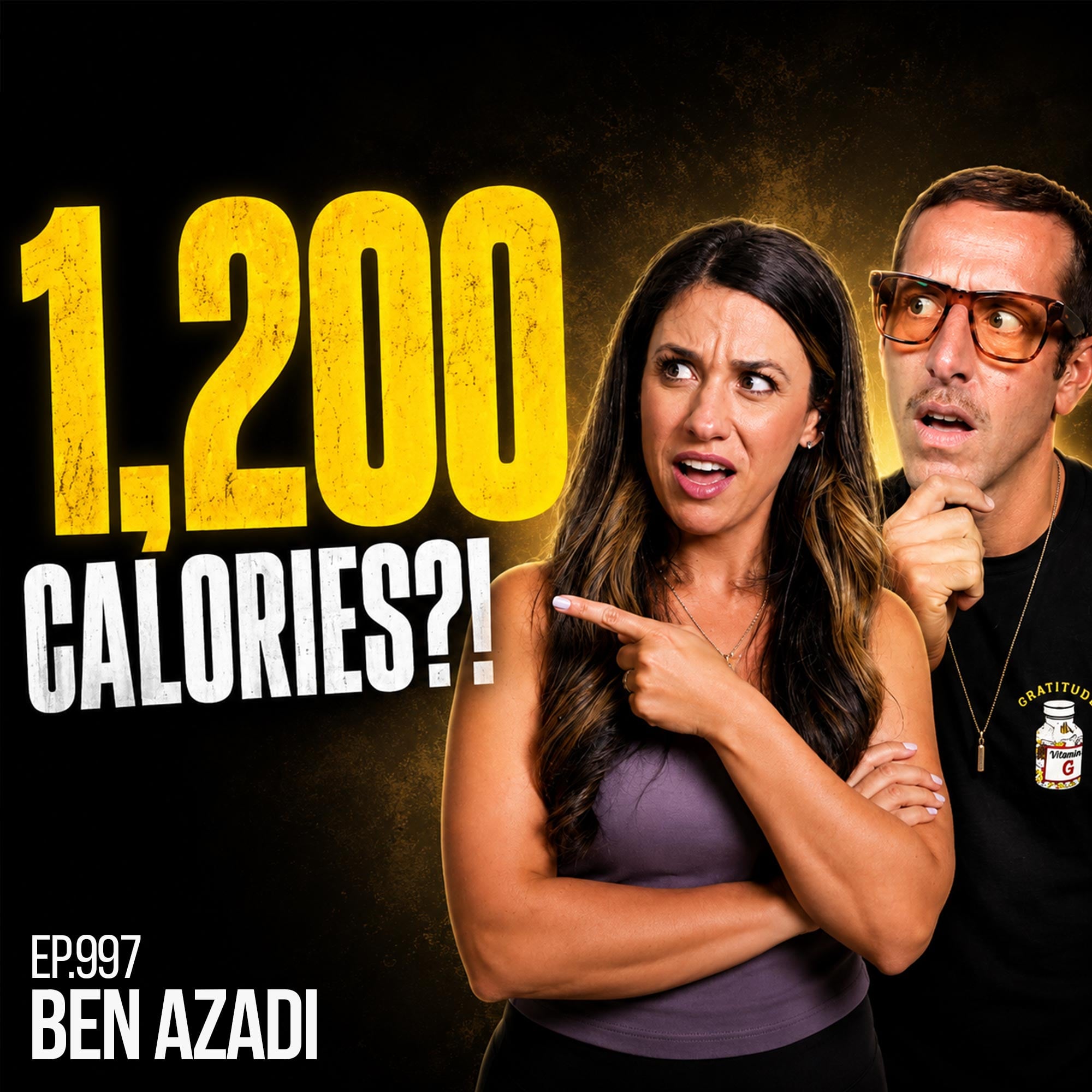

Why Can't I Lose Weight Even Though I Eat 1,200 Calories And Work Out?
NORMAL: "Eat less, move more — it's a willpower problem."
You can eat 1,200 calories, train, hit your protein, and still not lose fat if insulin stays high. On The Health Revival Show, metabolic-health author Ben Azadi and FitMom's Liz Roman explain that fat loss is driven by a hormonal signal, not a calorie count: while insulin is elevated, the body can't access stored fat for fuel, so a deficit alone won't move the scale.
FitMom's Liz Roman (@thepoopqueen) sat down with metabolic-health authority Ben Azadi — New York Times bestselling author of Metabolic Freedom and the new book KetoFlex — to unpack why so many women do everything "right" and still can't lose weight. The short version: your body isn't broken, and the number on the calorie app isn't the lever. The lever is the signal you're sending your metabolism.
Told your labs are "normal" but you still feel stuck, tired, and inflamed? Get a real explanation from a licensed practitioner.
Book a Root Cause Discovery CallWhy does eating healthy make some people feel worse at first?
02:14Ben Azadi: The first mistake people make transitioning to keto is doing it too aggressively — going from 300 carbs a day to under 50. That's a dramatic shift, and it triggers symptoms. I like a gradual approach: lower carbs, replace them with protein and fat, cut the snacking, and eat three meals a day. That alone starts teaching your metabolism to burn fat for fuel instead of sugar.
05:00Ben Azadi: The liver is the big player. It produces the bile that breaks down fat. When you eat more healthy fat and can't break it down, you feel terrible and blame keto — but for a lot of people it's a liver problem. So I lean on bitter-rich foods: arugula, apple cider vinegar, lemon and lime water, artichokes, even organic coffee, which stimulates bile production.
06:01Ben Azadi: And not all fats are the same. You can eat a pile of "keto-friendly" food that isn't healthy. Stay away from processed seed oils — canola, soybean, cottonseed, sunflower. Choose stable fats: butter, ghee, beef tallow, coconut oil, extra virgin olive oil. Keto-friendly doesn't automatically mean health-friendly.
06:49Liz Roman: So many people give up too quickly. They say, "I feel worse eating healthy foods." Yes — because you depleted the microbes that help you produce short-chain fatty acids and break down fiber. You have to reintroduce things to the microbiome slowly, alongside the bitter foods and cholagogues.
Can you do keto without a gallbladder?
07:38Ben Azadi: There's a misconception that you can't do ketosis without a gallbladder. Not true. The liver still produces bile — you just lost the storage house, so the liver needs even more support. Go low and slow. Lean on gentler fats like ghee, extra virgin olive oil, MCT oil, even sheep and goat cheese, which is roughly 30% MCT fat.
08:27Ben Azadi: If you don't have a gallbladder, supporting the liver is the single most important thing. Keep the bitter-rich foods, keep some healthy fats, but don't add too much fat at once — and take ox bile. It gives you an exogenous source of bile while your liver catches up and starts producing healthy bile again.
What is a "sugar burner," and why are 93% of us stuck?
11:00Ben Azadi: Keto isn't a diet — it's a metabolic process, and it's been around as long as humans have. Our ancestors had to fast, and fasting produces ketones to fuel the brain. Today we live in a keto deficiency. 93% of Americans have some form of metabolic dysfunction. They're in a metabolic prison — stuck burning sugar, relying on food for short-lived energy.
12:10Ben Azadi: Here's the loop: high-carb breakfast — say oatmeal and orange juice — spikes glucose, insulin drops it, energy crashes, the brain panics and screams for more carbs. So you snack at 9, snack at 11, lunch, snack again, coffee or Red Bull in the afternoon. It's an energy rollercoaster, because the metabolism is stuck burning sugar instead of fat.
Why can't you lose weight eating 1,200 calories and training?
16:05Ben Azadi: You have to change the signal you're giving your body. Fat loss is not a result of caloric deprivation or willpower — it's a signal. You could be eating 1,200 calories a day and still have high insulin, and when insulin is high, you'll never tap into that fat switch. You can exercise, eat the protein, be in a deficit — and still not lower insulin enough to make the switch.
16:44Ben Azadi: That's where carbohydrate manipulation and appropriately-done fasting come in — dropping carbs, replacing them with healthy fats, going into deeper levels of autophagy and ketosis. When a sugar burner is starved of glucose, it makes its own through gluconeogenesis, converting amino acids — or even raising cortisol — to keep brain glucose up. A flexible metabolism doesn't have to do that.
19:21Liz Roman: We say it's function before physique. I was working with someone whose insulin was above 30 — cravings, low energy, constant snacking, blood sugar all over the place. It's not a willpower problem. You have to get the right signals in, and sometimes address deficiencies too — I see a lot of B1 and B6 deficiency driving this.
Do you lose weight to get healthy, or get healthy to lose weight?
18:07Ben Azadi: We've been fed a lot of lies about fat loss. Most people think it's about the calories — it's not the most important thing. The old premise is "I need to lose weight to get healthy." That's backwards. We don't lose weight to get healthy; we get healthy to lose weight. Nobody has a weight problem — they have a weight symptom.
19:09Ben Azadi: Take care of the hormones, take care of the gut and the terrain, and the weight comes off as a side effect. Ketosis and fasting are two powerful tools to help you get there — but they're tools for getting healthy, not tricks for gaming the scale.
Where can you get KetoFlex?
20:57Ben Azadi: The book is out July 21st — paperback, Kindle, Audible, and Spotify, and I narrated the audio myself with bonus coaching sessions at the end of each chapter. If you want the perfect order, read Metabolic Freedom first, then KetoFlex — but you can start with either. You can grab it, plus free bonuses and a free fasting chapter, at ketoflexbook.com.
Your body isn't broken: Ben's final message
22:37Ben Azadi: Your body's not broken. You don't have these symptoms because you're getting older — it's the signals. Change the signals. Let the body feel nourished, safe, and protected, and it will do what it was designed to do: heal. Your job is to identify what's interfering and remove it.
24:29Ben Azadi: Understand: your body is not broken, your metabolism is not slow, you don't have bad genetics. You are in control. You are the victor of your future — not the victim of your history.
Stop guessing at your labs. A FitMom practitioner will read your root cause and build the plan around your body.
Book a Root Cause Discovery CallFrequently Asked Questions
Why can't I lose weight even though I eat 1,200 calories and work out?
Because fat loss is driven by insulin, not just calories. On The Health Revival Show, Ben Azadi explains you can eat 1,200 calories, train, and hit your protein, but if insulin stays high your body can't unlock stored fat for fuel — so the deficit won't show on the scale. FitMom's approach is to lower the insulin signal first through carb strategy and fasting, so fat loss follows.
What does it mean to be a "sugar burner"?
A sugar burner is someone whose metabolism relies on glucose from food for energy instead of burning stored fat. Ben Azadi notes that 93% of Americans have some metabolic dysfunction and live in this state — spiking glucose, crashing, and craving more carbs on an energy rollercoaster. FitMom helps clients become "fat-adapted" so the body can burn its own fat between meals for steady energy.
Can you do keto without a gallbladder?
Yes. Ben Azadi explains the gallbladder only stores bile — the liver still produces it, so ketosis is possible without one. The key is supporting the liver: go low and slow, favor gentler fats like ghee, MCT oil, and extra virgin olive oil, keep bitter-rich foods, and supplement ox bile to break down fat while the liver catches up. FitMom pairs this with targeted liver and bile support.
Why do I feel worse when I start eating healthy?
Feeling worse on healthier food often means the transition was too fast or the liver and gut aren't ready. FitMom's Liz Roman explains that a depleted microbiome can't produce the short-chain fatty acids needed to break down new fibers, so symptoms flare. The fix is gradual: reintroduce foods slowly, support bile with bitter foods, and rebuild the microbiome instead of forcing a dramatic overnight switch.
Do you lose weight to get healthy, or get healthy to lose weight?
You get healthy to lose weight — not the other way around. Ben Azadi argues nobody has a weight problem; they have a weight symptom. When you address the hormones, the gut, and the terrain, weight comes off as a side effect. FitMom builds every plan around the root cause first, using ketosis and fasting as tools to restore health, so fat loss follows the healing.
Is not losing weight a willpower problem?
No. Ben Azadi and FitMom's Liz Roman are clear that being stuck is a signal problem, not a discipline problem. You can do everything right and still stall if insulin is high or nutrient deficiencies are present — Liz routinely sees B1 and B6 deficiencies and insulin over 30 in clients who eat clean and train. The answer is changing the metabolic signal, not white-knuckling more restriction.
What are the best fats for keto?
Ben Azadi recommends stable, minimally processed fats: butter, ghee, beef tallow, coconut oil, and extra virgin olive oil. He warns against processed seed oils — canola, soybean, cottonseed, and sunflower — which are technically keto-friendly but inflammatory. The distinction FitMom reinforces: keto-friendly does not automatically mean health-friendly, and fat quality is what determines whether keto actually improves your metabolic health.
Key Terms From This Episode
- Ketosis
- A metabolic process — not a diet — in which the body burns fat and produces ketones to fuel the brain when glucose and insulin are low.
- Insulin
- The hormone that stores energy. While insulin is elevated, the body cannot access and burn stored fat, which is why a calorie deficit alone may not produce fat loss.
- Sugar burner
- A metabolism dependent on glucose from food for energy, cycling through spikes, crashes, and cravings instead of burning stored fat.
- Metabolic flexibility
- The ability to switch cleanly between burning glucose and burning fat for fuel — the goal state that ends the energy rollercoaster.
- Gluconeogenesis
- The body making its own glucose from amino acids (or via raised cortisol) to keep brain sugar up when carbs are scarce.
- Ox bile
- An exogenous bile supplement used to help break down dietary fat, especially useful for people without a gallbladder.
- Cholagogue
- A food or compound (like bitter greens or apple cider vinegar) that stimulates bile flow to aid fat digestion.
- Short-chain fatty acids
- Compounds produced by gut microbes when they ferment fiber; low levels can make new "healthy" foods feel intolerable at first.
Sources & Mentions
- KetoFlex by Ben Azadi — ketoflexbook.com (free bonuses + fasting chapter)
- Metabolic Freedom by Ben Azadi (New York Times bestseller)
- Ben Azadi on Instagram — @thebenazadi
- Liz Roman — @thepoopqueen · Becca Chilczenkowski — @thehormonequeen