

Laura Lummer - Given 12 Months to Live: Reversing Stage 4 Breast Cancer
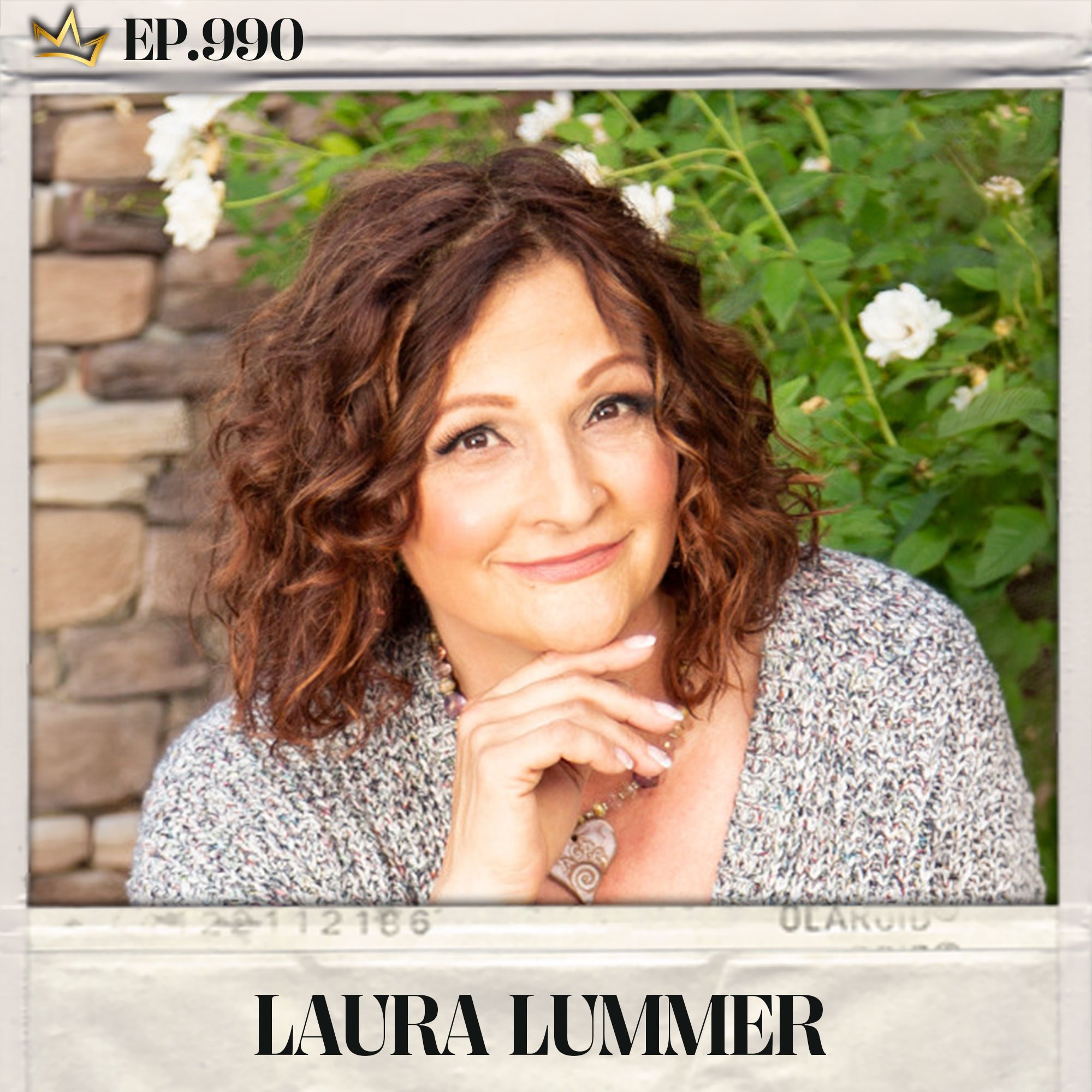
The Health Revival Show · Episode 990
Can You Reverse Stage 4 Breast Cancer With a Metabolic Approach?
Hosts: Liz Roman (@thepoopqueen) & Becca Chilczenkowski (@thehormonequeen) · Guest: Laura Lummer, The Breast Cancer Recovery Coach · Published July 1, 2026
The Short Answer
A stage 4 breast cancer diagnosis is not automatically a death sentence. On The Health Revival Show, two-time survivor Laura Lummer — given a 12-month life expectancy in 2020 — describes reversing widespread metastatic disease over five-plus years using an integrative “metabolic terrain” approach: comprehensive lab and nutrigenomic testing, correcting blood-sugar and methylation dysfunction, therapeutic ketosis, nervous-system and trauma work, alongside conventional care. Diet alone is never presented as a cure; it’s one tool that supports the body’s own ability to heal.
Key Takeaways
- Laura Lummer was diagnosed with stage 2 breast cancer in 2011 and stage 4 metastatic breast cancer in 2020, with a 12-month life expectancy. Five and a half years later, only one lymph node shows activity and the rest of her body has healed.
- The turning point was the metabolic terrain approach from Dr. Nasha Winters and its principle: “test, assess, don’t guess.”
- “Western healthy” wasn’t enough — her labs revealed blood-sugar dysregulation and methylation gene variants (including TCF7L2) that a standard checkup never flagged.
- Stress is terrain, not a side note. Both diagnoses followed intensely stressful periods; clients who skip the emotional and trauma work rarely fully heal.
- A ketogenic diet is a tool, never a cure. Nothing in the body works in a silo.
- Most breast cancer is lifestyle-driven, not hereditary — and it’s appearing in younger women, with the average diagnosis age falling from ~57 to ~53.
- Screening is an integrative, personal decision: scans and diagnostics save lives; the goal is peace of mind, not all-or-nothing fear.
How a woman given 12 months to live survived metastatic breast cancer
Liz: Welcome back to The Health Revival Show. Today we have Laura Lummer, a two-time breast cancer survivor. I’m going to let her share her story, but I loved the connection we made offline — knowing you’ve been trained by Dr. Winters through the Metabolic Terrain Institute of Health, and some of my connections there too. What a small world. I saw your comment on a social post, went to your page, loved what I saw, and knew this conversation would be well received and much needed for our listeners. Welcome, Laura.
Laura: Thank you so much for inviting me. I’m thrilled to be here.
Liz: Take us back through your journey — two-time breast cancer survivor — and what led you to doing what you do today.
Laura: Sure. In 2011, on July 3rd, I woke up, rolled over, and as my arm fell across my chest I felt a lump in my breast. I immediately knew something was wrong. I was very healthy — I didn’t have cystic breasts or fibroids. But it scared me instantly, because I’d already had months of frequent colds and a lot of fatigue that had felt “normal,” and then suddenly there was this lump. It all clicked into place. I got diagnostics right away and was diagnosed with stage 2 breast cancer.
Laura: The only experience I’d had with cancer was in 1993, when my brother was diagnosed with testicular cancer — a nightmarish six months, and then he passed away. So it was terrifying. I was working with a naturopath who was also an MD, so she was covered by insurance. She did the diagnostics, but when she gave me the diagnosis she said, “I haven’t worked in allopathic medicine in years, so I don’t really know what to tell you. Go home and Google what to do next.” And this was 2011 — Google was not what it is now. I was lost. I didn’t even know how cancer worked. Was this where it starts? Is it all over my body?
Laura: One of my sisters had a friend who was a two-time breast cancer survivor and a mentor with a foundation called Women Guiding Women. She called me — she was an angel. She walked me through my next steps. Before I knew it I was getting a lumpectomy. They woke me up and said it had spread to my lymph nodes and I needed chemotherapy. There was nothing I wanted to do less, but I’m a mother of four and I just wanted to live. I went through chemo — it was very difficult — and afterward they said they still hadn’t gotten it all, so I had a bilateral mastectomy, then reconstruction.
Laura: The real turning point came when I finished. That woman from Women Guiding Women had such an impact on me that I said, “When I’m ready, I’m going to go back and do what she does.” You had to be out of treatment for a year, because when you finish and come out of survival mode, you start to realize how much trauma you’ve been through. Cancer doesn’t work like a cold or a broken bone where you get better and move on. You get your release and think, “How will I know if I’m safe?” There was this thing growing inside me that could have killed me and I didn’t even know it. That’s a scary thing to live with.
Laura: So after the year I trained as a mentor, and that was the catalyst for everything. I met women who’d had breast or gynecological cancer, all describing the same depression, anxiety, and fear — and the same symptoms I was taking to my oncologist. I was put into chemical menopause by the chemo at 48, and when I described my symptoms he’d say, “I don’t hear that, that’s not related.” Then I met all these women being told the same thing, and I thought — can I say it? — this is bullshit. So I got a degree in healthy lifestyle coaching, essentially an integrated degree in nutrition, exercise, and behavior-change science, and started working with women who’d finished breast cancer treatment on their mindset and their lives.
Laura: Fast-forward eight years, to 2020. The world shut down. I’m living my dream — working from home, walking on the beach every morning, building my coaching business full-time. And one day I rinsed the sand off my feet, stepped into the beach shower, slipped in a sandy puddle, and landed on my hip. It was excruciating. The ER did X-rays and said nothing was broken — I’d probably bruised a bone, expect pain for five or six weeks. Weeks later I was still limping at lunch with a friend who’s a doctor. She said, “You should not be in this much pain this long. Go see my husband, an orthopedic surgeon.”
Laura: He ran diagnostics and called on a Sunday. He was hesitant. He said there was no tear, but a lot of swelling, fluid, and several lesions in the femur — and in cancer talk, “lesion” is a code word for tumor. I said, “Are you trying not to tell me I have cancer?” He said, “Yeah, that’s what it looks like.” A week of scans later, his wife called me on a Sunday morning while I was having coffee with my husband. She said, “I need you to understand so you can take care of yourself until you get to an oncologist.” I had cancer in both femurs, both hips, my pelvis, eight vertebrae, three ribs, my forehead, my shoulder blade. My lung was partially collapsed, and my heart was surrounded by fluid.
Laura: I was speechless. I thought, this cannot be me — you must have confused my scans with someone else. My brother got his news and six months later he was gone, and I thought, “Is this the last six months of my life?” It takes me about three days to process extreme news. On day three I told my husband: people heal from cancer all the time. I’d read The Metabolic Approach to Cancer. I’d read Radical Remission. I’m going to figure out how they do it. I’m not dying. I have too much to do.
Laura: That’s what started my search. And what didn’t sit right with me was that every program — juicing, veganism — used the same approach across the board. I was also pursuing conventional medicine: radiation on my head and spine, oral chemotherapy. But how could one protocol work for everyone? That’s when I went back to Dr. Nasha Winters’ work, watched her at summits, and thought, “I love this woman’s approach.” Then she opened a training program for allied health professionals, not just licensed physicians. I signed up immediately. I went there wanting to understand how to save my life — and I believe I learned it.
Laura: My life expectancy at the time of diagnosis was 12 months. Five and a half years later, I’m here with just one lymph node that has any cancer activity at all, and the rest of my body is completely healed. As recently as a couple of weeks ago, my oncologist — who sees the labs my naturopath runs — told me, “When you came in with full-blown cancer, I was shocked you were still here 12 months later. Now, after five years, I’m really starting to believe this metabolic approach. I see patients in very similar circumstances who haven’t done as well, and I think it’s because of your lifestyle approach.” It feels really good to win over a conventional oncologist.
Becca: Was the fall almost a godsend — a way to finally understand what was going on internally?
Laura: I say it was the fall that saved my life. I was working out — bench pressing 120 pounds, deadlifting. I kept saying, “My back is so sore, maybe I should stop the deadlifts.” My spine was in danger of spinal cord compression. There was a lot of cancer in my spine. But I still had so much energy that my oncologist said, “I can’t believe that with the amount of fluid in your chest you can hold a conversation.” I told him he had the wrong diagnostics. Then they drained a liter and a half of fluid out of my chest, and I thought, “I guess he knows what he’s doing.”
“Test, assess, don’t guess”: the metabolic terrain approach explained
Laura: The most powerful thing Dr. Nasha taught me was her slogan: “Test, assess, do not guess.” You look at your labs, your gut health, your nutrition genetics — you get all the data your body can give you. From that, you understand what your body needs and how to support its ability to heal. Once I had that information, I couldn’t keep it to myself, so I incorporated the metabolic approach into my business. It’s life-changing.
Becca: Were there labs that showed metabolic dysfunction — an internal environment that lets cancer be more prosperous? We see energy pathways skewed toward sugar-burning rather than ketosis, which makes it harder for cancer to proliferate. Where did you start?
Laura: Absolutely. I learned there’s a big difference between a Western “healthy lifestyle” and a complete functional-nutrition approach. Even with a healthy diet and exercise, I had genetics predisposing me to blood-sugar dysregulation, insulin dysregulation, and methylation issues. Across my clients diagnosed with breast cancer, methylation and blood-sugar dysregulation are two of the most common pathways. Our nutrition genetics and labs are the language of the body — the body is telling us what it needs. We’re lucky to live in a time when we can finally read that language.
Why “healthy” wasn’t enough — genes, blood sugar & methylation
Laura: In the traditional Western approach, that language isn’t part of it — “healthy” means eat whole foods, mostly plants, organic when possible. That’s not untrue, but what works for you? I was following a mostly vegetarian diet, which is a lot of carbohydrates. I might say, “It’s quinoa, it’s brown rice” — but if I have a TCF7L2 gene variant that prevents my pancreas from making adequate insulin, it doesn’t matter what kind of grain it is. I had to learn what my body actually needed. Once I saw all these genetic SNPs, my lifelong struggle with blood-sugar dysregulation finally made sense. I completely changed my diet and learned about ketosis. Because of my genetics, staying in ketosis is challenging — it takes a lot of fasting and focus. I have gene envy of clients who fast 13 hours and drop right into therapeutic ketosis.
Becca: I’m the same — I’ve always struggled to get into ketosis; it takes deep fasting and high fats. Lately I can get there in about 16 hours, even after eating carbs. It takes conditioning of the body — clearing inflammation — to build that ability. So what have you seen on the stress side? Because stress, cortisol, blood sugar, and sleep all go hand in hand.
Stress is the terrain: the emotional work nobody wants to do
Laura: If I could name the single most important thing after five years of this work, it would be your stress, your emotional wellness, and the processing of trauma. I have women who check every single box — they stay in ketosis, they’re amazing with their food — and they refuse to open that Pandora’s box of little-t traumas. They’re in toxic relationships and unhealthy jobs. I’ve had multiple women say to me, “I was actually relieved when I was diagnosed, because then I didn’t have to go back to that job for a few weeks.” Think about what those words mean.
Laura: Before my first diagnosis I’d just come out of a very toxic marriage — six months later, cancer. It doesn’t surprise me now. Before my stage 4 diagnosis I’d had an extremely stressful period — one of my children was going through something awful, my husband was in a traumatic business experience, I wasn’t sleeping. There’s no doubt in my mind that stress creates the environment inside your body that gives cancer a place to thrive, because it compromises your immune system and fuels inflammation. It fuels inflammation, and if you’re not willing to do the emotional work that comes with healing, I don’t think you’re going to heal. That’s how important it is. Sometimes I tell clients, “I’d rather you eat a ding-dong and deal with what’s really happening. We’re not talking about how much avocado to eat anymore — let’s look at what’s really happening.” It has to be addressed.
Liz: We just had Kiran Krishnan, a microbiologist, on the podcast. He shared a 2015 study on stress-driven leaky gut and all-cause mortality — and stress was the number-one indicator of leaky gut. When a doctor just says “manage stress” and leaves it there, what does that even mean? One thing I talk about with clients is finding joy. If you tell me to take an Epsom salt bath or meditate, I kind of want to punch you in the face — I’m a busy mom running a business. So I say, find joy, find what makes you feel calm, because the whole point of managing stress is to feel safe in the nervous system. We can’t out-supplement or out-diet a nervous system stuck in fight, flight, or freeze.
Laura: Happiness heals — you must have joy in your life, hard stop. Look at your relationships: do you have frenemies, and why? Anything you walk away from thinking “that’s so draining” is stress, and it’s you not having a healthy boundary. There’s healthy stress — deadlines for work you love — and then there’s the office I used to walk into thinking, “This is killing me a little bit.” And I was right. The tool I give clients is: live your life with intention. We have 168 hours in a week. Take away sleep, work, drive time, groceries — you still have 75 to 80 hours unaccounted for. What are you going to do with that time? You must protect it like your food budget, because it truly feeds your family. Dr. Nasha always says, “You cannot get well in the same life you got sick in.”
Laura: So you have to look at your life and ask: Do I have to do this? Does it have to be done by me? Or am I doing it because of conditioned beliefs about what a mom, a sister, a friend, a business owner should do? Thought work is essential to healing work. The first of my four pillars of breast cancer recovery is release: look at your old ways of thinking and let go of the ones that don’t serve you. It’s like a house so full you can’t fit another pair of socks in the drawer. We accumulate without consciously choosing. You have to take everything off the table and see what comes back — what’s essential, what you love. When you create that space, honoring boundaries for maybe the first time, now you have room to invite joy in. You can’t do it if life is full.
Laura: After any serious diagnosis — any metabolic imbalance — it’s your body saying, “I need your help.” Our bodies want to live, heal, and thrive, and they send signals all the time. In Western society we’ve misinterpreted those signals as our body betraying us. But let’s ask: who betrayed whom? Was the body not sleeping, telling you to calm things down? This relationship with our body is the most important relationship in our life. We have to understand it, listen to it, and build trust.
Becca: Your body fights to keep homeostasis and compensates for as long as it can. So if you’re experiencing symptoms now, it’s been trying for a while — look at the past five, ten years. We’re all in a world of instant gratification, but you’ve been doing things not in favor of your body’s health for a long time. This won’t turn around in two, four, or six months. It’s a process of unlearning who you were and becoming someone new — and that new person is going to be so much happier and healthier.
Why breast cancer is hitting younger women
Becca: You work a lot with breast cancer survivors. What are you seeing in terms of younger people, and the surge of diagnoses — even healthy people getting preventative removal of breasts and ovaries?
Laura: The genetic piece — BRCA, ATM, CHEK — is a tiny percentage of the reason for diagnosis. My doctor once asked, “Why all this metabolic stuff? This is a genetic problem.” I said, “Then why do you tell people to exercise and eat better if it’s genetic?” It’s a lifestyle issue — a combination. When we don’t care for ourselves and aren’t aware of our toxic burden — the blessing and curse of being young is you can get through a lot before it bothers you — that toxic load builds and builds. The average age of diagnosis used to be around 57; now it’s closer to 53, and dropping. I have clients in their 20s and 30s.
Laura: We misinform people. Conventional medicine conditions us to wait for a symptom — “come back when you have one.” My daughter had digestive issues as a teen and told me, “You’ve ruined me — now I can’t eat pizza and drink soda without feeling sick.” I said, “No, I taught you how to take care of your body.” It becomes younger and younger because we don’t teach young people to be conscious of this. Parents tell me they make three different dinners because the husband eats one way and the kids another. But a child has a human body too — we have to think about how a human body works, not just what a kid likes to eat, instead of buying into the food industry’s marketing.
Scans, mammograms & fear: the integrative middle path
Liz: What you presented is options — not fear-mongering. My sewing teacher died of breast cancer; my mother-in-law battled it. And even estrogen blockers afterward take a toll. The hardest part is that people don’t get informed consent — that fully suppressing estrogen raises the risk for osteoporosis, insulin resistance, low thyroid function, and weight gain. So how do you think about screening as a survivor — the different scans, and alternatives to mammograms?
Laura: We talk about “early diagnosis,” but a diagnosis is already too late — you already have cancer. We need to turn the ship around toward preventative lifestyle. Friends tell me, “If I ever get cancer, you’re the first person I call,” while I’m looking at the dark bags under their eyes and hearing they go to the bathroom once a week. I say, please don’t wait until you get cancer — your body is already telling you it’s heading toward a metabolic crisis. But we don’t want to live differently; we want the pizza, the beer, the late nights, the Netflix binges. Not that you can’t sometimes — but our bodies still love nature, simplicity, and sleep.
Laura: On screening, there are two schools of thought. The naturopathic side says don’t expose yourself to radiation — do thermography, look for metabolic activity in the breast. The other side is the fear of “what if I don’t?” A woman recently messaged me describing bleeding, pain, horrible symptoms — but she had so much fear of a scan because all she’s heard is how dangerous radiation is. It makes me lose my breath. Yes, we’d like to avoid radiation, but scans are a blessing — thank God we can look inside these bodies. I watch people dig in their heels — “I won’t do any conventional stuff” — and refuse information that could save their life. Neither extreme is right. We’ve got to have a combination. Even Dr. Nasha says, “We can’t help this person without a scan; we need to understand what’s going on.”
Laura: Being in a high state of ketosis gave me a much better quality of life during intense radiation. But ketosis is never to be presented as a cure for cancer — it’s a metabolic tool that reduces inflammation and creates vulnerability in cancer cells. It supports everything else you do. Diet alone is never going to heal you. Nothing in this body happens in a silo — genes don’t operate in silos. Circadian rhythm, sunlight, stress, being in nature — these are critical. If early diagnosis has to happen, I’d rather you catch it at stage zero, DCIS, where you have about a 98% chance of thriving well into your 80s. But better to never have it at all — to use the tools that are out there.
Laura: It breaks my heart when women value themselves less than they value their animals — I’ve had women refuse testing because their dog needs a certain medication, or their husband doesn’t support it, while they’re taking golf trips or buying new tools. Women walk around struggling and chalk it up to “mom life” or aging, or “I’ll get to it later.” That one kills me. Are we supposed to be sick if we’re lucky enough to live longer? No. Everyone says, “I’m aching, I’m tired, it’s because I’m old.” No, it is not because you’re old. I have 26-year-olds I can run circles around, and I’m 62 with stage 4 cancer. It’s about taking care of yourself.
Liz: I’d love for you to share the gift you have for our listeners, and where people can find you.
Laura: I’ve given you my Self-Love Journal — 31 days of prompts, because we misinterpret what self-love means. It’s little questions and acts of kindness for yourself that don’t have to be 20-minute meditations and Epsom salt baths. It’s about how you speak to yourself, how you criticize yourself, whether you give yourself grace. Awareness is the key to change — and you are the expert on you. You can find me at thebreastcancerrecoverycoach.com, my podcast Better Than Before Breast Cancer, and on Facebook and Instagram as The Breast Cancer Recovery Coach. One last thing I speak about: don’t be the giving tree — giving until you’re an empty stump and someone sits on you. You can love everybody and love yourself just as much. Sometimes that means saying no.
Liz: I love that. Thank you so much — and you do not look 62; you’re aging beautifully.
Becca: Amazing story. Thank you. We’ll be in touch.
Frequently asked questions
What is the metabolic terrain approach to cancer?
The metabolic terrain approach, taught by Dr. Nasha Winters and the Metabolic Terrain Institute of Health, treats the internal environment that let cancer grow, not just the tumor. Its slogan is “test, assess, don’t guess”: run comprehensive labs, gut, and nutrigenomic testing, then correct root drivers like blood-sugar dysregulation, methylation defects, inflammation, and stress. It is used alongside conventional treatment, not instead of it.
Why do healthy women who eat well and exercise still get breast cancer?
A “Western healthy” diet is not the same as a personalized one. Genetics like the TCF7L2 variant can block adequate insulin production, so even quinoa and brown rice spike blood sugar. Undiagnosed methylation issues, chronic stress, poor sleep, and toxic load build silently for years. Healthy on paper can still be the wrong terrain for that specific body.
Does stress cause breast cancer or make it worse?
Chronic stress is a core driver of the cancer-friendly terrain. It suppresses the immune system, fuels inflammation, and — per research on stress-driven leaky gut and all-cause mortality — stress ranks as a leading trigger of intestinal permeability. Survivor Laura Lummer notes both her diagnoses followed intensely stressful periods, and says clients who skip the emotional and trauma work rarely fully heal.
What tests should a breast cancer patient ask for?
Beyond standard imaging, the metabolic approach runs comprehensive bloodwork, gut-health testing, and nutrigenomic (genetic) panels to read “the language of the body.” Markers of blood-sugar and insulin dysregulation and methylation gene variants such as TCF7L2 are among the most common patterns seen in breast cancer clients. The goal is data-driven, individualized support rather than one protocol for everyone.
Can a ketogenic diet cure cancer?
No. Laura Lummer is explicit that ketosis is never a cure. A Mediterranean-style ketogenic diet is a metabolic tool that can lower inflammation, improve quality of life during treatments like radiation, and create vulnerability in cancer cells. It supports the other pillars — testing, nervous-system work, and conventional care — but “diet alone is never going to heal you.”
Is breast cancer genetic or lifestyle?
Genetic variants like BRCA, ATM, and CHEK2 account for only a small share of diagnoses. Most cases are driven by cumulative lifestyle and toxic-load factors. Having a high-risk gene raises risk but does not guarantee cancer, and lifestyle, monitoring, and terrain support are options many women are not told about. The average diagnosis age has been dropping from roughly 57 to 53.
Should I get a mammogram, or is thermography safer?
Laura Lummer takes an integrative middle path. Naturopathic thinking favors radiation-free options like thermography; the conventional side values early detection. Rather than an all-or-nothing stance, she asks which choice brings genuine peace of mind, and stresses that scans and diagnostics save lives. Refusing all imaging out of radiation fear can be as harmful as over-scanning.
What are the side effects of estrogen blockers after breast cancer?
Fully suppressing estrogen with aromatase inhibitors or blockers can raise the risk of osteoporosis, insulin resistance, low thyroid function, weight gain, and feeling generally unwell. The hosts argue patients too often make this choice without informed consent about the trade-offs, and that individualized, terrain-supporting options should be part of the conversation.
Key terms
- Metabolic terrain
- The body’s internal environment — blood sugar, hormones, immune function, inflammation, gut, stress — that determines whether cancer can thrive.
- “Test, assess, don’t guess”
- Dr. Nasha Winters’ principle of using labs and genomic data to individualize care instead of applying one protocol.
- TCF7L2
- A gene variant that can impair insulin production, making carbohydrates spike blood sugar regardless of “quality.”
- Methylation
- A core biochemical process; genetic defects here are a common pattern in breast cancer clients.
- Therapeutic ketosis
- A metabolic state (via a Mediterranean-style ketogenic diet and fasting) used as a supportive tool, not a cure.
- DCIS (stage zero)
- Non-invasive breast cancer with very high survival when found and treated early.
- Thermography
- A radiation-free imaging option that looks for metabolic activity in breast tissue.
- Aromatase inhibitors / estrogen blockers
- Drugs that suppress estrogen post-diagnosis; carry systemic side effects.
- BRCA / ATM / CHEK2
- Hereditary cancer-risk genes that account for a small minority of diagnoses.
- Chemical menopause
- Menopause induced by chemotherapy, as happened to Laura at 48.
Sources & references
- Dr. Nasha Winters — The Metabolic Approach to Cancer; Metabolic Terrain Institute of Health (MTIH)
- Kelly Turner, PhD — Radical Remission
- Kiran Krishnan — microbiologist; research on stress-driven leaky gut & all-cause mortality (referenced, ~2015)
- Women Guiding Women — breast & gynecological cancer patient mentoring foundation
- Shel Silverstein — The Giving Tree (analogy)
- Laura Lummer — The Breast Cancer Recovery Coach; podcast Better Than Before Breast Cancer; thebreastcancerrecoverycoach.com
Ready to find your root cause?
Told your labs are “normal” while you feel anything but? Apply for a Root Cause Discovery Call and get your terrain read.
Apply for a Root Cause Discovery CallThis episode and page are for educational purposes only and are not medical advice. Laura Lummer’s experience is one person’s story and is not a promise of results; a metabolic or lifestyle approach is meant to complement, not replace, care from a licensed oncologist or physician. Always consult your medical team before making changes to cancer treatment, screening, or medication.