

Ian Mitchell - Why "Incurable" Diseases Almost Always Have One Root
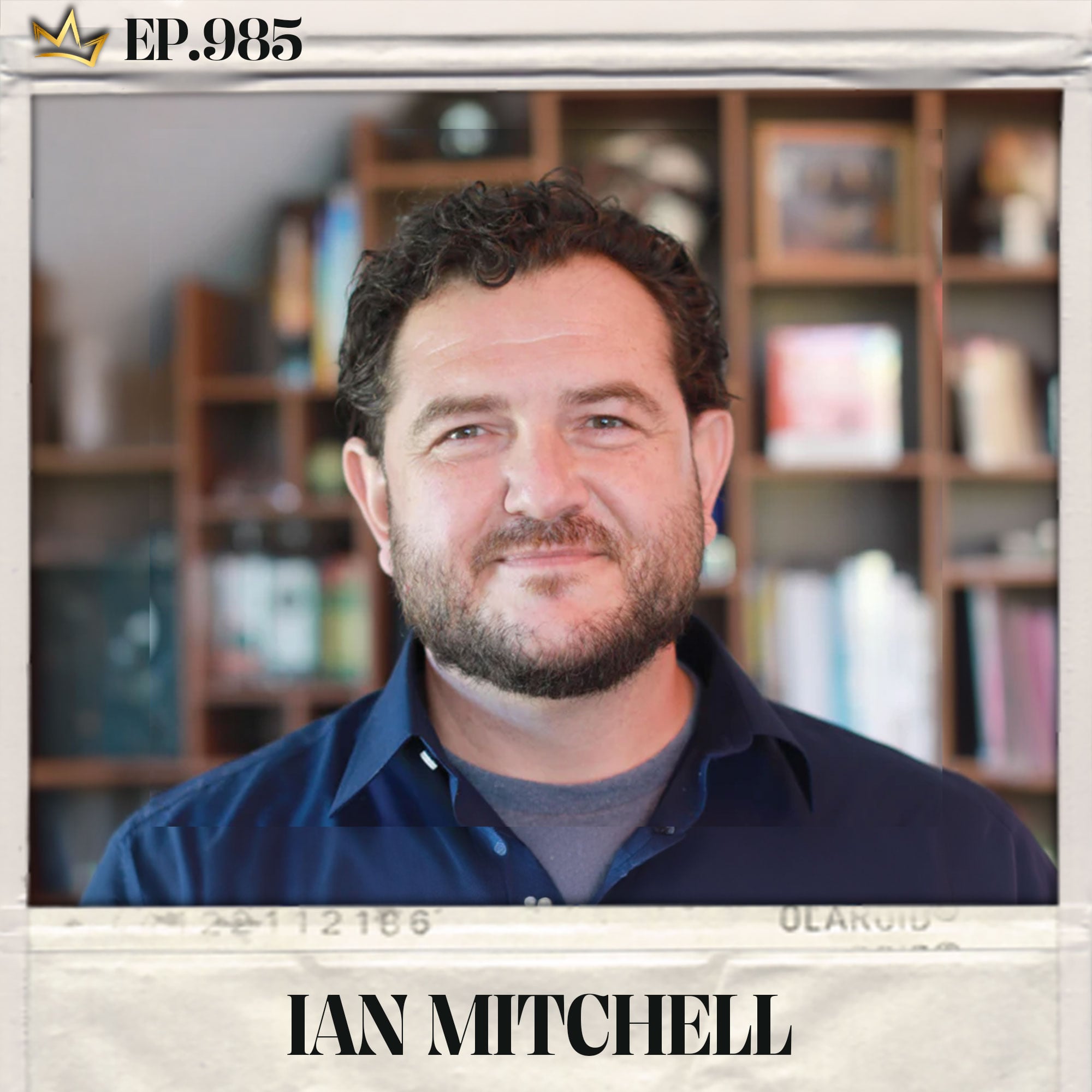
EPISODE DESCRIPTION:
Most "incurable" diseases trace back to one root — inflammation up, cellular energy down.
Research scientist Ian Mitchell (Wizard Sciences, MD Biophysics) joins Liz and Becca to make that case across autoimmunity, chronic pain, and cancer: carbon 60 and why mitochondria are the whole game, what he'd do first in an autoimmune flare, the metabolic argument that got him asked to run the National Cancer Institute, stem cells that slip past the blood-brain barrier, and the spike-protein crash that humbled him.
Big, opinionated conversation — not medical advice.
Tired of being told your labs are "normal"?
Apply for a Root Cause Discovery Call
***
CONNECT:
🏆 Work With Us: Revive & Thrive Program
🔗 Connect With Liz: Instagram | TikTok | YouTube
🔗 Connect With Becca: Instagram | TikTok | YouTube
🇺🇸 Private Community: FitMom Society
▶️ Have Questions? Ask Here
***
SAY THANKS:
***
produced by: 📣 brandhard
Transcript:
00:00:00.000 --> 00:01:00.000
Liz Roman: Welcome back to The Health Revival Show. We are so honored to have Ian Mitchell with us today. He is a wealth of knowledge. I was saying before, he's solved some of the things that people would say are completely unsolvable, yet he is blowing minds and changing lives. So we're gonna get into some really cool stuff today.
00:01:00.000 --> 00:02:00.000
Um, but really I think the fundamental thing is just consciousness is kind of like the crux of all of this for me. And, and I, I think I've been hell-bent on trying to increase my own awareness of things over the span of my life. And the thing I like about working in the health space is that there's so many puzzles that people think are intractable that really aren't, and you can, you can make a huge difference in people's lives.
00:02:00.000 --> 00:03:00.000
When I was a kid, my dad, who's kind of this freak genius guy, um, used to do this exercise with me over and over where he would ask me a question and, and I was, I was a smart kid, but I wasn't, you know, like super gifted or anything. He would ask me this question and say, "Can you solve X puzzle?" And give me some kind of hypothetical.
00:03:00.000 --> 00:04:00.000
And I think in retrospect, looking back on it, it was incredibly formative, um, because a lot of times when you put the constraints of information and knowledge, you know, it's kind of like that Einstein thing of, you know, which is more important, information or, or knowledge or imagination rather. And, you know, knowledge tells you what is, imagination tells you what can be.
00:04:00.000 --> 00:05:00.000
Clarke, all those guys. They just-- They came up with things that were so far ahead of the curve and seemed absolutely ridiculous to people at the time. But now, you know, 50, 60 years later, we're doing almost all of those things. And I was actually working on this project, uh, for a thing called the EmDrive, and my, uh, my son and I were watching this program, and I've, I've done work with NASA and some other, you know, kind of interesting agencies in the government and, and one of the things that NASA was doing was this thing called an EmDrive, and they were basically debunking it.
00:05:00.000 --> 00:06:00.000
Like, I could do that." 'Cause I saw very clearly what they had missed and why they were getting these kind of anomalous results. And, and my son in perfect fashion goes, "No, you can't." And so I was like, "Hoo-hoo, challenge accepted." And so I rolled into my lab on Monday and got one of the guys who's worked for me for like 15 years now and said, "Rick, I need you to go to Lowe's and buy six microwave ovens, couple rolls of copper roof flapping, and some big traffic cones."
00:06:00.000 --> 00:07:00.000
And I was like, "Who would know what that was like?" And I was like, "You know what? Gene Roddenberry, right? 'Star Trek.'" So I went back and I pulled up the first images from like the '60s of the Starship Enterprise, and I looked at it and I was like, "Holy shit. It's the same configuration with one difference." So I looked at the one thing I was missing and I, you know, called Rick and said, "Hey, I need you to go buy a basketball and more copper flashing."
00:07:00.000 --> 00:08:00.000
And it-- and then, of course, you know, I thought back about the exercise that my dad had me do, and I thought back about what Einstein had said about it, and it just, it really kind of cemented the idea that You know, the future is really something that you can fall into. So that-- I mean, for me, that's one of those things that that's a lot of what I do, is try and see into the future, take that technology, bring it back, and then disseminate it.
00:08:00.000 --> 00:09:00.000
Um- Yeah ... and kind of like the founding technology, from what I understand, for your, your company, Wizard Sciences, and- Yeah ... I'd love for you to talk a little bit about that particular technology, what it does, what it is, um, so that people can understand a little bit better, you know, the power behind it.
00:09:00.000 --> 00:10:00.000
And then you've got graphite, which is just kind of a-amorphous carbon. And then you've got fullerenes, and fullerenes, the, they're basically spherical clusters of carbon atoms. And, and they go all the way from, you know, down, like, 20 up to 360, so you've got... or thereabout. You've got a pretty huge range. The ones that I play with, for the most part, are Carbon 60, which is, uh, the f- the technical term is a truncated icosahedron.
00:10:00.000 --> 00:11:00.000
It ends up delocalizing from the lipid and moving into the mitochondrial membrane. And when it does that, it acts kind of like a buffer. And so if you think about the energy in your cells, mitochondrially, you know, the, the powerhouse of the cell where you're, where you're outputting all this energy, and most people think of it as ATP.
00:11:00.000 --> 00:12:00.000
And usually in a lab, we'll do that using a thing called a luminometer and a like CellTiter-Glo or CellTiter-Blue, which basically you put on and it only activates and fluoresces if there's ATP present. And so you can look at a cell, and when you put C60 in the cell, the ATP output jumps somewhere between 18.3% and 58%, give or take.
00:12:00.000 --> 00:13:00.000
And so in terms of You know, how you couple that, the body is really brilliant because if you combine it with a different lipid profile, like a different fat, it will go to a different place, right? So if I want it to go to my muscles and kind of systemically, I'll couple it with oleic acid, which is just like if you take organic olive oil and fractionate that down, you end up with, you know, oleic acid, or you can just use the straight olive oil, uh, as long as you're using like a really good, you know, organic olive oil.
00:13:00.000 --> 00:14:00.000
The, the body already does all that. So all you have to do is figure out kind of like line the billiard ball shots up, like where do you want it to go? What are you trying to elicit as a response? Then how do you couple it? How do you get the body to do what it needs to do? And from an autoimmune perspective, the, the two big constraints with autoimmunity, kind of like we were talking about before we got started, um, you have to squelch inflammatory response and you have to upregulate mitochondrial energy potential.
00:14:00.000 --> 00:15:00.000
Okay? And then inside that, you've got all this stuff, and you guys know where mitochondria come from, right? Like they're bacterial in origin. They were something that was kind of subsumed into our cells so they could symbiotically produce energy because they were super efficient. Well, they still contain bacterial DNA that's foreign from your body's own DNA.
00:15:00.000 --> 00:16:00.000
Well, that causes inflammation locally, which then dips the proximate cell voltage, and then it happens again, and then it cascades. So it's like this negative feedback loop. And The-- One of the things that I was able to do with C60 is when I put that into the right configuration, depending on what part of the body was being affected, the two things you have to do are absolutely shut down the inflammatory response and then absolutely bring up the mitochondrial potential.
00:16:00.000 --> 00:17:00.000
And so I did all this cytokine testing, um, where for-- through a company called Eurofins, where we showed very conclusively that when you take the C60, all of the cytokines, all of the pro-inflammatory cytokines just crater, absolutely crater very, very rapidly. And then your mitochondrial potential, we did with, you know, the, the luminocit or, or luminometers and the, uh, CellTiter-Glo and CellTiter-Blue, we were able to show that we increase those.
00:17:00.000 --> 00:18:00.000
You just have to provide it the resources so that it can do that. And I always tell people, like, I wouldn't have made those things if the world were perfectly pristine. Like if we were, you know, if this were like the 1200s and we were out living next to a beautiful stream on a hillside in Switzerland and everything was great, and we were, you know, drinking milk from our organic cows and, like, none of this shit would be necessary.
00:18:00.000 --> 00:19:00.000
uh, that we understand, you know, that you're a part of. If you don't mind, I'd love to pause here and talk a little bit about, so we just addressed autoimmunity. Yeah. What are some of those products? Because I believe that on Wizard Sciences for bang for your buck in terms of, like, I've been taking the methylene blue product, and I love that and the combination, and I'm not having to buy multiple products, so it's nice, you know, less capsules and whatnot.
00:19:00.000 --> 00:20:00.000
Yeah. So the product, um, it's called Evolve, and it's just-- it's literally the most basic thing. It's like, I think if you... It's like 69 bucks or 68 bucks. I don't, I don't actually know, but something like that. Um, and yeah, I would take that for, I don't know, a month and just ... You know, if you have a really acute autoimmune condition, probably take a tablespoon of it a day.
00:20:00.000 --> 00:21:00.000
Um, and at least that's how it feels to me 'cause I-I've got access to everything and I've tried, you know, NR, NMN, NAD. And for whatever reason, maybe it's just me, maybe it's my particular constitution, but the NMN seems to drive. And the one I did is I combined a couple of things. So, um, NMN, it-it's difficult to get it taken up into different tissue and organ systems.
00:21:00.000 --> 00:22:00.000
Like you, you can't get over to the food fast enough, and so you end up having a problem. And so this just inhibits the breakdown, um, of the NMN by CD38, and so you end up with a higher tissue density, um, and more access to it. And so when, when you take that stuff, the energetics go up. So the, the Evolve, like that would be my frontline for somebody with autoimmunity.
00:22:00.000 --> 00:23:00.000
There's, there's actually a lot to it. Um, but it, it's hard for people to quantify it because nobody as of yet has a quantumometer, so they can't gauge the actual energetics of a system. They can just basically say, "Yep, that's NMN." You know? But they're, they're very... As you guys know from the protein powder, they are very, very fundamentally different, and you can change things pretty dramatically when you just alter components that people aren't really testing for.
00:23:00.000 --> 00:24:00.000
It's kinda like the same thing, uh, you know, in terms of, okay, I saw HRT is good for me and I start taking it, but I'm so inflamed because of all the toxins and all of the, you know, underlying infections in my body. Now it's making me worse. And by the way, none of the things that I went on, uh, this for in terms of like maybe vaginal dryness or libido or whatever insomnia it might be got fixed because it's just going to waste circulating around, not actually getting and penetrating into the cell.
00:24:00.000 --> 00:25:00.000
And so you can, you can swap electrons in and out, so it, it can work as a pro-oxidative thing or an anti-oxidative thing depending on what's necessary. So you can almost think of it like a nanoscopic adaptogen, right? And when you put something like that into the cell It allows the, the electron transport chain to upregulate to kind of its maximum component, but not go beyond that.
00:25:00.000 --> 00:26:00.000
But like you said, because of the size and because of the, the rates of perfusion, you can get it pretty much everywhere systemically. And I- it's been my experience that almost everybody is inflamed. Like, uh, you know, especially performance athletes, you know? Um, this-- Actually, I have this here because this is the stuff that I take every morning, and it's called Olympics, and it, it used to be called Olympic until I got a very grumbly cease and desist letter from the Olympic Committee.
00:26:00.000 --> 00:27:00.000
Ian Mitchell: So it's M-C-C-O-N-N-E-L-L. And if you check out Blaine, Blaine is a unit. I mean, the guy is just a beast. Um, but he's come down and he's done two VSEL procedures with me.
00:27:00.000 --> 00:28:00.000
I mean, credit to him for doing all of the right stuff, you know, in terms of how to take it and buffer it and not blow out his joints because, you know, what I told him was like: "Look, it's kinda like Captain America's serum. Your muscles, because they have so much vascularity and blood flow, they, they can handle the load and they'll adapt really quickly.
00:28:00.000 --> 00:29:00.000
You know, like, yeah, it's actually, it's like 32 feet. So he's jumping over 10 feet in each standing jump. And then he does, you know, one of those ridiculous sprints, and then he deadlifts like 500, or, or rather back squats like 500 pounds. You know, just ridiculous stuff, things that you would not expect because he's, he's doing it all the right way.
00:29:00.000 --> 00:30:00.000
And I routinely tell people like, "Look, this is great, but you know, when you take it, you're gonna hit PRs every single time. Don't. Like back off." And I t- I've told this to a bunch of NFL quarterbacks too. It's like, "Look Suddenly instead of being able to throw 65 yards, you're gonna be able to throw, you know, 100 yards.
00:30:00.000 --> 00:31:00.000
it, like, one of the investors at Tonal, um, you know, 'cause the wall-mounted exercise thing, it always tracks it, and he showed me his Tonal, and when he started taking it, everything went up on average 85%. Like, whoop.
00:31:00.000 --> 00:32:00.000
Becca Chilcz: Yeah. It's the cr- rhabdo was the craziest thing I've ever experienced. So I'm- Yeah ... I was a competitive CrossFitter for a long time, and one of the you know, regional workouts was hundreds.
00:32:00.000 --> 00:33:00.000
And I was like, "It's because your muscles could do it, they remembered how, but your joints weren't trained for it." Like, it... And so I've ruptured my Achilles as well. Awful. But anyways, what I would love to understand, too, 'cause I know that you talked about this, I was listening to one of your podcasts with Dr.
00:33:00.000 --> 00:34:00.000
And I literally said, I was actually standing right behind where I am now, I said, "Are you sure?" And she, it kinda took her off a little bit and she goes, "Well, what do you mean?" I said, "Listen, here's the thing. If you want somebody to knock this out as a condition, I'm your guy. If you want somebody to be a pharmaceutical shill-" you're wasting your time.
00:34:00.000 --> 00:35:00.000
And the, the project was a $260 million joint grant between Harvard and MIT, and that sounds like a lot of money until you realize that annually, cancer is a trillion-dollar industry. So in terms of, in terms of relative scale, that grant paid out over two years, half of which came from pharma, half of which came from our happy taxpayer dollars.
00:35:00.000 --> 00:36:00.000
And as long as you can take the best and the brightest minds and direct them to this boondoggle... I mean, imagine if you brought your car to a mechanic because your engine was having problems, and they were like, "You know what we're gonna do? We're gonna figure out exactly what paint color is on your car.
00:36:00.000 --> 00:37:00.000
This is a metabolic disease, right? If you adjust metabolic function, and there are a couple of ways to do that, right? Like- Um, Tom Seyfried uses a ketogenic diet and then a thing called, um, DONs, which is 6-diazo-5-L-norleucine as a glutamate inhibitor. And when you do that, basically cancer eats sugars first, which is why you do the keto diet.
00:37:00.000 --> 00:38:00.000
The DG is deoxyglucose, and that type of configuration on the sugar makes it non-metabolizable. So you're not adding fuel to the cancer, but the cancer sees the sugar and sucks it in, so you get, you know, under the fluoroscope, you can see what lights up, and it tells you what the affinity is. And that's when they usually grade things with an SUV, a standard uptake value, to see how much of an affinity and how much sugar is being pulled in per unit volume, um, so you can see how aggressive the cancer is.
00:38:00.000 --> 00:39:00.000
It, it lacks replicative senescence. It doesn't stop when it's broken. It just keeps pumping out really crummy copies of itself. And because of that, they're mismatched or missing nucleotide base pairs. So, you know, like, in an image of a genome, the kind of the double helix, you see all the little horizontal ladder rungs.
00:39:00.000 --> 00:40:00.000
They literally blow themselves apart. So basically, you just trick the cancer into executing programmed cell death, and then it blows itself apart. Normally, that would trigger tumor lysis syndrome because there's so much toxicity, kind of like rhabdo actually, but instead of protein, it's just all the necrotic debris.
00:40:00.000 --> 00:41:00.000
And that is like, that's absolutely the worst thing. You know, I mean, literally they would have bowls, you know, big baskets of Otis Spunkmeyer muffins, which I guess is great as a business model because it kind of ensures that you've got repeat customers. But it's really- Mm-hmm ... it's sort of ethically bankrupt, um, because it's a horrible thing.
00:41:00.000 --> 00:42:00.000
And so the cancer's like, "Woo-hoo, this is epic," you know, and just jumps in and starts gobbling it up, and then you're, you know, proliferating. At the same time you're trying to kill the stuff with toxic chemo, you're making it rapidly proliferate. And so- Yeah ... I don't know. That's-- it's kind of a, it's a little bit of a bear for me.
00:42:00.000 --> 00:43:00.000
So even if you kill the cancer right then, your body is so marginalized and you've been beaten up so badly that I can almost guarantee that there's gonna be a resurgence of that. And, you know, that's why we have two-year and five-year recurrence rates is because statistically it does happen, right? You might knock it out, but there's a very high probability that it's gonna come back because you've beaten the hell out of your body, you know, and you don't give it a chance to recover.
00:43:00.000 --> 00:44:00.000
Becca Chilcz: And I was like, it, it i- and it's so frustrating because it's the level of a- and the fear that these doctors put... I have had so many women that go to these doctors and they're like- I know ... "I can't believe you're not doing estrogen blockers after breast cancer.
00:44:00.000 --> 00:45:00.000
If you look at it across, you know, a species like the all of humans, it's actually, it's kind of, it makes sense, right? Because it used to take out the older creatures and leave the resources for the younger creatures, and so biologically speaking, it made sense. Now, because of the way our lives are and the way we function, it makes a lot less sense, but our biology hasn't adapted.
00:45:00.000 --> 00:46:00.000
And metabolically, the fastest thing to do is put somebody on a ketogenic diet or have them do like really hardcore intermittent fasting for a little bit just to reset their, you know, glycemic response, right? How they, how they handle blood sugars. Because most people are, are insulin resistant at this point.
00:46:00.000 --> 00:47:00.000
Like I would not do that just because I see what happens when you do it every day. It's a horrible, horrible, horrible idea. It's not how we were designed to function, you know? So- You
00:47:00.000 --> 00:48:00.000
So a, a lot of times, one of the things that I look at is, you know, I'll track people's ketone numbers in the morning and at night, and in the morning and at night, and kind of look at, look at the response. And a lot of times people start to freak out because in the morning they have, you know, a not... I usually try and keep people at 2.4 millimolar or above.
00:48:00.000 --> 00:49:00.000
Sh- he was a glioblastoma patient, and his wife wrote this cookbook, and it's, it's a pretty aggressive ketogenic diet, like two, two grams net carbs daily, which sucks. Like, I've done it and it's awful. But if you're fighting for your life, you don't need to do it that long. It's not a permanent thing. That's one of the things that's different about my approach is like you do it, you're done.
00:49:00.000 --> 00:50:00.000
W- you can go and look in the book, you know, Estrogen Matters, and how protective some of this can be. Just because you've chopped off boobs doesn't mean that your risk is different, and that's the sad part because I see people walking around where they've not done anything else besides that and they think they're good.
00:50:00.000 --> 00:51:00.000
Like, wait a second. For the, the fasting that I did when I was really struggling, because genetically I don't get into autophagy well, and I know from my family genes it is very important that I do this and I keep this metabolic flexibility. The first time I went through it, I felt awful. Like I was canceling all my calls, laying and sleeping all day long, and sometimes it can feel like, uh, you know, even going through chemotherapy for people.
00:51:00.000 --> 00:52:00.000
It's killing your, you know, good, uh, immune cells. It's killing the gut lining, and that's why a lot of people end up with all these horrible GI symptoms post-treatment. And so there could be so many things that we can do if that's the route the person chooses to go through to kinda help support the immune system and counteract some of that, and then again, you know, just really rebuild and repair on the other side.
00:52:00.000 --> 00:53:00.000
Once you get it perfused in your cells, it also blocks radiation stress, which is-
00:53:00.000 --> 00:54:00.000
So as an adjunct, I would tell people, put yourself in a ketogenic diet, take the Evolve, and then take like something that upregulates you. Go in for Myers' cocktails or NMN or NAD. Take that because the extra energetics in your other cells will help bolster the system, right? Because like if, if you're taking hits in one area, you may not be able to save that particular area, right?
00:54:00.000 --> 00:55:00.000
It's fully formed. When you hit puberty, it starts to degrade. By the time you're in your like 40's, it's usually about halfway gone, and it goes through this process called involution, where it actually fills with fat. And then by the time you're in your, you know, late 50's, early 60's, it's gone, right? It's all completely filled with fat.
00:55:00.000 --> 00:56:00.000
And they're using a combination of, um, vitamin D, zinc, DHEA, metformin, and human growth hormone at 0.015 milligrams per kilogram body mass, taken four days a week. And they showed that they could de-involute the thymus, and when that happens, every marker of aging, um, rolls back. And, you know, and there's, uh, there's another, uh, fellow I know, Steve Horvath, who, who's a professor who developed this thing called the Horvath clock, which measures aging.
00:56:00.000 --> 00:57:00.000
I always start with the thymus, and it's because when you do that, it's such a high leverage activity. Like the, the couple of things I always treat in pretty much everybody is I hit the thymus, then I hit the brain, then I hit the adrenal glands, because I have yet to meet pretty much anybody who comes in to see me that isn't in adrenal fatigue to some degree or another.
00:57:00.000 --> 00:58:00.000
You know, my stuff is-- it's more of like a peripheral thing that you can do as an adjunct to that. You don't need to go the, the expensive, you know, route of the anti-metastatic because that's got All kinds of special molecules that, you know, are, are required to make it in this weirdo thermal catalysis process that it has to go through.
00:58:00.000 --> 00:59:00.000
And if you can just get a couple of leverage points in there and block that- Mm-hmm ... your body's gonna function much more effectively, and you'll come out of it without the same degree of radiation sickness and, you know, chemotoxicity. Like, people that get chemo brain, I put them on the, the Neural, which is something that I actually made for Alzheimer's.
00:59:00.000 --> 01:00:00.000
Becca Chilcz: Okay. So question Three questions. Let's start with V-cells. Can you explain what V-cells are, how they are utilized, and how it might be different? Like, we've talked a couple of times with different, um, podcast interviews around like exosome therapy.
01:00:00.000 --> 01:01:00.000
And so mesenchymal stem cells are multipotent, meaning that depending on where you take them from, they can differentiate into some things, but not everything. And they're also mature stem cells. So if you take mesenchymal stem cells from like a 42-year-old guy, they're gonna be 42-year-old stem cells. Um, if you kind of move on and you do like MUSE cells, which are similarly, they're mature stem cells, so they're, you know, 42 years old in this example, but mesenchymal stem cells are 15 to 20 microns, so they're kinda chunky.
01:01:00.000 --> 01:02:00.000
So like if I'm working on somebody with ALS, then I'm moving things toward the substantia nigra in the center of the brain, and so I just kind of lace them to get them to that point. Um, the, the tech is kind of interesting. So Basically, the process, it's almost like, um, for V-cells at least, is kind of like PRP, right?
01:02:00.000 --> 01:03:00.000
And, and I had read his patents before, and I asked him about them, and since I do laser optics and a lot of, you know, laser physics development stuff, uh, we were just talking and I kinda figured what he had done and because it wasn't exactly explained in the patents, but it was, it was a, a really great approach.
01:03:00.000 --> 01:04:00.000
And so right now, I would say this, the system that I developed is probably kind of the, the best thing. Actually, there's a paper being published this week and the-- my company is MD Biophysics, and it's, uh, going out this week 'cause we did about I don't know, two years of research at UCLA, um, and taking different blood samples and analyzing, you know, um, all of these different factors.
01:04:00.000 --> 01:05:00.000
You know, because you don't, you don't really understand how you got there because all of the peripheral systems to explain that function aren't really there yet. And so you have to kind of pull the thread, and you keep pulling it and keep going deeper and deeper until you can figure it out. So in this paper that we're publishing this week, it's, it's kind of funny because the last analysis is like, okay, look, we've shown that there's, you know, a significant change.
01:05:00.000 --> 01:06:00.000
People who literally couldn't walk when they come in, they walk out. You know, stuff, stuff where you, you actually see it. Uh, you know, I work in a, this surgical center in Miami, um, with a colleague, uh, Steven Alex, who's a really ace orthopedic surgeon, and we do all sorts of, you know, spinal injections on people and, you know, injections in different parts of their body and joints.
01:06:00.000 --> 01:07:00.000
But to get it translated from the academic setting where you're doing it into the actual clinical setting where people have access to it. I think right now I've trained, um, 26 different doctors and surgeons on how to do this, and so it's growing in number, right? There, there are centers all over the country where people are starting to do that, and they've got my laser system and the cryo system and the-- and they're doing all that stuff.
01:07:00.000 --> 01:08:00.000
Like, so, you know, for the pancreas, it's different settings with the lasers and different channels of lasers and different frequencies of lasers than I would use if I were working on somebody's brain. Like, if you're working on somebody's brain, your carrier frequency is at 40 hertz because 40 hertz really affects the brain in a very positive way.
01:08:00.000 --> 01:09:00.000
You know, people get fixed.
01:09:00.000 --> 01:10:00.000
Ian Mitchell: So the way, the way around that is you block y- this thing called NQO1, and you have to do-- There are about 51 different compounds that block it. The, the ones I use are, uh, quinolones, so anytime I've got somebody doing, like, something with cancer and NMN, I put, like, y- typically pyrroloquinoline quinone, the PQQ, in there because it inhibits the NQO1 subordination so that the cancer cells can't get access to the energetics from the NMN.
01:10:00.000 --> 01:11:00.000
I was actually just reading, um, some new research that came out, uh, yesterday that was talking about 9,000, uh, IUs needed daily for vitamin D, uh, and just how, like, they're walking back all this other research that was talking about maybe, um, you know, 1,000, 2,000, uh, or 400 whatever IUs, whatever it has been, and, uh, that was just on Focal Points from, um, one of the Substacks I was reading, and I'm like, you know, this makes a lot of sense and, and sadly it's been so hush hush, right, in the past five, six years because it's cheap and effective, and then we wouldn't have, uh, you know, maybe pharmaceuticals making the money that they're making.
01:11:00.000 --> 01:12:00.000
Is that kind of just for, let's say back on myself, right, general, um, women who are running a business, we're stressed, but we have pretty good health, right? Like we're metabolically flexible. We're not dealing with weight issues and, you know, massive symptoms, but we wanna optimize our health for longevity.
01:12:00.000 --> 01:13:00.000
Um, Retatrutide, not too shabby, but you've gotta take it in a very much a subclinical dose because the dosing that's recommended is, in my opinion, insane.
01:13:00.000 --> 01:14:00.000
And, and that one because you've got GLP, GIP, and glucagon, right? So it's hitting all three different areas. But just that little bitty, bitty dose makes a huge difference. But then, you know, I'd say the bioregulators are awesome. And y- you know, if you're a guy, um, there are just some things like I know for Testosterone, which was one of the big drivers for a guy, I put people on Olympics and NMN.
01:14:00.000 --> 01:15:00.000
And I-- And that actually wasn't what I was going for. I was working on an inflammatory response, but the whole cohort of animals on average lived 93% longer. And one of the things I noticed was, like, after that, going back and looking at it, if you really address all the different components as, as a man, it's absolutely critical that you nail some of those things down, because when your hormones get shot, and same thing for women, you're fucked.
01:15:00.000 --> 01:16:00.000
Hmm. And so, like, for guys, um, I'll typically put them on that, and then I'll tell them to take, um, Tongkat Ali or Eurycoma longifolia is the actual name of the stuff. But it's basically, it's an aromatase inhibitor, so it kind of builds a dam so that your own testosterone, endogenous production of testosterone just doesn't break down as quickly.
01:16:00.000 --> 01:17:00.000
But when-- Before I, before I did the patents on it, um, I was, you know, trying to get some of that because I had read, uh, Professor Khavinson's work, the Russian professor who did a lot of the bioregulator stuff back in the 2000s and 2010s and teens. And w-when I read it, I was like, "Oh my God, this is brilliant."
01:17:00.000 --> 01:18:00.000
Ian Mitchell: Like, like yeah, like legit, because nobody was pr- now you could buy that for like 40 bucks, you know? Right. If-- Actually, I think five mgs is like 40 bucks now. So yeah, back in the day in 2013, like to get one mg of that stuff synthesized was like 40 plus grand. It was
01:18:00.000 --> 01:19:00.000
But it was the ALA-GLU-ASP-GLY, which is, you know, the, the symbol of the protein s-strand for, um, for Epithalon. And that was coupled with carbon-60 and some other stuff because I was trying to figure out, like, how do you bolster this system? Like, how do you take out senescent cells, and how do you increase healthy metabolic function in all of your other peripheral somatic cells so that you can just have this robust stuff?
01:19:00.000 --> 01:20:00.000
Ian Mitchell: that they start trying to put out all these fires that are happening systemically, and the net effect of that is people think that biologically they're having a reaction to that compound, when in fact they're not.
01:20:00.000 --> 01:21:00.000
And so when you trigger rapid lipolysis, you're also releasing all of this junk that you've been building up and storing, and you, you almost get that kind of keto flu feeling of like, "Ugh." You feel super sluggish, you know? Mm-hmm. And, and that's just- It's
01:21:00.000 --> 01:22:00.000
Liz Roman: And unlike activated charcoal, the Carbon 60's not gonna bind to minerals, correct?
01:22:00.000 --> 01:23:00.000
Y- you have to think your way through this. No, no one supplement or procedure or medication is a panacea, right? Some of them have sup... Like GLP-1s, they're badass. They've got some amazing effects when used properly, which is why, you know, people are... It's kind of taken the world by storm. Um, but if you use it improperly and you're a moron about it, you're hosed.
01:23:00.000 --> 01:24:00.000
So, anti-aging and reversing or, you know, helping the body handle all of the things that we're exposed to in the environment Can we talk about fibromyalgia and MS, which I, in my training and, uh, just research and working with client cases, believe has been linked to a lot of underlying infections driving a ton of inflammation, including mold mycotoxins that aren't being cleared from the body.
01:24:00.000 --> 01:25:00.000
Mm-hmm. I actually think, without bias, at this point, and hopefully this isn't the case for much longer, at this point, it is arguably the best additive system in the world to fix things, right? Like, if something's broken, I don't care if it's somebody's heart is failing or their brain is failing or their eye is blind, doesn't matter.
01:25:00.000 --> 01:26:00.000
And I was actually gonna go to, uh, Switzerland and have that done in the very, very near future because I-- after the first round of COVID, I have a patent with the university on, um, recalcitrant viruses, like how to knock out recalcitrant viruses, and I did that right at the start of COVID, and myself and another professor came up with a way to do that.
01:26:00.000 --> 01:27:00.000
I would have to sit down and go and I, I just couldn't catch my breath. My heart was pounding. I was consistently tachycardic. Like, my resting heart rate was like 93, and then I would go tachycardic the moment I stood up. It'd be like 106 when I stood up. And it sucked, and it was like that for years, and I was-- I-- it absolutely whacked me, and so I had to figure out like, okay, how do I deal with that?
01:27:00.000 --> 01:28:00.000
You could also do therapeutic plasma exchange. I'm not as huge a fan of that because you take your own out and then you put albumin back in, and your body, in theory, over four days, you know, bumps that up and converts it so you've got access and you have all of the things you need in terms of your plasma.
01:28:00.000 --> 01:29:00.000
Actually, okay, so this is kind of one of my favorite things is when people have cases that are super bizarre. Like, I literally was just working on a case a couple weeks ago. Um, woman, early 20s, super exhausted, and so I kinda went through all of the different factors and said, "Okay, so you have strep A, and strep A is exacerbating a thing called alpha-1 antitrypsin, um, deficiency," which she also had.
01:29:00.000 --> 01:30:00.000
I love it when, you know, when I really have to work my ass off to figure something out. Uh, that's-- There's one thing that I do consistently no matter what. Every day I do mental puzzles because I figure kind of like my bread and butter is, you know, using my, you know, noggin to try and help people and solve puzzles.
01:30:00.000 --> 01:31:00.000
You're like, "I wanna see you. Like, you're my mom," you know? Uh, and I wish I would've met you. My mom passed of ALS in 2017. It's like, man, if I only knew you over a decade ago, right? Um, maybe there would've been something different. But thank you for the work that you're doing. It sounds, you know, like you've got- Thank you Uh, I mean, so many amazing things.
01:31:00.000 --> 01:32:00.000
Liz Roman: Yeah. Well, we always close out our podcast with asking our, uh, guests what is one thing that you would shout from the mountaintops for all of the world to hear, if it could just be one thing?
01:32:00.000 --> 01:33:00.000
And we did it-- The results were so insane that we did it six times, um, because we knew that if we said that we had done this, people would laugh us out of the building because it was just a preposterous thing. Like, because it was done double-blind over a distance of 307,000 miles respectively. And so nothing changed hands, nothing touched, nothing was in contact, and yet the cellular output jumped 20 to 29%.
01:33:00.000 --> 01:34:00.000
Like, we're able to elicit a response irrespective of distance instantaneously in these different cells. And that's something that, you know, like a decade ago would've sounded absolutely ridiculous. But, you know, we know that quantum entanglement is a thing. I, I think sometimes we just think that we're separate from nature, and so as it turns out, I don't really think we are.
01:34:00.000 --> 01:34:01.000
Go out and be kind.