

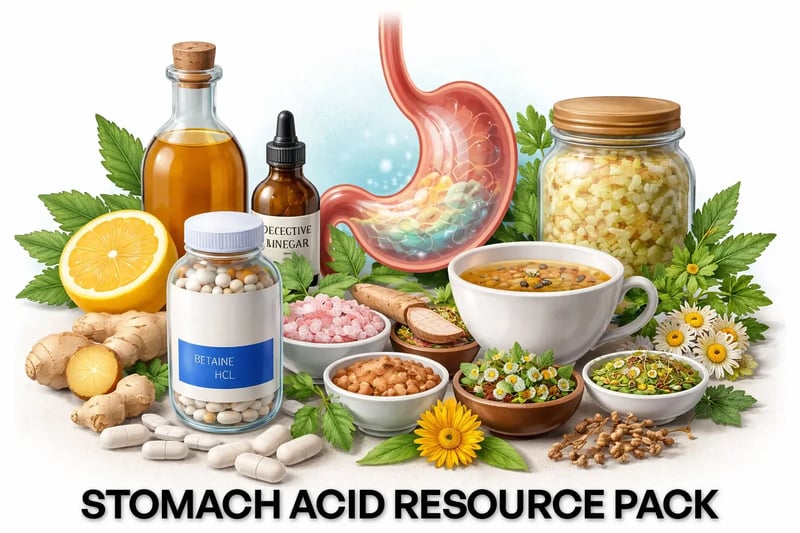
Disclaimer: This information should NOT be taken as medical advice. We do a different HCl tolerance test with clients that is guided by their practitioner at the right time in their healing journey, but this is a great resource and some info provided is credit to Dr Jockers.
Note: This should NOT be done if you have active heartburn, reflux, gastritis or GERD. This would be contraindicated on a PPI as well. We advise working with a practitioner to ween off proton pump inhibitors while doing upper GI healing and then begin this test 2 weeks after you’re symptom free.
The Betaine HCL Challenge Test
This is a very reliable test you can perform if you have the symptoms above and failed the Baking soda test.
🌟 It will cost you a bottle of Hydro-zyme Betaine HCL, which you will probably need anyways to help you restore HCL levels if they truly are low.
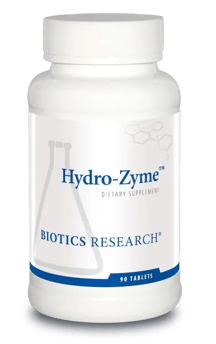
To perform the test do the following:
- Buy some Betaine HCL with pepsin (we use Hydrozyme by Biotics Research to start the test, can be purchased in our Fullscript practitioner account)
- Eat a high protein meal of at least 6 ounces of meat (you can have veggies too)
- In the middle of the meal (never in the beginning) take 1 Hydrozyme Betaine HCL pill
- Finish the meal and observe what you notice.
Possible Outcomes:
- You Don’t Notice Anything: If you do not notice any difference it is most likely that you have low stomach acid levels.
- You Notice Indigestion: If you notice a burning, hotness or heaviness in your chest then these are signs you have adequate stomach acid levels.
It is best to do this test 2-3 times in order to make sure you aren’t getting a false positive. There are 3 main reasons for someone getting a possible false positive.
- Didn’t Consume Enough Protein: If it is a relatively low protein meal, you won’t need much HCL and therefore the supplement can cause too much of an increase.
- Took the Capsule Before the Meal: This will almost always cause indigestion as your body isn’t ready for the supplement.
- Have Esophageal Sphincter Dysfunction: For some individuals, they may have a hiatal hernia or poor contractile activity of the esophageal sphincter that can cause an increase in indigestion like symptoms. It is always good to get a medical exam to rule these things out before doing the test if possible.
After getting 2-3 positive tests in a row, begin using the HCL supplement with the protocol below along with the other ways I have shared to improve your stomach acid levels.
If You Don’t Suffer From Acid Reflux:
Take HCl mid-meal, after at least a few bites of your food. Begin by taking 1 HCl supplement (150-mg betaine hydrochloride tablet) per meal. As long as you don’t feel adverse digestive symptoms, continue taking 1 HCl with every meal for 3 days and then increase the dose to 2 per meal.
Continue taking 2 per meal for 3 days and, as long as no adverse digestive symptoms have arisen, then increase the dose to 3 per meal.
Continue taking 3 per meal for 3 days and then, if no adverse digestive symptoms, increase the dose to 4 per meal for 3 days.
When you get to 5 of the 150-mg tablet formula per meal, if no adverse symptom, switch to a higher-dose formula. This will keep the pill count down and is more economical.
Higher dose capsules we like are Metagest by Metagenics or Betaine Plus HP by Biotics Research.
The maximum dosage is 6 higher-dose tablets (no more than 4,200 mg)
If and when any adverse digestive symptoms arise, cut back the dose to the previous dose where there were no adverse symptoms present.
For example, if at four 150-mg tablets per meal there are no symptoms, but when the dose is increased to five 150-mg tablets per meal there are adverse digestive symptoms, then go back to 4/meal.
If no adverse digestive symptoms are present at that point, 4/meal is the optimal dose.
Over time, and as the body increases its own capacity to produce HCl, that dose may also begin to trigger symptoms, which is the indication that it is time to go reduce the dose again, in this example, to 3/meal.
TIPS:
- It is critical to find your upper threshold (the highest dose you can handle) in order to ensure you are fully digesting and absorbing your food.
- At some point, you will likely determine that a particular dose is too much for you. For some, this may be a feeling of warmth in the stomach or chest, or a heartburn sensation. For others, too much supplemental HCl causes a gurgling feeling in the stomach or throat, gastric distress, or other type of digestive reaction. Once you find your upper threshold, back down to the next lowest dose you were previously taking. Do not stop until you find your upper threshold.
- If you get immediate burning from HCl, stop it immediately and let your practitioner know. Preliminary stomach healing may be necessary. This is not an indicator that you don’t need HCl but rather that healing must take place first.
- If this discomfort is intense, you can take 1 teaspoon baking soda in water to reduce discomfort.
- If you are eating a smaller snack-like meal or a low protein meal, you will likely need to lower your HCl dose.
Over time your dosage may need to be adjusted – As you increase absorption and maintain a state of “rest and digest” when you eat, you will likely need less supplemental HCl.
If you feel a reaction at your usual dose, decrease by one until you find the dose that is comfortable. Conversely, if you are under stress, you may need to increase your HCl dose to ensure proper digestion.
If 4 caps induces indigestion, then take 3 caps with your larger protein meals (not protein shakes or broth – only meals with meat and protein).
Once you begin feeling indigestion with 3 caps, drop it to 2, etc
8 Sneaky Signs Of Low Stomach Acid
Most commonly we think about heartburn, reflux or GERD being too much stomach acid, but in most cases it is actually too little stomach acid and that places pressure on the upper esophageal sphincter which can lead to the valve opening and gastric juice burning the esophagus.
Here I am discussing the sneaky signs and symptoms beyond the traditional heartburn/reflux/GERD.
See we need the proper amount of stomach acid to break down food so we can properly digest it, especially proteins.
1️⃣ Trouble Digesting Meat 🥩
People with low stomach acid levels struggle to digest meat and other protein foods. It’s for this reason that you may feel tired, dizzy or nauseous after eating meat.
2️⃣ Gas and Bloating After Eating 💨
This is usually a sign that your digestive system is not functioning properly. It could also indicate an excessive growth of bacteria.
3️⃣ Nutritional Deficiencies 👎🏼
Does your diet have all essential nutrients but tests show you’re nutrient deficient? Low stomach acid levels may be hindering the absorption of nutrients into your body.
4️⃣ Skin Problems Such as Acne 😩
A healthy gut helps keep your skin healthy. Unfortunately, low stomach acid leads to excessive bacteria growth, which can cause skin issues. This explains why 40 percent of people with acne have low stomach acid, according to research.
5️⃣ Leaky Gut Syndrome 🐳
If you’re a health enthusiast, you’ve noticed that leaky gut syndrome is getting a lot of attention lately. Well, you’re prone to this condition when stomach acid levels are low, because your body will accumulate bacteria and toxins.
6️⃣ Undigested Food in Stools 💩
There’s a very high chance you have low stomach acid if you can see undigested food in your stool. This can lead to low energy, since you’re not getting enough of the nutrients from the food you eat.
7️⃣ Hair Loss in Women 💇🏻♀️
Most times, we lose hair due to a deficiency in B vitamins. You should also look out for other signs of B vitamin deficiency, such as brittle nails, fatigue, shortness of breath, dizziness, confusion, skin rash, weakness, numbness, and a loss of memory. The symptoms of vitamin B deficiency vary depending on the type of vitamin B deficiency.
The body needs a certain amount of each type of vitamin B to function well and B12 requires special proteins and stomach acid to be adequately absorbed in the small bowel or terminal ileum, which is the last part of the small bowel before connecting to the colon.
8️⃣ Diarrhea or Constipation 🧻
Again, this has to do with the overgrowth of bad bacteria. When your stomach has lots of bad bacteria and low amounts of friendly bacteria, you’re likely to suffer constipation, diarrhea and bloating.
What Causes Low Stomach Acid?
✅ High-stress levels: Stress tends to reduce the production of stomach acid.
✅ Aging: The stomach produces less stomach acid as we grow older.
✅ Stomach surgery: Your stomach may start producing less acid after a stomach surgery.
✅ Medication: Taking antacids and other meds for digestive problems can lead to low stomach acid levels.
✅ High sugar intake: A diet that’s high in sugar can lower your stomach acid levels.
How To Increase Stomach Acid Naturally
There are various, natural ways to naturally improve HCl and upper digestive function. None of the following are suitable if you suffer from gastritis or ulcers.
Bitter herbs such as gentian, globe artichoke, hops and dandelion root are some of the safest and most effective herbs at stimulating gastric acid. Ginger is also a great digestive stimulant.
They work most effectively in tincture form so they’re best obtained from a qualified practitioner.
If you have only access to the dried herbs, make an infusion of pure dandelion root (check the ingredients as often if you buy this in granule form they add sugar and dairy) – 1 tsp per cup and drink ½ cup, warm, 20 minutes before meals.
A simple Ayurvedic remedy is to slowly chew on a thin slice of fresh ginger with a pinch of rock salt 5-10 minutes before meals.
Apple cider vinegar or lemon: these are very helpful in the short term to acidify your stomach environment. They’re best sipped with meals or right at the beginning of a meal. 1-2 tsp apple cider vinegar or lemon juice in a small glass of water.
Apple cider vinegar and lemon are both very acidic and in the long term they can damage the enamel on your teeth. To minimize this, sip them through a straw.
Zinc is necessary to produce carbonic anhydrase, an enzyme involved in gastric acid production.
Avoid drinking large amounts of water with meals as this will dilute your gastric juices. Swap the water for gelatine and mineral-rich home-made bone broth. The gelatine in it stimulates digestive juices and helps with protein digestion.
Eat the protein portion of the meal first. Amino acids (the building blocks of protein) stimulate gastric acid release.
Eat in a peaceful, stress-free environment, enjoying tasty food. The smell and anticipation of food triggers gastric acid release.
Chew your food thoroughly as this primes your stomach for digestion.
Start your meal with a small salad of bitter leaves such as rocket, dandelion leaves from the garden or radicchio.
Gentian
Burdock root
Dandelion
Artichoke leaf
Wormwood
Motherwort
Chamomile
Always add some acid to your meals in the form of lemon or vinaigrettes and fermented vegetables.
There are also ways to supplement with betaine hydrochloride and pepsin.
This should be done with a qualified practitioner as some people do not tolerate this well, which can be an indication of H Pylori - so we would want to eradicate that FIRST and build up the stomach acid as this lives and thrives in the GI tract if stomach acid is low.
What To Do Next?
Schedule a free Root Cause Discovery Call with our team so we can help you fix what’s been ignored for years — step by step.