

Thomas Wilkinson - The Dopamine Chair: Can This Device Fix Anxiety, Sleep & Addiction?
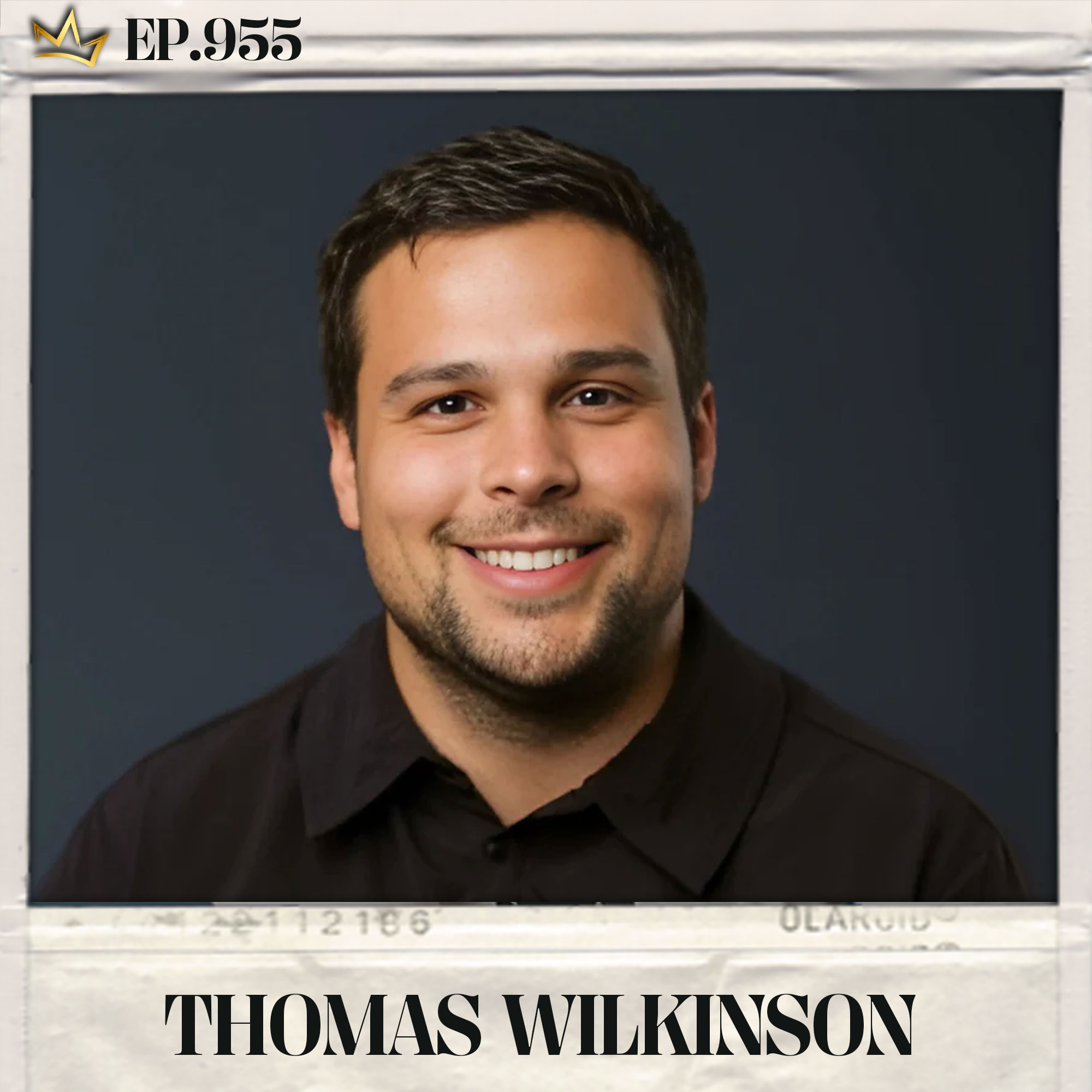
EPISODE DESCRIPTION:
What if boosting dopamine didn’t require medication?
In this episode of The Health Revival Show, Liz Roman and Becca Chilczenkowski sit down with Thomas Wilkinson, founder of NeuroNova, to discuss a fascinating new technology designed to stimulate dopamine naturally.
After the global spike in anxiety, depression, addiction, and sleep disorders following COVID, researchers have been searching for non-pharmaceutical solutions to regulate brain chemistry.
Enter the NeuroNova Dopamine Chair.
Using targeted vibration along the spine, the device stimulates mechanoreceptors that signal the brain to release dopamine — increasing levels to 200% of baseline for several hours.
In this conversation we cover:
• Why dopamine is essential for motivation, learning, and emotional regulation
• The hidden mental health epidemic after COVID
• Why constant digital stimulation may be wrecking our dopamine systems
• How this technology may help anxiety, addiction recovery, sleep issues, and focus
• The surprising effects researchers are seeing in deep sleep and nervous system regulation
• What dopamine actually does in the brain (and why it’s often misunderstood)
If you’ve ever struggled with anxiety, burnout, addiction recovery, poor sleep, or that “flat” feeling where nothing excites you anymore, this conversation may change how you think about mental health.
This episode explores one of the most intriguing emerging tools in neuromodulation and dopamine regulation.
Connect with Thomas - Instagram
Check out the Dopamine Chair - Use Code: "fitmom" for 10% off
***
CONNECT:
🏆 Work With Us: Revive & Thrive Program
🔗 Connect With Liz: Instagram | TikTok | YouTube
🔗 Connect With Becca: Instagram | TikTok | YouTube
🇺🇸 Private Community: FitMom Society
▶️ Have Questions? Ask Here
***
SAY THANKS:
***
produced by: 📣 brandhard
Transcript:
Liz Roman: [00:00:00] Welcome back to the Health Revival Show. Today we have Thomas Wilkinson. He is the founder and CEO of Neuro Nova, and so we met him at the Vibrant Health Summit last September. It's taken us this long to get on a podcast because of very busy schedules, and we're excited to chat about, I'm just gonna call it the Dopamine Chair.
Maybe I'm off point there. We're gonna call it the dopamine chair, and for all of you who feel this anhedonia, post COVID flat effect is kind of what we talk about with some of our clients in our practice. This could definitely be for you, or if you are someone struggling with anxiety, depression, alcohol withdrawal, opioid withdrawal, addictions.
We know that dopamine is this neurotransmitter that, you know, is kind of more on that addictive side. So I'm excited to dive in today. So welcome to the show. We'll just let you kick it off by introducing yourself to our audience. What is your background and what led you to start Neuro Nova and essentially invent this?
Thomas Wilkinson: Well, so first of all, glad to be here and, uh, I'm certainly not [00:01:00] going to claim that I'm smart enough to, uh, come up with this technology, but. I have been a long time entrepreneur. I, I started, um, as a student in mechanical engineering and I started my first business while in school. This was back in 20 14, 20 14.
Um, and so I've just fallen in love with starting businesses and, um, my, my expertise has been taking technology that, uh, professors have developed at universities and helping them come to life. So that's kind of how I got started on this path. But, uh, neuro Nova is the most exciting business that I've ever been a part of, and it's not even close.
Um, and the reason is, is the impact is so huge and, and, um, the, the mental lives that it can bless. Um. Let's face it, after COVID, we're, we're in tough shape. If you've done any research on anxiety and mental health, um, we're, we're not in a good spot. And so I'm really excited and, and [00:02:00] really proud to be a part of a business.
It's trying to make that better and do it in an, in a non-invasive and non-pharmacological way. Uh, and that's what really drew me to this technology. Um. And we can dive into it now or later if you want to, exactly how it works. But I, I lost a, a close family member to an overdose on methadone, and so this was about 10 years ago.
Um, and so I've, I've. Always wondered. Um, well, I guess we should educate the Audi audience a little bit. If you have a friend or family member that goes through addiction recovery, um, what happens is your brain has artificially high dopamine levels when you're on a substance. So when you abruptly stop taking heroin or whatever, your brain.
The levels of dopamine plummet, and that's really painful and it causes withdrawals and sometimes can be fatal. Um, and so what happens is, is uh, the current method has been to give that person methadone, which is, um, another drug. So [00:03:00] you're treating somebody with a substance abuse problem with another substance, uh, to come off the withdrawals, but then they become addicted to that new substance.
It turns out one of the neuroscientists at the university here at in Utah, um, had a family member go through the same thing and he was smart enough to do something about it. And so he said, look, my new life's mission is to help help the brain produce dopamine in a non-invasive, non-pharmacological way.
Uh, and it took years with zero progress, seven years exactly. Um, with, with zero progress. Um, they had a bit of a penicillin moment in 2019 and, um, that's why we're where we're at today.
Becca Chilcz: So can you explain what the Neuro Nova chair does and essentially who you are seeing it used for, how it's helping just so that people understand what we're talking about?
Thomas Wilkinson: Yeah, absolutely. That's probably, uh, really helpful. So what the Neuro [00:04:00] Nova chair is doing is it's sending, uh, gentle vibration up your spine and we're targeting. Nerve endings in your spine called mechanoreceptors. There's little nerves that are sensitive to mechanical stimulation, and after about seven minutes, what we see in the trials is um, your brain should produce about 200% of baseline dopamine, and that lasts for about three hours.
We saw in our NIH trials, uh, a 60% decrease in generalized anxiety versus placebo when people were coming off of opiates. So really strong. And, and these were double-blind, placebo controlled, so like. Um, so the very strong data, and so the NIH funded another three and a half million dollars to do a multi-state trial as we take this through the FDA.
And so that's the goal eventually to have insurance reimbursed for this, but it was breakthrough tech and yeah, the story of how the scientists figured it out is kind of cool. If you guys want me to share, I can share.
Becca Chilcz: We like cool [00:05:00] stories.
Thomas Wilkinson: So they're in the lab. Picture this just like five, I don't wanna say nerdy, but just the smartest people you know, and neuroscientists, nothing's working.
And one of the guys like, Hey, I noticed 10 years ago when we were working with these opiate addicts doing like back adjustments. Some of them would report that they would have their anxiety alleviated. What if we tried. Targeting nerve endings in the spine to see if that does anything. And everyone laughed at him.
They thought, you are crazy. This is woo woo, whatever. And he's like, well, nothing else is worthless. Try it. So they tried vibration and they guessed 80 hertz. So they rigged up these rodents with these machines, hit them with 80 hertz. Cut their brain open 200% of baseline dopamine and they couldn't believe it.
What, what's more impressive or more cool [00:06:00] is they tried over a hundred frequencies after that and it was nothing. So they could have tried 10 or 15 in a row and thought, okay, this is another dead end. You're crazy, and moved on. Uh, so I thought it was. Kind of like a penicillin moment. I don't know if you guys know how they discovered penicillin, but it was like an accident.
Somebody brought a moldy sandwich into the lab and got into the Petri dish. So kinda cool.
Becca Chilcz: Yeah. Yeah. I mean it's, I feel like it's a God's intervention moment, you know, of picking the right thing and, and it becoming what it is meant to be. Um, can you explain, just because the immediate thought I have is like a vibration plate, right?
So. A lot of females use them for lymphatic drainage. I don't see men use them as well, but women try to do anything to lose weight. So, um, I think of like, you know, that I feel really good after mine. So maybe it is having some small effect on dopamine. Um, but explain, 'cause I know, I believe I talked to you guys at the Vibrant Summit about that.
How is, why do you have to sit on it? Like why is it [00:07:00] different than standing vibration?
Thomas Wilkinson: Right. So, um, 80 Hertz is a very, very rapid. Frequency that's 80 times a second. And we actually tried to do it with people standing up. There's like too many different variables to get it. 'cause we're actually targeting, like right here in your neck, that's the highest concentration of these, uh, nerve endings.
And so what's actually happening is we have an invent, a new waveform. So have you ever seen, uh, a lake or on the ocean when two waves hit each other, a third one's created, it's a little bit bigger. That's actually what we're doing. So you're only getting about 25 hertz on one side, 25 and a half on the other.
And those two ways combine and create a third wave that's embedded into your spine. And you can't do it if that person is standing up. And from what I understand, vibe plates around 40 hertz. Um, if you try to get 80 hertz to somebody's spine with them standing up, you'd probably kill 'em.
Becca Chilcz: Oh,
Thomas Wilkinson: I dunno. Like [00:08:00] it's, it's, it's that intense.
Becca Chilcz: Wow. Because I sat on it when I was there and I didn't notice. It was like super intense feeling when you're sitting on it.
Thomas Wilkinson: It's not,
Becca Chilcz: but it's
Thomas Wilkinson: crazy. It's not when you Yeah, it's not, when you sit on it, it's, it's, but if you're, if you're standing all the way up, you just can't, to get 80 hertz up to that level, it would have to be so intense that it would not work.
Becca Chilcz: Got it. I understand what you're saying.
Liz Roman: Mm-hmm.
Becca Chilcz: I, I'm just fascinated sometimes with the way that brains work of people that invent things like this.
Liz Roman: And I think it's really cool that, you know, obviously the research is there and you're seeing it. I, I wanna go back to what you mentioned earlier in terms of the post COVID, you know, the epidemic that we're seeing with anxiety and depression.
I remember, and I, to be transparent, I have not looked at the stats recently, but back in 2021, things were coming out that we were seeing over a 400% increase. And I can only imagine what it's been since then and that's reported. People saying, I feel more depressed, I feel more anxious because obviously you locked everybody and shut the world [00:09:00] down, and we need that connection with people.
But more importantly, I would love for you to kind of expand upon that and what you all have seen, because in our practice we're seeing a lot of what we call anhedonia, where people just. Aren't excited about life. It's kind of this flat effect essentially. And they might be taking hormones, they might be taking peptides, they might be doing all the right things with their diet or exercise or you know, whatever.
But they feel almost like they're being pulled through sand, if that makes sense. Like everything just feels challenging. It's not anything that's bringing them joy. So when we talk about all of these really cool tools, what is the thing that people really need to understand about dopamine? Because our understanding is that you can't feel.
The other things in terms of those hormones or you know, pep peptides. I was gonna say something else. I don't dunno what I was gonna say. Peptides or, you know, the things that you are doing if you can't field dopamine. So I'd love for you to expand upon that because we are seeing even more, even on like [00:10:00] genetic reports and different things, if the GABA glutamate balance is off, you could take all the supplements till the cows come home, but are you even able to utilize them if you don't feel dopamine?
Thomas Wilkinson: Great question. Have you ever read the book, the Anxious Generation?
Liz Roman: I have not. No. Dopamine is one that is in my Dopamine nation. Dopamine Nation. Yeah. That was
Thomas Wilkinson: by Dr. Anna Lemke. But the other is, is called the Anxious Generation. And, and it's actually pretty interesting as well. I, I'd recommend reading both of them.
Um, the, the simple fact of the matter is our brains were not designed. Um, to get hit with notifications constantly throughout the day. They weren't designed for social media, you know, for the instant, like, gratification of, you know, posting something and then, uh, getting likes weren't designed to use ai.
And so, um, I think it's a result of, uh, our world changing and how we engage with world, uh, changing [00:11:00] significantly. Um. But dopamine isn't, the isn't a, a bad thing. Like we, we need dopamine so that we can, you know, have motivation and, um, so we can learn. Um, and I think one misconception around dopamine is it is, is that it's like supposed to be this feel good neurotransmitter, which, which it, it actually isn't.
Um, it, it's more, it's more a reward or. It primes your brain to, to be able to learn. I, I think of it as kind of like a lubricant. Um, if, if you, um, if you don't have enough of it in your brain, you can't create new neural pathways to learn new behaviors. And so yeah, we can dive deeper into the science on that match.
I wish Dr. Bells was on the call and he could kind of go again. I'm, I'm not a PhD, but um, Dr. Bells can go deep into that. But genuinely [00:12:00] I'm very concerned with, um, the people that we're seeing. Um, just, and yeah, that's, it's, it's, it's sad to see where we're at as a society, but also really exciting to see the results that people are getting after using the chair and just getting back to a homeostasis, right.
That it's not, um. When, when you're using social media or drugs or alcohol or whatever to get your fix of dopamine, you're getting like this artificial high. And then after you're done using it, you get a crash and you crash below baseline. And so you're, when you're feeling anxiety, it's because you're, you have this gap between.
Your homeostasis level of dopamine and, and what you actually have. Um, and, and what's different about what we're doing is we're doing what's called a physiological release of dopamine. So it's natural. And so you actually get like a stacking effect and you're kind of climbing your way out of that rut.
And what we wanna do is get you back to a level of homeostasis where you can feel [00:13:00] calm again.
Liz Roman: So, I don't know if this is appropriate, but I have to ask in terms of our youth and, you know, teenagers and children, because I think that there's a lot of a DHD diagnosis, there's a lot of, you know, the anxiety and mood dysregulation that we're seeing.
How have you used this with, you know, children or teens? And if so, what have you seen on that? Because they're just bombarded. Even the schools now are using all tablets and, you know, computers and, you know, all of that. So it's just our learning styles have completely shifted as well. So they're just behind these screens all the time.
Thomas Wilkinson: Yeah. Um, we've, we've seen incredible results. Um, you called it the dopamine share. We actually have a. Um, a children's hospital in southern Utah. They call it the chill Chair. The kids call it that. Um, it just helps 'em regulate. Um, and we're seeing a lot of traction, uh, getting our chairs into the school systems because, because of that, um, I think, [00:14:00] and this might be a hot take, but the fact that we're prescribing Adderall to children is we're basically microdosing methamphetamines to kids.
Um, I think that's insane. Um, and. You're basically creating an addict for life because they're gonna be dependent on that forever. Um, my personal experience, and, you know, the reason I jumped all in on this because I, I purchased the technology from the university and partnered with the PhDs, but I had my own issue that I was trying to solve.
Like I had a rough childhood, that's why my brother got into drugs. But my issue was anxiety. And, you know, of course the first thing I was prescribed, um, when I, you know, went into my doctor was. You got all these issues, so we're gonna give you Adderall and citalopram and gabapentin and Klonopin, and I'm a 21-year-old kid and I'm like, I don't know.
I'm just in a lot of pain, so, okay. Whatever you say. And I didn't wanna tell my mom or my family about it 'cause I, we just lost my brother and I, you know, I didn't want to be [00:15:00] another burden and so I just did what I thought everyone was doing. Um, and the problem is that the medication worked, but the side effects were terrible.
Um, and so I tried to get off the, those meds at least a dozen times and I couldn't do it. It was affecting my relationships. Um, basically numbed me and I wanted to be present and there for my kids. I have three kids, um, and. So I, I saw this tech, I, I had the, you know, obviously the experience with my brother and I was like, okay, I'm seeing all these clinical trials.
I'm gonna try it for myself and see if it, if, if it works for me. And it was life changing. I was, you know, able to, to, um, transition from those meds, meds in a matter of a few days. And so I, I just knew at that point I was all in and, you know, this is now my, my Life mission and I'm excited to share it with the world.
It's
Becca Chilcz: amazing. So I'd love for, and you know, I know [00:16:00] we mentioned having the doctor, something that we've seen a lot of, 'cause we do work a lot with autoimmune and really complex chronic conditions and how much dopamine is an immune messenger as well that people don't realize. And how it affects like inflammatory pathways and people being on these drugs their entire lives.
Because I think a lot of times too. People think that they need to be so productive all the time that a lot of people on these medications don't actually need these medications. Like they just, they think that, oh, I'm operating at such a higher level on them. That I should be here all the time, right?
Like, this is what should be normal when No, it's not. Like we probably just need to get, do a really hard work at getting rid of some distractions and like focusing ourselves on things and having realistic expectations of ourselves on things. But then you do create, like any medication, you create dependency on it.
You create, you need higher doses of it, right? It, the body will adapt to [00:17:00] it over time. But what we're seeing too is that. The combination of a lot of these hard medications that people were put on is teenagers, Accutane and Adderall, and these things that are just so chemically potent are creating higher risk of autoimmune conditions and like more.
Layered factors to it. Um, so I would love for you to talk a little bit around with the chair and using of the chair. How often are you seeing people need to use it? Are, what kind of outcomes are you seeing? How quick? Um, my, my brain also obviously goes to Parkinson's. 'cause of my dad, um, has Parkinson's, so like.
Application wise, what are you seeing with the chair in terms of need and duration with some of these things?
Thomas Wilkinson: Great question. So in, in our, in our clinical trials, we have seven of them. We see a significant impact. After, uh, 10 sessions, you're seeing a 60% decrease in generalized anxiety. Um, but we actually have a lot of users that use it [00:18:00] daily.
Um, I, I use it every day because. Like, I think I talked about earlier, dopamine is context dependent. It's the learning chemical. And so what I'm trying to do is I'm trying to like improve the habits that I have each day. Um, and 'cause I, I guess that's just, I'm always trying to improve upon myself. So I'll do it first thing when I get up.
Um, and I'll do a meditation and I'll write down what I'm grateful for and I go to the gym. Then when I get home at night. Get the kids down, all the things. And then I sit on it right before bed, and then I write down the three thing, three wins I had that day and the three wins I'm gonna have the next day and then I'm out.
And what's really cool is we see, um, the, one of the clinical trials, we see a significant impact on sleep latency. So it used to take, i, I track on my ordering, it used to take me an hour and a half to fall asleep. Now, now I'm in between 10 and 17 minutes. I'm out. Um, which was really cool, but. [00:19:00] Um, this is an interesting story.
I was in Arizona not too long ago and we haven't done a clinical trial on this part of sleep yet, but I was, uh, I have a venture capital fund and so I was just talking to a guy about my fund and he is like, Hey, I noticed you have this AA ring. I'm a sleep specialist. Like that is my thing. I'm an md. I think that the number one contributor to cognitive decline is actually a lack of deep sleep.
Would you mind if I look at your data and I said. Okay, so I hand him my phone and he looks at my data. And he's like scrolling through it. And I just see his eyes get big and I'm like, what? What's going on? He's like, dude, I have to be honest with you, I've never seen anything like this. How are you getting over two hours of deep sleep every night?
Like how is, how's it like consistently over 25% of your total sleep? And I said, I actually, I don't know, but my sleeve's been great. I invested in this company and you know, I run this company called Neuro Nova. This is what it is. And he is like. [00:20:00] Wait a second. I have to talk to your PhD, your, your inventor right now.
So we call Dr. Bills and they're on the phone just giddy, like talking about the science and, and, and Dr. Bills is like, yeah, Tom, I forgot to tell you about this. We actually saw with deep sleep, significant impacts. We just haven't published this study yet. Um. And, um, anyway, so they get off the phone and the guy looks at me.
He is like, I have to be honest with you this, if this does what I think it's doing, this will be the biggest company I'll see in my lifetime. Um, because of the way it's able to help people with their deep sleep. So then I send it to all the people I know that struggle with deep sleep. Um, I sent it to my mom.
I send it to, you know, this family in Midway going from about only getting 30 minutes of deep sleep a night to now over an hour and a half a night. So really cool stuff around sleep. We talked about addiction recovery, we talked about anxiety, P-T-S-D-O-C-D, pain management. Um, and then of course [00:21:00] Parkinson's is, is one that's really interesting.
We don't have, um, our clinical trials done with that yet, but we're seeing anecdotal evidence that it's being really helpful. Um, and one that. I feel, I guess at this point good talking about we've had enough mothers of kids with autism, um, send us testimonials. Like I've never seen my son smile so much in his life, like just helping them regulate their emotions.
It's been incredible to see that. I'm excited to do some trials on that, to get some data back, but it, it truly is breakthrough technology and I'm just anyway, getting excited about it, but.
Liz Roman: How
Becca Chilcz: much does the chair weigh? I'm just curious.
Thomas Wilkinson: I think it's like 30 pounds.
Liz Roman: Oh, okay. That's not bad. Yeah, so I mean, I wanted to talk a little bit about, like you were saying, you know that you're using it a couple times a day.
Just everything that is even on the website, like. Five times a week, 10 minutes. Anybody [00:22:00] can do this, right? Very easy to implement. You could use it for your entire family for, again, a variety of things that you're talking about here. I would even love to know if you've seen anything more on the gut side.
So obviously we know that our gut microbiome has a big influence and gut brain access all these things on our neural transmitters. Have you seen anything in, maybe you haven't studied this, or maybe you have. Relation to things like irritable, irritable bowel, or IBD, Crohn's Colitis, chronic bloating, just digestive issues in general and how this has maybe helped.
Obviously, you know, I'm the poop queen, so I'm always talking to people, you know, constipation side of things, but I several cases of people who have done all the things and it's fine. Why do you still struggle with the bloating or the distension? And I think when we go back to the gut brain connection, the neurological, even like sensations through the vagus nerve and the spinal cord and everything, there's gotta be a missing link here.
So just really curious if [00:23:00] you've seen anything on the gut side.
Thomas Wilkinson: So there probably is. I, um, we don't have data on this yet, but Dr. Bes, um, w would probably be able to comment more on this. Uh, what I've personally seen, not necessarily on the gut side 'cause I haven't had gut, uh, issues in necessarily. Um, but I have lost almost 30 pounds of fat because it's helped me.
Um, so when I do my meditation. Obviously I have the dopamine in my brain. What I'm trying to do is rewire my subconscious about my relationship with food. Um, and it's really helped me be more disciplined, uh, from that aspect. So, um, I don't, you know, for me that's my, been my personal experience with it. Um, but that's probably a, a deeper question for Dr.
Bills. But, you know, the science would say probably,
Liz Roman: yeah. I mean, I would love to, if you can circle back and find that answer so that we can, you know, share that in a future podcast. Because again, when you think about the reward mechanism for people, [00:24:00] that's why they bingey. They're ultimately trying to find pleasure and happiness and joy at the same time suppress other feelings and emotions.
Right? And so whether that's showing up as alcohol, drugs, binge eating or whatever it could be in terms of scrolling and all the things that we have these days. Because like you said, we were never really meant to live in this environment where we're behind screens all the time. We're not outside in the sun, we're not searching for our food, and you know, we just have.
Uber Eats and anything French fried readily available to you that you want, it's crazy. And so a lot of that has obviously shifted how our physiology is working in this environment, which we could all probably agree not very well considering the pandemic that we have of obesity. So yeah, I would love for you to follow up on that and give us a little bit more context if you can from him, because I do think that for some individuals.
On that side of the addiction for food and binging, this could be really [00:25:00] powerful, and obviously that impacts the gut because it's such an inflammatory event to binge.
Thomas Wilkinson: I couldn't agree more. And you said something that stood out to me that we've gotten feedback from, from our customers, um, that have families is that, you know, this just having one in your home to help regulate, um, everyone in the family.
I mean, it's less than $200 a month, but you've got a family in Arizona, you know, dad struggles anxiety. Two, the kids struggle with anxiety and they get an. An immense amount of value out of it. Um, and they've got some cool testimonials that they've sent, um, from that. But, um, anyway,
Becca Chilcz: yeah, absolutely. I mean, I, I know my kids always love standing on my vibration plate.
I'm sure they'd love sitting on my, a vibrating chair if I got one. My
Liz Roman: son told me the other day, mom, I'm getting a six pack because Becca got a vibration plate. And I honestly was like, I'm never getting a vibration plate. They're stupid. I have a reel coming out. 'cause I used to be a dancer. I can vibrate my body [00:26:00] pretty well.
So I'm like, you can just do this free or you can do that. And now even my baby who's 13 months goes over, he turns it on. He like gets on it on all fours. So funny. And then he like, like making noises. But yeah, 1, 2, 6 was like,
Thomas Wilkinson: honestly, I put my, I put my 1-year-old on this, on the seat when he's like, like a little dysregulated and it, it is really gentle.
And then he kind of chills him out too. He likes it.
Liz Roman: Yeah. And man, anything to
Becca Chilcz: I know, chill, anything to chill out. I mean, and that's, that's who I feel the worst with with all of this is our kids. Like, I know you have kids. I have two little kids. Liz has two little kids, like. They're just set up for failure at this point in terms of all that they're exposed to and like then you feel like a bad parent because you know, I'm like, you can't watch this.
You can't watch that. You can't, because like I know if you turn on YouTube, you're just gonna scroll and scroll and scroll because like. They don't have the mental capacity to be like, this is wrong, or this is not, you know, and it just, they're, I'm [00:27:00] worried, like genuinely worried about our youth, um, and the world that they're having to grow up in.
Not only because of all of the things that they're exposed to dopamine wise, but also just like the unrealistic expectations that social media now sets in terms of you can't believe anything you see on there. And it's just, I think it's gonna mess with the brain so much more than we even realize already.
Um. I think we're just now starting to see the negative effects of what COVID did. Um, like truly we were talking about it yesterday with our, uh, mentor in terms of, I think I, I was hearing statistics this morning on a podcast. Kids
Thomas Wilkinson: can't read.
Becca Chilcz: Yeah. Kids can't read. 'cause they're just not like, they don't have to basically they like, and, um, one in five.
Adults now is believed to have what's called mast cell activation syndrome, and COVID was believed to kind of like destabilize the immune system in these weird ways that no other virus did. And then also the, you know, pandemic of isolation and not seeing people and the mental health that [00:28:00] kind of repercu cussed from that.
But with this chair, so. I'd love for you to talk a little bit. Obviously it's in, you know, hospitals and it's in health centers and it's, you know, it's not cheap to have and own one of these chairs, but I'd love for you to give people insight into how they can use them. Like you said, less than $200 a month, like you can, I'm actually thinking about running this chair, not only for my house, but I might rent it for my dad first.
But talk to people about what that looks like, where they can find out more information about it and who you would say. I know we've talked about, you know, the top symptoms that it seems to alleviate, but who you would say this is really geared towards when it comes to, you know, the population.
Thomas Wilkinson: Okay. Yeah, absolutely.
Well, um, one thing I wanted to note and, and I'm grateful for you guys for putting on this podcast because I think what you're doing is helping wake us all up because obviously our society went way too far to the, Hey, just take a pill. You're good. And now we're [00:29:00] coming back to wait a minute. Like that's not the only way to treat, you know, certain symptoms and we could do a more holistic, natural way.
Um, and the FDA is actually clearing what are called neuromodulation devices, which is what our chair is, uh, for other neuro neurotransmitters like serotonin. Ours in particular is targeting dopamine. So I'm hopeful. Um, even though it seems dire, I'm hopeful because people are waking up to it. It was painful enough that we're like.
Now we're trying to, to solve the problem. Um, as far as affordability, yes. So we have clinics across the country that have our chair, and you can go there and pay to, you know, have a few sessions. But what we learned is people wanna have it where they're at, either at their workplace or at their home. And so we've created a model that allows people to rent it, to have it their home.
Um, and that's less than $200 a month. Um, and you could even buy it. Um, if you wanna buy it upfront, it's 6,000, or, you know, through a firm, you can, um, do a payment plan through them, which is, you know, less than $200 a month. Um, and then [00:30:00] immense amount of value. What we're seeing is like, who, who? You're going to see the biggest impact for people that struggle with anxiety, uh, or addiction, and then struggle to sleep, and those kind of are the ones that are gonna see an, an impact more readily.
You know, we, we see people that have, um, gone through like intense trauma. They're dealing with a ton of anxiety. You see them sit on the chair and you can watch them change right before your eyes. Really cool. And, and it affects people, you know, a little bit differently. It does. You know, it depends on who you are, but, um, but yeah, if you're dealing with anxiety, um, and acute anxiety as well, um, it's, it's really helpful.
Becca Chilcz: That's amazing. So Neuro Nova is the name of it, I'm assuming? Neuro nova.com.
Thomas Wilkinson: I wish. It's neuro nova co uh com. Yeah,
Becca Chilcz: don't worry. We
Liz Roman: are, we're a.co too.
Thomas Wilkinson: Okay. [00:31:00] Yeah, everyone's always,
Liz Roman: they're always so confused. And I'm like, no, it's co co. It's,
Thomas Wilkinson: no, our ours, ours is neuro nova co.com. We should have done a Neuro Nova Co.
Liz Roman: Oh, uh, okay. We'll put all the links in the show notes. Um, but yeah, going back to what you mentioned around renting, let's talk a little bit more around what you would say. How long, obviously probably person, independent and how severe what they're dealing with. But in general, you were saying earlier, from an anxiety perspective, most people getting 10 uses and feeling really good, feeling really regulated because even on the pharmaceutical side, so using something like a Amadine, which is.
Often used for kind of helping reregulate dopamine bring back homeostasis. It's a short term thing. So obviously in your case you have a longer term, you own the technology, right? That you have a longer term use and you're finding that, and you would recommend that and [00:32:00] probably for severe people you would.
But what would you say someone should plan or budget for if they were gonna rent it three months, six months? Longer majority,
Thomas Wilkinson: at least give it three months and just get as much value add as as you can. What we're seeing, we we're not seeing a lot of people send it back after, you know, after you have it for a month.
It's like, okay, well now how can I optimize? Right? How can I continue to, you know, better my mental health and just help myself regulate? Um, because we all have little habits that we're trying to change, you know, in our lives. And, uh, you know, it's a really useful tool for that. Um, and, and whether or not you have anxiety like.
You may gotten your anxiety under control, but you're still gonna have stressful days. And it's nice after a stressful day just to like, okay, I'm, I need to zone out and, and zen out before I go to bed so I can sleep better. And so, um, you know, most of the time people end up keeping it, but, but it, we wanted to have an option to so that just about anybody could afford it.
And that's my ultimate goal, and I want to get it to that point where it's affordable for [00:33:00] everyone.
Liz Roman: It's fantastic. My last question, 'cause what automatically comes to mind for me, and I've been very open about this on the podcast over the years. I'm a terrible meditator. Like I've had the Muse device in the past and it worked really well.
I got to gamify things, right? Bought a new one. I was so frustrated. I sent it back because it just wasn't like working. And there's nothing more frustrating than something that doesn't work. Right. That's supposed to work. Yeah. So when you're on the chair. Are you allowed to do anything else? Or you just say like, this is your time.
You need to sit zone out. You don't need to be on your phone. Don't be reading a book. Like what are you gonna recommend With the use of the chair,
Thomas Wilkinson: you could probably read a book. I would not recommend being on your phone because you don't wanna reinforce that. Connection there. Um, and so as far as meditation goes, I'm, I'm with you.
I have never been able to meditate in my life until having this chair, and I don't, you know, it, it helps put you into that space where you can go through it, but it [00:34:00] is helpful to have a meditation going, um, so that you're, you know, reinforcing some of those behaviors. So, um. I would try it, like if you guys you have a chance to have one, I would try it and then try a meditation with it.
Um, see if it actually helps you meditate. Um, but I, but you wanna be really intentional with what you do after you do the chair, because you're getting more dopamine for three and a half hours. So you want to reinforce whatever that behavior is. And so I wouldn't sit on the chair and then just go. Watch tv, like you wanna pair it with po positive behaviors, whether it's doing your homework, it's working on your business, it's, you know, connecting with your partner, which has been really helpful for me.
It helps me chill out and I can really connect with my partner in a way that I haven't, you know, my wife in a way haven't been able to do in the past. Um, those are the types of activities that you want to reinforce.
Liz Roman: Fantastic. When I, I'm moving in a few months. When I move, I'll definitely have to rent one for.
A few months just to see. 'cause I think that this
Becca Chilcz: is, I don't get to have deep sleep. I'll be really [00:35:00] curious. I, my deep sleep's usually less than an hour. It's gotten a little bit better, um, with some other hacks. But like, I, I've always struggled with deep sleep and I struggle with fatigue and I struggle with brain fog.
Like those are kind of big things that I've,
Thomas Wilkinson: yeah, I would love to see if it can help you.
Becca Chilcz: Yeah. Yeah,
Liz Roman: well we get one and have your dad sit on it and
Becca Chilcz: Yeah. Yeah, I know that, I think we talked at the, I don't think late stage or later stage Parkinson's. It was something that you guys mentioned was like a huge turnaround.
Thomas Wilkinson: It would be harder, probably later stage, but, um, it'd be interesting to see.
Becca Chilcz: Yeah. I mean, he has pain. He, I'm sure for other things like absolutely could be helpful for him. So, yeah.
Liz Roman: Awesome. Well, yeah, thank you so much. And I think we're gonna get a link in the show notes here if you guys are listening and you wanna use that to go and rent or purchase whatever, uh, everything is below.
And then we'll have our code fit Mom for you as well. And if you like this episode, please share this out because the [00:36:00] more that we can spread the word about these types of devices, again. Not pharmaceutical and not anything that's, you know, major life altering where you have to travel and go get these therapeutics.
You can have this in your home. This is fantastic and I would just say to you, thank you for making it affordable for people. You really break it down by the day. It's just a couple bucks a day for something that can really change your life. So links during the show notes, please if you share it, tag us on social media.
That's how we grow our show. Just found out right before we recorded that we are now a top half percent in the world, which is whoa. Amazing. We've been a top 1% for a long time. This is our sixth year podcasting, so that was really fun. And the only way this has been possible is through our listeners sharing, rating, reviewing, subscribing.
We don't do any ads on the show, so thank you for whoever is doing that. And with that, go and rent yourself a dopamine chair and connect with this company and we hope you guys have a great [00:37:00] day.