

Miguel Bautista - CFS: The Nervous System Link Nobody Explains
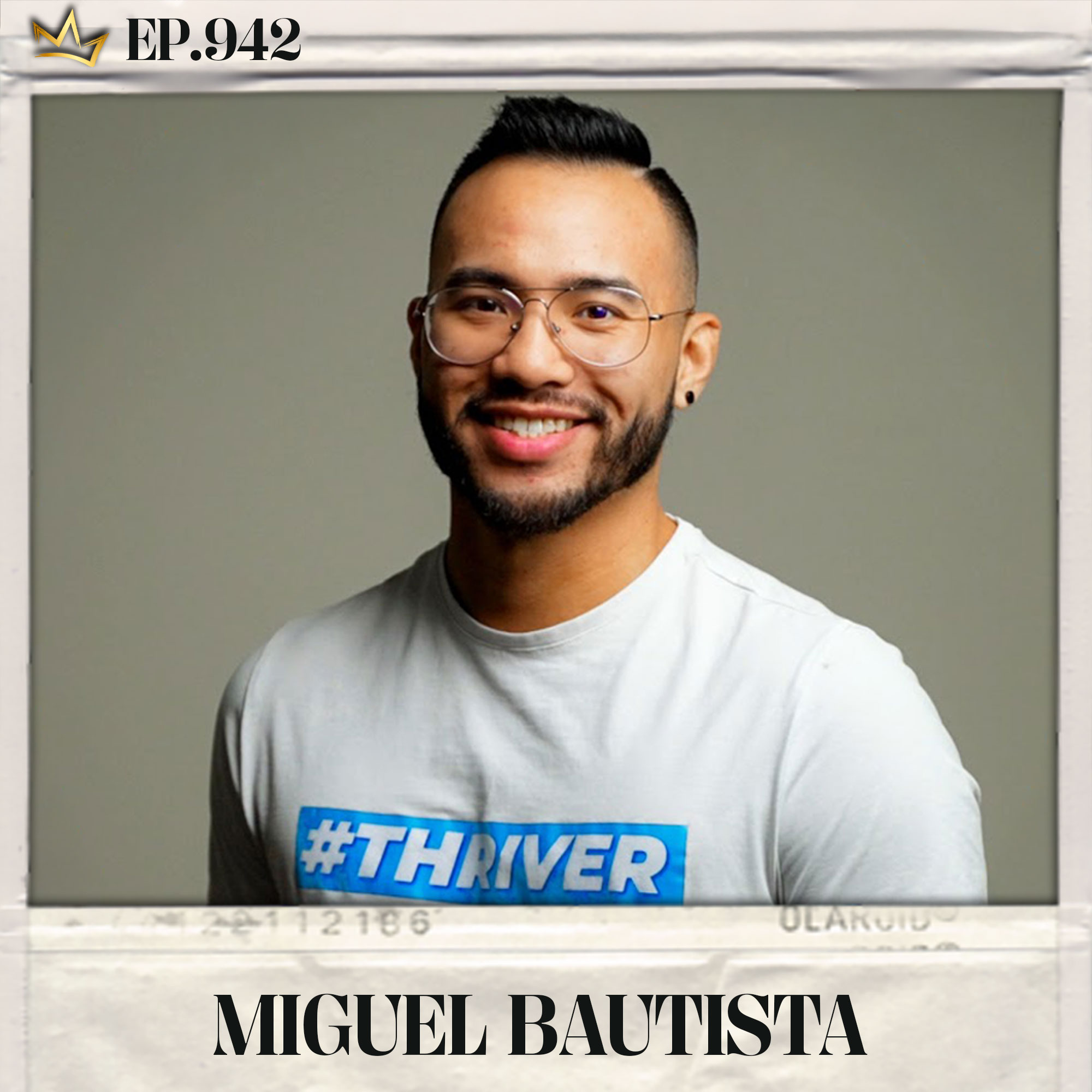
EPISODE DESCRIPTION:
Chronic fatigue. Nervous system dysregulation. Normal labs… but you still feel terrible.
In this episode, we interview CFS Recovery founder Miguel Bautista, who went from bedridden and hospitalized with 50+ symptoms to full recovery using neuroplasticity and nervous system retraining.
We break down why many chronic illness protocols fail, how symptom “whack-a-mole” keeps people stuck, and the critical difference between symptom suppression and true resilience recovery.
You’ll learn about the stress threshold model, the magnifying glass effect of fear and symptom tracking, and why many high-achieving personalities are more vulnerable to nervous system collapse after prolonged stress or illness.
If you’re dealing with chronic fatigue syndrome, long COVID, burnout, or mystery symptoms with normal labs — this episode will change how you see healing.
Connect with Miguel: Instagram | Youtube
Free Gift: Recovery Roadmap Kit
***
CONNECT:
🏆 Work With Us: Revive & Thrive Program
🔗 Connect With Liz: Instagram | TikTok | YouTube
🔗 Connect With Becca: Instagram | TikTok | YouTube
🇺🇸 Private Community: FitMom Society
▶️ Have Questions? Ask Here
***
SAY THANKS:
***
produced by: 📣 brandhard
Transcript:
Becca: [00:00:00] Welcome back to the Health Revival Show. We have an amazing interview today that I think is going to speak to many people listening because we know personally our clients deal with this a lot and anyone that's dealing with. Chronic illness, long COVID, chronic pain, chronic fatigue syndrome. We're seeing more and more now because of COVID, I think, and I'm sure we'll get into that.
And how COVID affected the nervous system and affected the immune system differently than any other virus we've seen. But we have Miguel Battista today who is the founder of CFS Recovery. Fully recovered himself from debilitating symptoms with a lot of the methods that he uses now with his clients.
Miguel, thank you so much for joining us. Can you introduce yourself and give a little bit of background, maybe your story of how you got into all of this?
Miguel: Yeah, absolutely. Hello, Liz and Becca. First off, I just want to thank you guys so much for having me on. I've listened to your show and what you're building here is really something special and I just wanted to acknowledge you guys for that because I know what you're [00:01:00] doing isn't easy.
As a content creator myself, it's it's a lot of work to put this content out, so you are creating real impact. Big ripple effect and I'm very honored to be a part of it. And last thing before I jump in, for everybody listening, just do me a huge favor and go leave a five star rating and review on whatever platform you're tuning in from so that they can impact even more people.
I already did mine over on Apple Podcasts the other day, so come and join me. But let's dive into things. My name is Miguel. I run CFS recovery and recovering from chronic fatigue syndrome. And, long COVID hypersensitive nervous system issues. It's very isolating and it can leave a lot of people feeling really hopeless, right?
And many people are sick. They just really struggle to find answers that actually work while being told it's all in their head. Or they end up trapped in the cycle of just surviving instead of truly thriving. Just losing years of their life to an illness that nobody seems to understand. So my goal [00:02:00] is to help people with ccf s and long COVID and other nervous system related issues, fully recover using neuroplasticity and nervous system-based approaches so they can get their lives back.
Really go from surviving to thriving without relying on the endless protocols that never seem to work. And for myself, we've worked with thousands of individuals. We have 5,000 testimonials, like lots of recovery case studies of helping people who thought they'd lost their life forever.
So I'm fully recovered myself. I personally dealt with 50 plus symptoms myself. I was bedridden for quite a long time. I was hospitalized. I had to use a walker and really build my life from scratch. And now I don't have any symptoms but. What I'm most proud of is just watching people cry, tears of gratitude and joy.
Just being able to go walk outside again without symptoms or, spend time at the dinner table with family without pain and symptoms, or just be a [00:03:00] functioning member of society and celebrate New Year's and Christmas and all that. Just rediscovering who they are beyond the illness. And you know what I find interesting?
People see my life now and a lot of them. Say they, they ask me, how do you do so much? How do you exercise and travel and, you're filming all this content, you save lives. What's the secret sauce? What's the secret medication? But I'll tell you guys one thing that's definitely not where I started.
I was 19 years old thinking I had my life together. At 22, I was being spoonfed by my 75-year-old grandma who was helping wipe me down 'cause I couldn't shower. So sick I couldn't roll over in bed, but now I'm living my best life. So it's been a long journey to get here, which I'm happy to dive into.
Liz: Wow, that's humbling. In terms of all of the things that you struggled with, I'd love to know what was your trigger at that point in time in your life? Was it illness that you had? Was it a [00:04:00] vaccine, a trauma in your life?
Miguel: You know what's really interesting? It's hard to pinpoint one exact thing.
I think there were a few things that kind of broke the, what was a straw that broke the, oh, what's it saying?
Liz: Camel's back
Miguel: a straw that finally broke the camel's back. Yes, and I think a lot of. Like a lot of people listening to this right now, there are certain personality traits that I see who tend to get these type of nervous system issues.
Very type A personality, maybe perfectionist, high achiever. They like to push themselves. And when I was 19, actually my whole life leading up to that point, it was always go. Always had to be perfect, straight a's. And it was like that with sports as well. And so I wasn't really sleeping much like a lot of people, I was the results were never good enough and I was always striving for more, which I think can be good for a lot of people until it starts to actually affect your health.
So I started getting things like anxiety, [00:05:00] insomnia, brain fog, but at the time. What most people do is they see that almost as like a sign of weakness. And they're like, I just gotta push through this. I'm not weak, actually, this is my sign to double down and go even harder. But what they don't realize is that, they're digging themselves a deeper hole that gets harder and harder to climb out of.
So one thing led to another, and then once I started feeling worse. Like a lot of people I went to specialists. I ended up in the ER a handful of times 'cause my heart rate would just go through the roof, couldn't breathe, and they would pass me to specialists. And then you just end up on this revolving door of specialists.
And when that doesn't work, then you go down the alternative health route Naturopaths. You try a bunch of weird stuff, let's put it that way. I've tried dozens and dozens of weird things that kind of worked for a little bit, when I zoom out, they actually made me a lot worse. And so there's this, there's like the [00:06:00] physical aspect of it.
You're physically drained, you're feeling these symptoms compound on each other, but also emotionally, like you really start to lose who you are. And your identity. 'cause when you can no longer work out or even work full-time and you've built your identity around that. Then you start to question like, wait, who am I really?
Without all these things. And for a type A person and a perfectionist, it could, that could be very difficult. So for me it was a handful of things. And I think the different treatments that I tried only accelerated me getting worse. Trying to do multiple detoxes hopping on thyroid medication when I shouldn't have hopping on hydrocortisone.
'cause they said I had adrenal fatigue and that just wiped me out. It just got worse and worse until your whole life starts falling apart. And then for me, I like I was hospitalized for two months at my longest and completely bedridden for about six months before that.
Becca: My gosh. So [00:07:00] I gotta ask did you just obviously didn't wake up one day with all these symptoms was there, did you get sick and then you started having, a progression of that sickness that just wouldn't go away or?
I'm just very curious now.
Miguel: Yeah.
Becca: What it looked like in terms of your scenario.
Miguel: I would say the moment that it shifted everything for me and my life was not the same for the next five years. It was this one day I was studying and I was just drinking a bunch of energy drinks and then my heart rate just went through the roof and it went to about 180 beats per minute, just sitting down in the library.
They called the ambulance. There were like eight paramedics that came in. I was convinced that I was gonna die that day, and I was only, I think I was 19 at the time. And then they rushed me to the hospital. They're giving me oxygen, I can't breathe. And then all my tests, what do you know? They come back perfectly normal as it usually does for a lot of people dealing with this stuff.
And they're like, just drink [00:08:00] electrolytes. You're good. From that day for the next almost five years, I could not exercise and working was very difficult. I would flare up with almost everything I did until I figured out what was really going on and started going after the root cause. But that's what kind of set it off.
And then I'd go back to normal. Three months later, I'd relapse, emergency room again, worked my way back. Relapse again. So you're in this like downward spiral where the nervous system, unless you intervene manually, it'll just compound on itself and a downward spiral.
Becca: It's interesting. I've seen some like terrifying stories on social media of kids with energy drinks and
Miguel: Yeah.
Becca: I'm looking at Liz's husband 'cause he drinks energy drinks too.
Liz: Oh my gosh. Like water. And my nephew too. And I keep sending them all these reels about everything that is horrible about them.
But coffee makes me peak my pants. So then I just drinks and I'm like, this is not good either.
Becca: I [00:09:00] think it's also just a time
Liz: we need to detox from all the caffeine. Yeah. No. In all reality, I really wish that there was more information because I was. Yeah, like you in college as well, when you are active maybe in the community.
I was working, I was also president of a business fraternity and I was like, Hey, we gotta get straight A's here. We don't have time to slack on anything. And so I could have been in that situation too. So no judgment there. But I wanna talk a little bit about, you said that moment and everything shifted for you, but you also then took the functional medicine route and you started all of these different therapies that seemingly did not work in actually.
Did more harm than good. What is it that you've identified along, your journey and with all of the people that you've worked with, why do you think that so many people while supporting your liver and helping your body with, detoxing maybe from things in our environment, things that they are putting on skincare, haircare, our water, our air quality, all that stuff.
What do you [00:10:00] think is. The thing that has hindering these people, because I also know a lot of people who have gone down the route of the nervous system work addressing trauma, thinking about, brain retraining and all those types of things. And they still get stuck in what I would call the negative feedback loop.
So what is it within that, that you've identified as the straw that we can, correct. To get things back online appropriately?
Miguel: Absolutely. There are so many things. I think that hinder recovery, but if we could chalk it up to just a few things, what you just said is one of them, it's very easy to fall into that downward spiral and negative feedback loop when you don't know what's going on.
When you're going to every doctor and specialists and you're in, you not you're literally entrusting your life with these people. That's what they're supposed to do to save people, right? But when you go in there and they're telling you're perfectly normal. I've been wheelchaired into doctor's offices at night, at 20 years old, and they're like, [00:11:00] yeah, all your blood tests look good, so you should be fine.
That really starts to make you feel like you're going crazy, what a lot of people do is they'll start Googling things, right? Reddit forums, random Facebook groups with not much moderation. It's like a network of do might call it, which makes sense, right? 'cause people end up trying to be their own doctors when the doctors haven't helped them.
And I wonder how many people who are listening to this right now have spent more time googling their symptoms. In the last several months than actually living life, right? If they've canceled plans at the last minute because they just didn't know their body, if their body would cooperate, I just want them to know that's not a character flaw, right?
That's just, that's part of a nervous system issue. It's looking for things to solve. So I think Googling symptoms endlessly is definitely one of the roadblocks we see. And the other thing is. Playing symptom, whack-a-mole, I call it. [00:12:00] Because there can be so many different symptoms that overlap on each other, and it's really hard to actually solve all of them if you're going after them individually.
And I know there's somebody listening right now who has tried everything. And they've, they have different protocols for different symptoms, which I think is sometimes is necessary. Sometimes you need certain supplements for things you're deficient in. Sometimes you do need to do deep breathing.
Sometimes you need to do other protocols, but it gets to the point where. The moment you try solving one symptom, another symptom pops up, and then you move from that to another symptom, but you never really get to the root cause, like the upstream issue that's causing all of these downstream issues. So it really starts to make people feel like they're going crazy.
So I think the Googling of symptoms or the endless research staying stuck in that cycle
That can keep people stuck. And then just trying way too many things. Way too [00:13:00] many things. It really becomes like a full-time job to them. And a lot of people who have this, they're not working necessarily, but you might as well consider this a full-time job, if not overtime.
That's all you think about the moment you wake up and the moment you go to sleep. So once you figure out the deeper cause of all this stuff. As long as you've had your health checks and your tests and scans, and then they can't really find anything that explains the whole picture.
I think that's when it can really help to get into the deeper stuff, like the nervous system. And that's when it, that's what changed everything for me.
Becca: Yeah. So with that, and if I'm jumping ahead too much, stop me, but with that, what led you to there? Like how did you decide? Okay. This is where it is, this is what's driving this, or the main, one of the main drivers of what's going on.
And how did you start approaching how to address it, right? Because we know, nervous system work, I feel is a very big buzz right now on social media. It's a nervous system reset [00:14:00] and it's, doing deep breathing and legs up on the wall and going for a walk in nature. And not that all of these things are not helpful and amazing, but we know that alone is not going to a lot of times.
Reverse someone that is in such a deep place, like it sounds like you were a lot of our clients are also in those shoes of, a half of a supplement is causing a reaction. To where they're just yeah. And we know that is not it's a, it's an emotional, mental nervous system.
Like it's your, it's the unconscious part of your body that is driving these issues. And so I'd be really curious, like, how did you come on that realization for yourself and. Where did you start when you tried to start improving things?
Miguel: Yeah, so it was a crazy story of how I came upon these different principles and ended up implementing them.
I think a lot of, like a lot of people who end up using these methods or approaching it from a neuroplasticity perspective, they do it when they don't really have any other choice but to [00:15:00] try that thing because they've exhausted all other options. 'cause early on in recovery. You're mainly looking for externals.
Growing up, if you get sick, you go to the doctor, they give you a pill. If you hurt something, they give you a pill. So that's what we're conditioned to do. So most people with this, they're constantly looking for external fixes, right? The problem with that though, is once you've exhausted all the options, you've seen the specialists, it can be very easy to go get a second, third, fourth, fifth, sixth opinion.
That's what will make you feel like you're going crazy. And so for me, I actually, I was in the hospital after being bedridden for six months. And that's after years of being sick with this. I got really severe for six months, literally spoonfed by my grandma my grandpa, who was also taking care of me.
Like he was literally brushing my teeth every day, praying over me every night, saying, there's a miracle coming. Trust me. He actually passed away. While I was sick and he was taking care of me. And so that was [00:16:00] like, that took the stress to a whole nother level and with an already sensitive nervous system, you can imagine how amplified that is.
So I was basically like paralyzed for about a week. I couldn't roll over for. Couldn't even really eat. My dad had a blend food and I was drinking it. It was it was rice and tilapia I remember. And he put hot water, so it was like, it would go down smoother, but it's good. I can laugh about it now, but it was a rough time.
And then he ended up calling the ambulance. I was in the ICU for about a month. They were running every test they could until eventually they said, you know what, Miguel? Physically, there's nothing wrong with your organs. Your lungs are fine, your heart's fine. Your muscles are fine. They did every test you could imagine, and they said, we have this, not we have to send you home, or if you really wanna stay in the hospital, if you want to work with one of the brain doctors, he's a psychiatrist.
We're not saying you're [00:17:00] crazy, but there's extra rooms in the psych ward. I was like whoa. Like I'm not crazy. Like why? Why are you sending me to the psych ward? They're like there's just extra rooms. If you can't go back and forth every day, then you could stay there. And I said I don't really have a choice, do I?
And I think at that point in my life, I was 22 and I was just looking up at the ceiling. I'm like, this is rock bottom. I can't move. I can't feed myself. I used to be a team captain in, in high school for wrestling and football. And I said, you know what? I have nothing to lose here. And if this dude told me to eat cardboard, I would do it because at this point I'm like, my life is over.
And so I ended up saying yes. They were like, you could go home anytime you're a volunteer, got a special wristband and everything. But they wheeled me over there and for the next three weeks I would meet with this psychiatrist and he's still my friend to this day. And he would teach me about. [00:18:00] How this is a nervous system issue.
'cause as soon as they rolled me in there, he looked at my charts. It was a big binder. Then he looked at me and he said, I know exactly what's going on with you. You're not dying. You're actually gonna be okay. This is actually a relatively simple fix, Miguel. You don't have a hardware issue. You have a software issue.
Your organs are fine, but the way your brain is communicating to your body, it's like trying to drive a Formula One car. In downtown versus driving like a Honda Civic, you're obviously gonna hit something 'cause your nervous system just so sensitive. And so he started drawing these diagrams every day on the board, sharing analogies with me.
And little by little it started to work, but I had to burn all the bridges, forget everything I thought I knew about recovery. Forget all the Reddit forms I read, and really go all in. But within a week I was. I was like spoonfed, bedridden. I went to sitting in a wheelchair. Then another week I was using a walker.
A week after that, I was standing up [00:19:00] on my own two feet. And then a month after I met him, this was actually after my 23rd birthday, I got released back into the world as like the 2.0 version of Miguel. So that's how I was basically forced to do this 'cause there was no other choice.
Liz: So he is drawing diagrams and you're meeting with him every day, which is, I think amazing because in most healthcare facilities that's not generally the amount of time that you get and maybe attention that you get.
What were some of the things within that you felt were the most powerful? Was it that you were doing rapid eye movement activities? Were you. Doing, mantras were you working on your belief? Were you working on, just finding calm? What were some of those things that you really felt were the steps that, progressed and I would say even here, like stack on top of each other to help turn that corner back to the 2.0 version of you?
Miguel: Yeah, [00:20:00] I think, the number one thing was. Dispelling the whole myth and my whole belief that there was some kind of external magic bullet to solve this thing. Because one of the things I see a lot of people falling into the trap of it is thinking there's some rare special treatment, that nobody knows about that will cure them overnight if they just search hard enough or spend enough money.
But that really leads them to being really passive in their recovery. Thinking that something external is gonna fix this. So it removes their power in the whole recovery journey. And at least for me it made me a victim waiting to be rescued instead of an active participant in my own recovery. So I was obsessed.
Prior to meeting him, I was obsessed with searching financially. Spending thousands on treatments, just really more and more hopeless with each failed treatment. Like another door basically slammed shut in my face. But you get trapped in that sunk cost idea of I've spent so much already, I [00:21:00] can't stop now.
I need to go deeper and deeper. So I used to think, and a lot of people think if I just find the one right external treatment, I'm gonna be cured. I saw this person who recovered in two days from this one brain retraining thing, right? So I tried so many different things, and for him it was keeping it super simple.
One of the biggest the biggest ideas he shared with me was the idea of the stress threshold and just understanding where the symptoms were coming from and why they even started in the first place. The fact that they even started to make sense removed a lot of anxiety. So essentially he told me that we're all born with a certain stress threshold, right?
If someone's stress threshold, let's say it's up here for audio listeners. I'm holding my hand up, but my forehead. And then in life, your stressors start to build up. And that could be anything. It could be finances, start to stack up, could be relationships, could be your personality, it could be your perfectionism.
Could be [00:22:00] work, could be a lot of things could be you getting sick, could be you getting COVID. That could be the straw that broke the camel's back. But eventually it reaches a tipping point where your threshold is, it's at its tipping point, basically like your jar is full and it's overflowing. And when that happens, your brain just starts to tell you to slow down, but it doesn't speak language.
It's very primal. It will speak in symptoms. So we'll give you these signals, fatigue, brain fog, anxiety, shortness of breath, nausea, all that stuff. And if we're not able to recognize those signs, we'll just keep blowing past that limit and that's when things can really start to compound on each other. And then two symptoms turns into four, four turns into eight, turns into 15, then 20.
Next thing you can't really live a full life. Understanding the stress threshold was absolutely huge. And there's another one I think it's worth mentioning, the magnifying glass effect. The fact that whenever I was flaring up, [00:23:00] like most people, I would I would become hypervigilant.
I'd start checking my heart rate, I'd start writing my symptoms down. I'd start tracking my energy every hour of the day and becoming obsessive about it. That's putting a magnifying glass on, on this problem. And when your brain is in flareup mode, a lot of people don't realize that fear is like a magnifying glass.
That anxiety is a magnifying glass for the symptoms. So not only is it tougher to, to deal with those flareups psychologically and emotionally, but physically you will feel those symptoms even more. And I'm sure there's people listening right now who, you know. One day, maybe they went outside or went to the mall and for some reason they didn't get a flare up or some reason they actually felt better.
And that's another telltale sign that, this likely a hypersensitive nervous system issue if things sometimes don't make sense in terms of the symptom patterns. And they're very inconsistent. [00:24:00] So when he explained that, I was like, that makes a lot of sense. And it really changed everything.
Liz: I would say, especially because you're male and we work with females and so a lot of the symptom patterns that we do, we look at in terms of their menstrual cycles and the season of life, and there can be some correlations to that for sure. But then there are seemingly, like you're saying, one day is great and nothing, you've not really done anything different.
But yeah, the next day and then you are hyper. Fixated on that. And I think, for me, in the past I have dealt with the spiral, right? Where I have an automatic negative thought, I call them ants, right? And then all of a sudden that's like worst case scenario. And I still struggle with that sometimes.
I was chatting with a mentor earlier this year and he was like, every single one of us, no matter how successful we are, how healthy we are, we're always trying to rewrite this, the ship back on track. Keeping things on track. 'cause the mind is so powerful at spiraling. So for example, [00:25:00] hey, I didn't hit a sales goal this week.
That can turn into that person thinks they're gonna lose their home and be homeless. You know what I'm saying? Like it's completely really
Miguel: yeah, I can relate to this. Sounds familiar.
Liz: Oh, I love that you brought that up because what I wanna hear from you is when you learned that, how did you start to shift your reactions, your behaviors, your thoughts when you noticed that?
Because now you've become aware, you've been taught about this effect and you've been made aware so you can recognize it. What were some of the steps that you took to start to mitigate it?
Miguel: Yeah, so the number one thing was awareness. And I think most people, they're running on this autopilot in recovery.
They almost try to mentally check out, because this life is just so hard to deal with. So you can fall into this pattern of, just strutting along in recovery. You're trying really hard, but like I mentioned earlier, you're putting all that responsibility onto the doctors, onto the specialists.
So for me it was [00:26:00] becoming very aware. Not just the sensations in my body physically, but what was I thinking? What were the emotions attached to them? How was I responding well to symptoms? And actually we tell all the people we work with. That's the golden rule in recovery is, this is what my doctor told me too.
Your success is determined by how well you respond to symptoms. And so when you can catch yourself going on these downward spirals or feedback loops of negativity. Once you start to recognize those, you get better and better at interrupting that flow basically. And when you interrupt that, you pull yourself out of this downward spiral.
But what a lot of people do is they'll feel the symptoms and like you said they'll go to worst case scenario thinking of, oh, my heart rate's up. Oh, am I gonna have a heart attack? Okay, lemme check my heart rate, let me monitor it. Or shortness of breath going up the stairs. Are my lungs gonna shut down?
Am I gonna pass out? Or pot symptoms, right? Being really scared to move around [00:27:00] 'cause you start to get dizzy and your body feels like it's pulsing. So typically the brain likes to go to worse case scenario thinking, which makes sense. Its job is to keep you alive and it's pretty dang scary what's happening in your body if you don't understand what's going on.
But once you do. For me it was really combating, I don't wanna say combating, I wanna say it was neutralizing emotion with logic. And I realized the more logical I was about what was happening to me, the easier it was to deal with things, and also the faster the symptoms went away. So now, like when I first started sitting in a wheelchair.
I tried doing that before and I would just get wiped out. Like the smallest things would trigger me into some kind of crash where I was wiped out for four or five days. Now, once I realized that, this method of responding well, I'd sit in a wheelchair, I get crazy palpitations, heart rate through the roof, shortness of [00:28:00] breath, but I was trying to be neutral about it and just tell myself no.
Miguel your lungs are not gonna shut down. This is just a little glitch. It's a software glitch. It'll normalize and after about 10 minutes, it would actually start to normalize. Whereas if I freaked out a little bit, yeah, I would've been back in bed for a long time. So for me, it was really neutralizing the emotion with logic because the way I see it, your brain can only do so many things at once.
It can't be super emotional and super logical at the same time. And it can't be super logical and super emotional, right? So there's this balance. I don't think you're ever gonna be 0% emotional, 'cause we're all humans. We're not robots. But I think if you can start to shift more towards the logical side of things, and that comes from really understanding what's going on, where you're at in recovery I think it makes it.
Infinitely easier 'cause it actually starts to make sense versus [00:29:00] feeling like you're just floundering every day, not really knowing what's going on.
Becca: Yeah, I think it's so true. I, we have the conversation a lot with our clients of, 'cause a lot of our clients come to us having worked with many other people and, having a laundry list of symptoms and supplements they've tried and things that they've done and those, you tend to get very hyper fixated on what you're feeling.
Because that's what you've also probably been told to do. Hey, let's pay attention to what's going on with the body. And I think it can be not only we, the way we always say it is not only is this confusing as a practitioner because you're coming to me every single day with different things.
So like it's, you get very stuck and you can't pick up like a 10,000 foot view of trends or if anything's improving because we're only focused on the things that are going wrong usually. And so I would love to know when you apply this like. Versus just daily calming techniques, which I think, are splattered all over the internet.
Like all the things that everyone knows, the, we've talked about them, the deep breathing, the meditation, the journaling, like [00:30:00] all of these things. What do you think real nervous system regulation looks like versus the daily calming techniques? That, again, can be helpful and I think are great, but.
We know they don't move the needle all the time. Like sometimes it's very artificial. Liz and I joke all the time I hate meditating. I cannot sit still. And
Miguel: that's me too
Becca: with my, so I like devices that are gonna stimulate the vagus nerve for me. I like. I like more devotionals and like prompts and things that are guiding my thinking.
And I think everyone is different too, and everyone what they respond to can be different. But I'd love to know how you use this with your clients and what techniques you find truly effective versus there's the. I don't wanna call it fluff, but the things that Yeah,
Miguel: yeah. No, you're absolutely right because there are a lot of great techniques or strategies or exercises that you can do.
But like you said it's not like you're gonna sit there for four hours a day and meditate. And. Happy thoughts and tell yourself [00:31:00] positive things that, like in reality, recovery can actually look pretty, pretty messy. And there's no exact playbook on exactly what somebody should do. What we really try to do with people is give them, it's almost like a compass of okay, this is specifically where you are at right now.
So we have different stages that we can see people are at are at. So let's say someone's couch bound, we're like, okay. You're couch bound based on your severity. Like these are the best protocols that we've seen to work with, like thousands of other people. This is what to focus on right now physically.
This is what to focus on emotionally and also cognitively. What are the things that kind of fit within this stage? And also what do you need to look out for in this stage? Because different stages of recovery, like someone who's bedridden. Very not very different, but different layers of roadblocks than somebody who's like semi-functional and they can work and things like that.
So a lot of [00:32:00] it there, there are certain strategies you can plug in throughout the day, like the deep breathing, like the meditation, if someone can do that. But other than that it's helping them build their internal confidence. Of their own threshold, basically. So to get them to understand what is my personal threshold right now in terms of stimulation?
I like to think about it like it's like a meter that you have a max limit. Once you hit that max limit, which is what a lot of people do, they'll just push and push and then it'll hit that wall. Like basically how stimulated is your nervous system right now, and over time that capacity grows.
You need to grow it. But, helping them recognize how stimulated am I right now? And that's, it's directly correlated with how many symptoms you're feeling and also what are, how intense the emotions are. So yeah it's really different for every stage. But there are certain protocols we would recommend.
So for example, [00:33:00] somebody who, we call it the orange stage and they're couch bound, so they're mainly sitting on the couch, sitting on chairs around the house. It's difficult to walk around. That's like the wired really wired and very high adrenaline stage. For those people it might be counterintuitive to think that, or they might think it's counterintuitive to actually move more.
They have all this adrenaline going because when they move, symptoms flare up, but it's temporary. So we actually get them to move more. We're like, no let's actually step outside. Let's show your body that it's safe. All we're gonna do is take one step outside the door, that's it. We're gonna come back in.
And it's really building that confidence in them that they could do a little bit of this, little bit of that. But we like to break it down into different areas of life. So can you watch tv? Can you use your computer? Can you talk on the phone? Hold conversations? That's cognitive. And then there's the physical stuff like, chores around the house, taking showers every day, cooking [00:34:00] food, doing laundry, and then just builds up over time.
Becca: Yeah, I think that's it. It's essentially right, like almost exposure theory.
Miguel: Yes.
Becca: Trying to, with any type of fear, with any type of even allergies.
Miguel: Yep.
Becca: Getting your body to feel safe with these things. So what do you think the shifts emotionally in behavior like, especially with, you talked earlier about how can someone tell the difference between true recovery versus getting better and then flaring again?
Sim and I, we see it a lot too. People, symptoms become suppressed and we always say the goal for us with our clients is, I don't want you to be symptom free. Like I want you to be resilient. I want your body to be able to tolerate things. We can, a lot of people can get symptom free, but then they hit a period of stress in their life, or they get re-exposed to a trigger or whatever it might be, and it's like complete regression.
Which is devastating. It's, you put all this work in and you feel like you maybe are better and then your body shows you it's not. And so I would be curious, how do you, with your clients tell the [00:35:00] difference between that.
Miguel: Yeah. Like the difference between a full true recovery and something that's a little more shaky.
Becca: Yeah.
Miguel: Yeah. So we like to call it, we like to call the ultimate goal thriving health. I even have it on my shirt. Thriving. Yeah. We call everybody. We work with, even everybody in our community actually just thrivers, right? You're not a survivor. You are a thriver, which is somebody who's gone, not just back to living, how they used to.
Not back to living how they used to, but actually better, a much more healthy life with more capacity and more fulfillment. So the one thing the most important thing is do they know how they recovered? Do they know exactly how they recovered? What exact steps? Or was it just by luck? Because there's a lot of people who quote unquote, recover.
They'll say they recovered, but they'll say, yeah, I recovered three times in the past. Was it really a full recovery if you got sick again? [00:36:00] Because if you knew exactly how to recover, you would have not done the things that would lead to you getting sick. And so after, I think after getting sick, so many times people start to realize okay, I need to understand what's going on because I can't just go through life walking on eggshells thinking this thing's.
Like looming over me and that any day I could just get sick again. So if somebody truly understands pretty much what's going on with the nervous system and they are consciously, actively taking steps to get better every single week, every single month, and it's not luck, and there's a clear pattern.
That's how we're confident that, okay, this person's gonna be pretty resilient in life. And I've even pushed the limits. I'm like the Guinea pig for our program. Like I showed up to Hawaii on one day's notice and ran part of the Honolulu marathon and I don't even run. And the reason I did it, it's crazy.
This is like old crazy Miguel coming back, but I was like, am I really recovered? [00:37:00] Let's say the symptoms did come back and I flared up. Would I know exactly what to do in order to get better? I was like, yeah, actually I would. So I'm curious. Let's try to get symptoms. But they didn't show up. So yeah, a lot of people the big thing too is they've fallen to the trap of thinking, because they've lived a certain way their whole life, whether it's like a high achiever.
Perfectionists. They think that's just pert permanently their personality. This is who I am, this is how I'm wired. So when someone suggests that, okay, we need to adjust some of these traits and adjust some of these personality things, they start thinking, am I gonna lose my edge?
Do I have to become a completely different person? So they become terrified of losing themselves. And. It's hard for them to picture themselves as that person who can't even who can even relax on the weekend or something like that. So they can think, I don't know how to live any other way.
If I'm not constantly thinking and [00:38:00] overanalyzing and pushing, how will I live a fulfilling life because I achieved so much in the past, or this is how it's been for such a long time. I thought I had to become a new person too. But here's what nobody tells 'em though, right? You have to transform yourself, but into someone better than you were before.
Because if you go back to the old life you were living, you're probably going to run into the same patterns. History repeats itself. So the only way to actually truly recover from this is to transform who you are at like the deepest level in terms of like how you live your life, how you even see life.
The things you're doing for a lot of people are you really doing it 'cause you want to do it? Or are you living in some other people's values? So once they wrap their minds around that and once they learn how to regulate their nervous system and use their God-given gifts and talents when it is required.
And they can turn that switch [00:39:00] on and off. That's when I think you can become unstoppable and people who deal with these nervous system things, I think it's like a double-edged sword, could be a blessing and a curse depending on how you use it. Typically we have overactive minds, but when you learn to harness that, I've seen people do remarkable things.
I've seen people like start companies. I've seen people start families and they never wanted families, things like that. So it's actually insane how powerful the brain is. If you can learn to harness it and use it to your advantage.
Liz: I love what you said there in terms of, they're becoming a new person and a better version of themselves.
And with that, honestly, you're shedding what is not serving right? You're shedding the old and that really allows you, so for example, being a type A personality that wants to be very productive and, all of those things it's different today, even in my life, running the business that we have now than it was when I was.
A human resource manager, right? Still high achievers, still going to the gym, working out, doing all these things. But because my values have [00:40:00] shifted and I've become a better version of myself than so do my behaviors, and just having that awareness of when is the push time and when is the time to slow down and to delegate and ask for help because I think many people.
Feel bad when they are sick. I hear this a lot from clients, right? That they can't do everything for everybody else. 'cause that's what they've always done and it's more reframing that for them that. It's okay to be the person that is asking for help. And that doesn't mean that you're weak. It means very simply that you've shown up for other people and now it's their term to show up for you.
And then as you move forward, as this better version of yourself, you realize that there are boundaries. 'cause I think so many people in these situations that we're talking about here, I've never set boundaries. They are just like, yes. Yes. Yes to everything. Yes. I'll do everything. I'll do everything.
And I'll do everything that I don't even really wanna do. There's a couple of books that I read one of them when I was getting married a decade ago, and it was basically like life changing, magic of not giving a fuck. And then there's another [00:41:00] one I'm blinking on it right now, but it, it talked about truly.
If you don't want to do something like go to a baby shower, that's two hours away for a person you haven't seen in two years, then you say no, you send a gift and you have that eight hours back in your day because you've not wasted the time driving to and from sitting there. And that was a big shift for me because I always would have this I feel bad, right?
I feel bad if I don't go. I was invited, I'm gonna hurt someone's feelings. But at the same time, internally I was. You know what I mean? I was like, resenting the fact that I said yes, I'm gonna go and drive two hours there instead, and then thinking about what everyone says on their deathbed, what the regrets are, right?
Not doing the things that I truly wanted to do. And so I've tried to live my life by that now and just not feel bad if I say no. So just for somebody listening out there, hopefully you can take that as well and remind yourself that just because you've stepped into this new version of you, embrace those boundaries.
Set those boundaries. Abide by them because ultimately [00:42:00] if you're not, like you said, history repeats itself, you'll end up back to where you were. And that's no way to live either. 'cause essentially, if you're couch bound or bedbound, you're not living life. Before we wrap up, I would love for you to tell people about your offer so that in-depth nervous system assessment, that's free.
This assessment helps identify where someone's nervous system is dysregulated, what patterns may be slowing progress and what needs to change to move forward. Share what that looks like tactically for people. Are they filling out a form? Are they connecting with your team? Is there a group that they can join so that they can start to understand a little bit more about spotting, maybe areas of their life that are dysregulated?
Miguel: Absolutely. I'd love to. Yeah, Liz and Becca, one thing I love about you guys is you're constantly showing up for your audience and just giving massive value. So that inspired me to do the same. I'm gonna give everybody listening something I've literally never offered before. They can look for it online.
It's not online. Never shared it publicly. It's something that we reserve for our highest level premium members. [00:43:00] My clients might actually be upset for me giving this away, but I wanna overdeliver for your audience because you actually go deep and you really try to help people understand what's going on, not just cope with this stuff, but really solve it.
So I, I wanna offer them something called the recovery roadmap kit. Lemme explain who this is for. So if you're dealing with CFS or long COVID or chronic symptoms and you feel like you're doing all the right things, like you're following advice, you're trying different protocols, you're resting when you're told to rest, pushing when you're told to push, but nothing is actually moving the needle, and that has you feeling confused and just frustrated, just second guessing every decision you make, then this is for you.
Most people they just don't realize recovery. It's not about doing more, it's about doing the right things at the right stage. And if you don't know what stage you're in, you can end up, sometimes wasting some precious energy or making things worse without even knowing it. So here's what you have access to here.
Part one is [00:44:00] called the recovery stage Identifier. It's a short diagnostic questionnaire. It shows you exactly where your nervous system sits on this, the stages of recovery, as well as like a timeline that we see and how fast people can recover, but also shows you why what you've been doing hasn't worked, and also what you should actually be focusing on right now.
And for a lot of people inside our community, this alone is the biggest relief they've felt in months because there's no more guessing, there's no more random trial and error. There's just a lot of clarity. Part two is what I'm most excited about and I was debating whether I should include this or not, but.
I'm gonna include it. It's called a personalized recovery report. This is the exact internal use internal tool, exact internal tool we use with our premium clients. And it's never been available outside of that. So it's basically a detailed personalized analysis based on your symptoms, your activity levels, even the way you think in recovery, and it maps [00:45:00] out the specific patterns that are keeping you stuck.
Shows you what you need to change, what to double down on, but more importantly, the exact order those changes need to happen in. So it's not just a quiz result. It's it's a decision making framework for recovery. And lastly, I set up a page specifically for this podcast. It's at www.cfsrecovery.co/revival podcast.
I just please ask you guys to not share it around 'cause it's only for. For you guys listening right now, top secret stuff. So if you're ready to stop guessing and really start recovering with clarity, go from survivor to thriver. Head over to www.cfsrecovery.co/survival podcast right now and grab it there waiting for you.
Liz: I love that. Thank you so much. That's gonna be a great, powerful tool. You definitely went above and beyond in terms of that tactical and applicable that we like to give our audience, and this has just been incredible. So thank you so much for your time today, aka don't have any other words you wanna say?
Becca: No, this has been [00:46:00] amazing. I think it's so helpful for people to hear and understand how powerful the mind is. Like you said, I think it's for good or bad, like you get to choose. You get to choose what. What that looks like. Yeah. Even though some days it can feel like your body is not giving you a choice you have a choice.
So this has been amazing. Thank you so much for sharing your knowledge and these resources, and I'm sure we are gonna have some people taking advantage of them. So yeah. Thank you again.
Miguel: Thank you so much. Appreciate it. And for everybody listening right now, recovery is absolutely possible. Your life is waiting for you on the other side of this.
Go crush it.
Becca: [00:00:00] Welcome back to the Health Revival Show. We have an amazing interview today that I think is going to speak to many people listening because we know personally our clients deal with this a lot and anyone that's dealing with. Chronic illness, long COVID, chronic pain, chronic fatigue syndrome. We're seeing more and more now because of COVID, I think, and I'm sure we'll get into that.
And how COVID affected the nervous system and affected the immune system differently than any other virus we've seen. But we have Miguel Battista today who is the founder of CFS Recovery. Fully recovered himself from debilitating symptoms with a lot of the methods that he uses now with his clients.
Miguel, thank you so much for joining us. Can you introduce yourself and give a little bit of background, maybe your story of how you got into all of this?
Miguel: Yeah, absolutely. Hello, Liz and Becca. First off, I just want to thank you guys so much for having me on. I've listened to your show and what you're building here is really something special and I just wanted to acknowledge you guys for that because I know what you're [00:01:00] doing isn't easy.
As a content creator myself, it's it's a lot of work to put this content out, so you are creating real impact. Big ripple effect and I'm very honored to be a part of it. And last thing before I jump in, for everybody listening, just do me a huge favor and go leave a five star rating and review on whatever platform you're tuning in from so that they can impact even more people.
I already did mine over on Apple Podcasts the other day, so come and join me. But let's dive into things. My name is Miguel. I run CFS recovery and recovering from chronic fatigue syndrome. And, long COVID hypersensitive nervous system issues. It's very isolating and it can leave a lot of people feeling really hopeless, right?
And many people are sick. They just really struggle to find answers that actually work while being told it's all in their head. Or they end up trapped in the cycle of just surviving instead of truly thriving. Just losing years of their life to an illness that nobody seems to understand. So my goal [00:02:00] is to help people with ccf s and long COVID and other nervous system related issues, fully recover using neuroplasticity and nervous system-based approaches so they can get their lives back.
Really go from surviving to thriving without relying on the endless protocols that never seem to work. And for myself, we've worked with thousands of individuals. We have 5,000 testimonials, like lots of recovery case studies of helping people who thought they'd lost their life forever.
So I'm fully recovered myself. I personally dealt with 50 plus symptoms myself. I was bedridden for quite a long time. I was hospitalized. I had to use a walker and really build my life from scratch. And now I don't have any symptoms but. What I'm most proud of is just watching people cry, tears of gratitude and joy.
Just being able to go walk outside again without symptoms or, spend time at the dinner table with family without pain and symptoms, or just be a [00:03:00] functioning member of society and celebrate New Year's and Christmas and all that. Just rediscovering who they are beyond the illness. And you know what I find interesting?
People see my life now and a lot of them. Say they, they ask me, how do you do so much? How do you exercise and travel and, you're filming all this content, you save lives. What's the secret sauce? What's the secret medication? But I'll tell you guys one thing that's definitely not where I started.
I was 19 years old thinking I had my life together. At 22, I was being spoonfed by my 75-year-old grandma who was helping wipe me down 'cause I couldn't shower. So sick I couldn't roll over in bed, but now I'm living my best life. So it's been a long journey to get here, which I'm happy to dive into.
Liz: Wow, that's humbling. In terms of all of the things that you struggled with, I'd love to know what was your trigger at that point in time in your life? Was it illness that you had? Was it a [00:04:00] vaccine, a trauma in your life?
Miguel: You know what's really interesting? It's hard to pinpoint one exact thing.
I think there were a few things that kind of broke the, what was a straw that broke the, oh, what's it saying?
Liz: Camel's back
Miguel: a straw that finally broke the camel's back. Yes, and I think a lot of. Like a lot of people listening to this right now, there are certain personality traits that I see who tend to get these type of nervous system issues.
Very type A personality, maybe perfectionist, high achiever. They like to push themselves. And when I was 19, actually my whole life leading up to that point, it was always go. Always had to be perfect, straight a's. And it was like that with sports as well. And so I wasn't really sleeping much like a lot of people, I was the results were never good enough and I was always striving for more, which I think can be good for a lot of people until it starts to actually affect your health.
So I started getting things like anxiety, [00:05:00] insomnia, brain fog, but at the time. What most people do is they see that almost as like a sign of weakness. And they're like, I just gotta push through this. I'm not weak, actually, this is my sign to double down and go even harder. But what they don't realize is that, they're digging themselves a deeper hole that gets harder and harder to climb out of.
So one thing led to another, and then once I started feeling worse. Like a lot of people I went to specialists. I ended up in the ER a handful of times 'cause my heart rate would just go through the roof, couldn't breathe, and they would pass me to specialists. And then you just end up on this revolving door of specialists.
And when that doesn't work, then you go down the alternative health route Naturopaths. You try a bunch of weird stuff, let's put it that way. I've tried dozens and dozens of weird things that kind of worked for a little bit, when I zoom out, they actually made me a lot worse. And so there's this, there's like the [00:06:00] physical aspect of it.
You're physically drained, you're feeling these symptoms compound on each other, but also emotionally, like you really start to lose who you are. And your identity. 'cause when you can no longer work out or even work full-time and you've built your identity around that. Then you start to question like, wait, who am I really?
Without all these things. And for a type A person and a perfectionist, it could, that could be very difficult. So for me it was a handful of things. And I think the different treatments that I tried only accelerated me getting worse. Trying to do multiple detoxes hopping on thyroid medication when I shouldn't have hopping on hydrocortisone.
'cause they said I had adrenal fatigue and that just wiped me out. It just got worse and worse until your whole life starts falling apart. And then for me, I like I was hospitalized for two months at my longest and completely bedridden for about six months before that.
Becca: My gosh. So [00:07:00] I gotta ask did you just obviously didn't wake up one day with all these symptoms was there, did you get sick and then you started having, a progression of that sickness that just wouldn't go away or?
I'm just very curious now.
Miguel: Yeah.
Becca: What it looked like in terms of your scenario.
Miguel: I would say the moment that it shifted everything for me and my life was not the same for the next five years. It was this one day I was studying and I was just drinking a bunch of energy drinks and then my heart rate just went through the roof and it went to about 180 beats per minute, just sitting down in the library.
They called the ambulance. There were like eight paramedics that came in. I was convinced that I was gonna die that day, and I was only, I think I was 19 at the time. And then they rushed me to the hospital. They're giving me oxygen, I can't breathe. And then all my tests, what do you know? They come back perfectly normal as it usually does for a lot of people dealing with this stuff.
And they're like, just drink [00:08:00] electrolytes. You're good. From that day for the next almost five years, I could not exercise and working was very difficult. I would flare up with almost everything I did until I figured out what was really going on and started going after the root cause. But that's what kind of set it off.
And then I'd go back to normal. Three months later, I'd relapse, emergency room again, worked my way back. Relapse again. So you're in this like downward spiral where the nervous system, unless you intervene manually, it'll just compound on itself and a downward spiral.
Becca: It's interesting. I've seen some like terrifying stories on social media of kids with energy drinks and
Miguel: Yeah.
Becca: I'm looking at Liz's husband 'cause he drinks energy drinks too.
Liz: Oh my gosh. Like water. And my nephew too. And I keep sending them all these reels about everything that is horrible about them.
But coffee makes me peak my pants. So then I just drinks and I'm like, this is not good either.
Becca: I [00:09:00] think it's also just a time
Liz: we need to detox from all the caffeine. Yeah. No. In all reality, I really wish that there was more information because I was. Yeah, like you in college as well, when you are active maybe in the community.
I was working, I was also president of a business fraternity and I was like, Hey, we gotta get straight A's here. We don't have time to slack on anything. And so I could have been in that situation too. So no judgment there. But I wanna talk a little bit about, you said that moment and everything shifted for you, but you also then took the functional medicine route and you started all of these different therapies that seemingly did not work in actually.
Did more harm than good. What is it that you've identified along, your journey and with all of the people that you've worked with, why do you think that so many people while supporting your liver and helping your body with, detoxing maybe from things in our environment, things that they are putting on skincare, haircare, our water, our air quality, all that stuff.
What do you [00:10:00] think is. The thing that has hindering these people, because I also know a lot of people who have gone down the route of the nervous system work addressing trauma, thinking about, brain retraining and all those types of things. And they still get stuck in what I would call the negative feedback loop.
So what is it within that, that you've identified as the straw that we can, correct. To get things back online appropriately?
Miguel: Absolutely. There are so many things. I think that hinder recovery, but if we could chalk it up to just a few things, what you just said is one of them, it's very easy to fall into that downward spiral and negative feedback loop when you don't know what's going on.
When you're going to every doctor and specialists and you're in, you not you're literally entrusting your life with these people. That's what they're supposed to do to save people, right? But when you go in there and they're telling you're perfectly normal. I've been wheelchaired into doctor's offices at night, at 20 years old, and they're like, [00:11:00] yeah, all your blood tests look good, so you should be fine.
That really starts to make you feel like you're going crazy, what a lot of people do is they'll start Googling things, right? Reddit forums, random Facebook groups with not much moderation. It's like a network of do might call it, which makes sense, right? 'cause people end up trying to be their own doctors when the doctors haven't helped them.
And I wonder how many people who are listening to this right now have spent more time googling their symptoms. In the last several months than actually living life, right? If they've canceled plans at the last minute because they just didn't know their body, if their body would cooperate, I just want them to know that's not a character flaw, right?
That's just, that's part of a nervous system issue. It's looking for things to solve. So I think Googling symptoms endlessly is definitely one of the roadblocks we see. And the other thing is. Playing symptom, whack-a-mole, I call it. [00:12:00] Because there can be so many different symptoms that overlap on each other, and it's really hard to actually solve all of them if you're going after them individually.
And I know there's somebody listening right now who has tried everything. And they've, they have different protocols for different symptoms, which I think is sometimes is necessary. Sometimes you need certain supplements for things you're deficient in. Sometimes you do need to do deep breathing.
Sometimes you need to do other protocols, but it gets to the point where. The moment you try solving one symptom, another symptom pops up, and then you move from that to another symptom, but you never really get to the root cause, like the upstream issue that's causing all of these downstream issues. So it really starts to make people feel like they're going crazy.
So I think the Googling of symptoms or the endless research staying stuck in that cycle
That can keep people stuck. And then just trying way too many things. Way too [00:13:00] many things. It really becomes like a full-time job to them. And a lot of people who have this, they're not working necessarily, but you might as well consider this a full-time job, if not overtime.
That's all you think about the moment you wake up and the moment you go to sleep. So once you figure out the deeper cause of all this stuff. As long as you've had your health checks and your tests and scans, and then they can't really find anything that explains the whole picture.
I think that's when it can really help to get into the deeper stuff, like the nervous system. And that's when it, that's what changed everything for me.
Becca: Yeah. So with that, and if I'm jumping ahead too much, stop me, but with that, what led you to there? Like how did you decide? Okay. This is where it is, this is what's driving this, or the main, one of the main drivers of what's going on.
And how did you start approaching how to address it, right? Because we know, nervous system work, I feel is a very big buzz right now on social media. It's a nervous system reset [00:14:00] and it's, doing deep breathing and legs up on the wall and going for a walk in nature. And not that all of these things are not helpful and amazing, but we know that alone is not going to a lot of times.
Reverse someone that is in such a deep place, like it sounds like you were a lot of our clients are also in those shoes of, a half of a supplement is causing a reaction. To where they're just yeah. And we know that is not it's a, it's an emotional, mental nervous system.
Like it's your, it's the unconscious part of your body that is driving these issues. And so I'd be really curious, like, how did you come on that realization for yourself and. Where did you start when you tried to start improving things?
Miguel: Yeah, so it was a crazy story of how I came upon these different principles and ended up implementing them.
I think a lot of, like a lot of people who end up using these methods or approaching it from a neuroplasticity perspective, they do it when they don't really have any other choice but to [00:15:00] try that thing because they've exhausted all other options. 'cause early on in recovery. You're mainly looking for externals.
Growing up, if you get sick, you go to the doctor, they give you a pill. If you hurt something, they give you a pill. So that's what we're conditioned to do. So most people with this, they're constantly looking for external fixes, right? The problem with that though, is once you've exhausted all the options, you've seen the specialists, it can be very easy to go get a second, third, fourth, fifth, sixth opinion.
That's what will make you feel like you're going crazy. And so for me, I actually, I was in the hospital after being bedridden for six months. And that's after years of being sick with this. I got really severe for six months, literally spoonfed by my grandma my grandpa, who was also taking care of me.
Like he was literally brushing my teeth every day, praying over me every night, saying, there's a miracle coming. Trust me. He actually passed away. While I was sick and he was taking care of me. And so that was [00:16:00] like, that took the stress to a whole nother level and with an already sensitive nervous system, you can imagine how amplified that is.
So I was basically like paralyzed for about a week. I couldn't roll over for. Couldn't even really eat. My dad had a blend food and I was drinking it. It was it was rice and tilapia I remember. And he put hot water, so it was like, it would go down smoother, but it's good. I can laugh about it now, but it was a rough time.
And then he ended up calling the ambulance. I was in the ICU for about a month. They were running every test they could until eventually they said, you know what, Miguel? Physically, there's nothing wrong with your organs. Your lungs are fine, your heart's fine. Your muscles are fine. They did every test you could imagine, and they said, we have this, not we have to send you home, or if you really wanna stay in the hospital, if you want to work with one of the brain doctors, he's a psychiatrist.
We're not saying you're [00:17:00] crazy, but there's extra rooms in the psych ward. I was like whoa. Like I'm not crazy. Like why? Why are you sending me to the psych ward? They're like there's just extra rooms. If you can't go back and forth every day, then you could stay there. And I said I don't really have a choice, do I?
And I think at that point in my life, I was 22 and I was just looking up at the ceiling. I'm like, this is rock bottom. I can't move. I can't feed myself. I used to be a team captain in, in high school for wrestling and football. And I said, you know what? I have nothing to lose here. And if this dude told me to eat cardboard, I would do it because at this point I'm like, my life is over.
And so I ended up saying yes. They were like, you could go home anytime you're a volunteer, got a special wristband and everything. But they wheeled me over there and for the next three weeks I would meet with this psychiatrist and he's still my friend to this day. And he would teach me about. [00:18:00] How this is a nervous system issue.
'cause as soon as they rolled me in there, he looked at my charts. It was a big binder. Then he looked at me and he said, I know exactly what's going on with you. You're not dying. You're actually gonna be okay. This is actually a relatively simple fix, Miguel. You don't have a hardware issue. You have a software issue.
Your organs are fine, but the way your brain is communicating to your body, it's like trying to drive a Formula One car. In downtown versus driving like a Honda Civic, you're obviously gonna hit something 'cause your nervous system just so sensitive. And so he started drawing these diagrams every day on the board, sharing analogies with me.
And little by little it started to work, but I had to burn all the bridges, forget everything I thought I knew about recovery. Forget all the Reddit forms I read, and really go all in. But within a week I was. I was like spoonfed, bedridden. I went to sitting in a wheelchair. Then another week I was using a walker.
A week after that, I was standing up [00:19:00] on my own two feet. And then a month after I met him, this was actually after my 23rd birthday, I got released back into the world as like the 2.0 version of Miguel. So that's how I was basically forced to do this 'cause there was no other choice.
Liz: So he is drawing diagrams and you're meeting with him every day, which is, I think amazing because in most healthcare facilities that's not generally the amount of time that you get and maybe attention that you get.
What were some of the things within that you felt were the most powerful? Was it that you were doing rapid eye movement activities? Were you. Doing, mantras were you working on your belief? Were you working on, just finding calm? What were some of those things that you really felt were the steps that, progressed and I would say even here, like stack on top of each other to help turn that corner back to the 2.0 version of you?
Miguel: Yeah, [00:20:00] I think, the number one thing was. Dispelling the whole myth and my whole belief that there was some kind of external magic bullet to solve this thing. Because one of the things I see a lot of people falling into the trap of it is thinking there's some rare special treatment, that nobody knows about that will cure them overnight if they just search hard enough or spend enough money.
But that really leads them to being really passive in their recovery. Thinking that something external is gonna fix this. So it removes their power in the whole recovery journey. And at least for me it made me a victim waiting to be rescued instead of an active participant in my own recovery. So I was obsessed.
Prior to meeting him, I was obsessed with searching financially. Spending thousands on treatments, just really more and more hopeless with each failed treatment. Like another door basically slammed shut in my face. But you get trapped in that sunk cost idea of I've spent so much already, I [00:21:00] can't stop now.
I need to go deeper and deeper. So I used to think, and a lot of people think if I just find the one right external treatment, I'm gonna be cured. I saw this person who recovered in two days from this one brain retraining thing, right? So I tried so many different things, and for him it was keeping it super simple.
One of the biggest the biggest ideas he shared with me was the idea of the stress threshold and just understanding where the symptoms were coming from and why they even started in the first place. The fact that they even started to make sense removed a lot of anxiety. So essentially he told me that we're all born with a certain stress threshold, right?
If someone's stress threshold, let's say it's up here for audio listeners. I'm holding my hand up, but my forehead. And then in life, your stressors start to build up. And that could be anything. It could be finances, start to stack up, could be relationships, could be your personality, it could be your perfectionism.
Could be [00:22:00] work, could be a lot of things could be you getting sick, could be you getting COVID. That could be the straw that broke the camel's back. But eventually it reaches a tipping point where your threshold is, it's at its tipping point, basically like your jar is full and it's overflowing. And when that happens, your brain just starts to tell you to slow down, but it doesn't speak language.
It's very primal. It will speak in symptoms. So we'll give you these signals, fatigue, brain fog, anxiety, shortness of breath, nausea, all that stuff. And if we're not able to recognize those signs, we'll just keep blowing past that limit and that's when things can really start to compound on each other. And then two symptoms turns into four, four turns into eight, turns into 15, then 20.
Next thing you can't really live a full life. Understanding the stress threshold was absolutely huge. And there's another one I think it's worth mentioning, the magnifying glass effect. The fact that whenever I was flaring up, [00:23:00] like most people, I would I would become hypervigilant.
I'd start checking my heart rate, I'd start writing my symptoms down. I'd start tracking my energy every hour of the day and becoming obsessive about it. That's putting a magnifying glass on, on this problem. And when your brain is in flareup mode, a lot of people don't realize that fear is like a magnifying glass.
That anxiety is a magnifying glass for the symptoms. So not only is it tougher to, to deal with those flareups psychologically and emotionally, but physically you will feel those symptoms even more. And I'm sure there's people listening right now who, you know. One day, maybe they went outside or went to the mall and for some reason they didn't get a flare up or some reason they actually felt better.
And that's another telltale sign that, this likely a hypersensitive nervous system issue if things sometimes don't make sense in terms of the symptom patterns. And they're very inconsistent. [00:24:00] So when he explained that, I was like, that makes a lot of sense. And it really changed everything.
Liz: I would say, especially because you're male and we work with females and so a lot of the symptom patterns that we do, we look at in terms of their menstrual cycles and the season of life, and there can be some correlations to that for sure. But then there are seemingly, like you're saying, one day is great and nothing, you've not really done anything different.
But yeah, the next day and then you are hyper. Fixated on that. And I think, for me, in the past I have dealt with the spiral, right? Where I have an automatic negative thought, I call them ants, right? And then all of a sudden that's like worst case scenario. And I still struggle with that sometimes.
I was chatting with a mentor earlier this year and he was like, every single one of us, no matter how successful we are, how healthy we are, we're always trying to rewrite this, the ship back on track. Keeping things on track. 'cause the mind is so powerful at spiraling. So for example, [00:25:00] hey, I didn't hit a sales goal this week.
That can turn into that person thinks they're gonna lose their home and be homeless. You know what I'm saying? Like it's completely really
Miguel: yeah, I can relate to this. Sounds familiar.
Liz: Oh, I love that you brought that up because what I wanna hear from you is when you learned that, how did you start to shift your reactions, your behaviors, your thoughts when you noticed that?
Because now you've become aware, you've been taught about this effect and you've been made aware so you can recognize it. What were some of the steps that you took to start to mitigate it?
Miguel: Yeah, so the number one thing was awareness. And I think most people, they're running on this autopilot in recovery.
They almost try to mentally check out, because this life is just so hard to deal with. So you can fall into this pattern of, just strutting along in recovery. You're trying really hard, but like I mentioned earlier, you're putting all that responsibility onto the doctors, onto the specialists.
So for me it was [00:26:00] becoming very aware. Not just the sensations in my body physically, but what was I thinking? What were the emotions attached to them? How was I responding well to symptoms? And actually we tell all the people we work with. That's the golden rule in recovery is, this is what my doctor told me too.
Your success is determined by how well you respond to symptoms. And so when you can catch yourself going on these downward spirals or feedback loops of negativity. Once you start to recognize those, you get better and better at interrupting that flow basically. And when you interrupt that, you pull yourself out of this downward spiral.
But what a lot of people do is they'll feel the symptoms and like you said they'll go to worst case scenario thinking of, oh, my heart rate's up. Oh, am I gonna have a heart attack? Okay, lemme check my heart rate, let me monitor it. Or shortness of breath going up the stairs. Are my lungs gonna shut down?
Am I gonna pass out? Or pot symptoms, right? Being really scared to move around [00:27:00] 'cause you start to get dizzy and your body feels like it's pulsing. So typically the brain likes to go to worse case scenario thinking, which makes sense. Its job is to keep you alive and it's pretty dang scary what's happening in your body if you don't understand what's going on.
But once you do. For me it was really combating, I don't wanna say combating, I wanna say it was neutralizing emotion with logic. And I realized the more logical I was about what was happening to me, the easier it was to deal with things, and also the faster the symptoms went away. So now, like when I first started sitting in a wheelchair.
I tried doing that before and I would just get wiped out. Like the smallest things would trigger me into some kind of crash where I was wiped out for four or five days. Now, once I realized that, this method of responding well, I'd sit in a wheelchair, I get crazy palpitations, heart rate through the roof, shortness of [00:28:00] breath, but I was trying to be neutral about it and just tell myself no.
Miguel your lungs are not gonna shut down. This is just a little glitch. It's a software glitch. It'll normalize and after about 10 minutes, it would actually start to normalize. Whereas if I freaked out a little bit, yeah, I would've been back in bed for a long time. So for me, it was really neutralizing the emotion with logic because the way I see it, your brain can only do so many things at once.
It can't be super emotional and super logical at the same time. And it can't be super logical and super emotional, right? So there's this balance. I don't think you're ever gonna be 0% emotional, 'cause we're all humans. We're not robots. But I think if you can start to shift more towards the logical side of things, and that comes from really understanding what's going on, where you're at in recovery I think it makes it.
Infinitely easier 'cause it actually starts to make sense versus [00:29:00] feeling like you're just floundering every day, not really knowing what's going on.
Becca: Yeah, I think it's so true. I, we have the conversation a lot with our clients of, 'cause a lot of our clients come to us having worked with many other people and, having a laundry list of symptoms and supplements they've tried and things that they've done and those, you tend to get very hyper fixated on what you're feeling.
Because that's what you've also probably been told to do. Hey, let's pay attention to what's going on with the body. And I think it can be not only we, the way we always say it is not only is this confusing as a practitioner because you're coming to me every single day with different things.
So like it's, you get very stuck and you can't pick up like a 10,000 foot view of trends or if anything's improving because we're only focused on the things that are going wrong usually. And so I would love to know when you apply this like. Versus just daily calming techniques, which I think, are splattered all over the internet.
Like all the things that everyone knows, the, we've talked about them, the deep breathing, the meditation, the journaling, like [00:30:00] all of these things. What do you think real nervous system regulation looks like versus the daily calming techniques? That, again, can be helpful and I think are great, but.
We know they don't move the needle all the time. Like sometimes it's very artificial. Liz and I joke all the time I hate meditating. I cannot sit still. And
Miguel: that's me too
Becca: with my, so I like devices that are gonna stimulate the vagus nerve for me. I like. I like more devotionals and like prompts and things that are guiding my thinking.
And I think everyone is different too, and everyone what they respond to can be different. But I'd love to know how you use this with your clients and what techniques you find truly effective versus there's the. I don't wanna call it fluff, but the things that Yeah,
Miguel: yeah. No, you're absolutely right because there are a lot of great techniques or strategies or exercises that you can do.
But like you said it's not like you're gonna sit there for four hours a day and meditate. And. Happy thoughts and tell yourself [00:31:00] positive things that, like in reality, recovery can actually look pretty, pretty messy. And there's no exact playbook on exactly what somebody should do. What we really try to do with people is give them, it's almost like a compass of okay, this is specifically where you are at right now.
So we have different stages that we can see people are at are at. So let's say someone's couch bound, we're like, okay. You're couch bound based on your severity. Like these are the best protocols that we've seen to work with, like thousands of other people. This is what to focus on right now physically.
This is what to focus on emotionally and also cognitively. What are the things that kind of fit within this stage? And also what do you need to look out for in this stage? Because different stages of recovery, like someone who's bedridden. Very not very different, but different layers of roadblocks than somebody who's like semi-functional and they can work and things like that.
So a lot of [00:32:00] it there, there are certain strategies you can plug in throughout the day, like the deep breathing, like the meditation, if someone can do that. But other than that it's helping them build their internal confidence. Of their own threshold, basically. So to get them to understand what is my personal threshold right now in terms of stimulation?
I like to think about it like it's like a meter that you have a max limit. Once you hit that max limit, which is what a lot of people do, they'll just push and push and then it'll hit that wall. Like basically how stimulated is your nervous system right now, and over time that capacity grows.
You need to grow it. But, helping them recognize how stimulated am I right now? And that's, it's directly correlated with how many symptoms you're feeling and also what are, how intense the emotions are. So yeah it's really different for every stage. But there are certain protocols we would recommend.
So for example, [00:33:00] somebody who, we call it the orange stage and they're couch bound, so they're mainly sitting on the couch, sitting on chairs around the house. It's difficult to walk around. That's like the wired really wired and very high adrenaline stage. For those people it might be counterintuitive to think that, or they might think it's counterintuitive to actually move more.
They have all this adrenaline going because when they move, symptoms flare up, but it's temporary. So we actually get them to move more. We're like, no let's actually step outside. Let's show your body that it's safe. All we're gonna do is take one step outside the door, that's it. We're gonna come back in.
And it's really building that confidence in them that they could do a little bit of this, little bit of that. But we like to break it down into different areas of life. So can you watch tv? Can you use your computer? Can you talk on the phone? Hold conversations? That's cognitive. And then there's the physical stuff like, chores around the house, taking showers every day, cooking [00:34:00] food, doing laundry, and then just builds up over time.
Becca: Yeah, I think that's it. It's essentially right, like almost exposure theory.
Miguel: Yes.
Becca: Trying to, with any type of fear, with any type of even allergies.
Miguel: Yep.
Becca: Getting your body to feel safe with these things. So what do you think the shifts emotionally in behavior like, especially with, you talked earlier about how can someone tell the difference between true recovery versus getting better and then flaring again?
Sim and I, we see it a lot too. People, symptoms become suppressed and we always say the goal for us with our clients is, I don't want you to be symptom free. Like I want you to be resilient. I want your body to be able to tolerate things. We can, a lot of people can get symptom free, but then they hit a period of stress in their life, or they get re-exposed to a trigger or whatever it might be, and it's like complete regression.
Which is devastating. It's, you put all this work in and you feel like you maybe are better and then your body shows you it's not. And so I would be curious, how do you, with your clients tell the [00:35:00] difference between that.
Miguel: Yeah. Like the difference between a full true recovery and something that's a little more shaky.
Becca: Yeah.
Miguel: Yeah. So we like to call it, we like to call the ultimate goal thriving health. I even have it on my shirt. Thriving. Yeah. We call everybody. We work with, even everybody in our community actually just thrivers, right? You're not a survivor. You are a thriver, which is somebody who's gone, not just back to living, how they used to.
Not back to living how they used to, but actually better, a much more healthy life with more capacity and more fulfillment. So the one thing the most important thing is do they know how they recovered? Do they know exactly how they recovered? What exact steps? Or was it just by luck? Because there's a lot of people who quote unquote, recover.
They'll say they recovered, but they'll say, yeah, I recovered three times in the past. Was it really a full recovery if you got sick again? [00:36:00] Because if you knew exactly how to recover, you would have not done the things that would lead to you getting sick. And so after, I think after getting sick, so many times people start to realize okay, I need to understand what's going on because I can't just go through life walking on eggshells thinking this thing's.
Like looming over me and that any day I could just get sick again. So if somebody truly understands pretty much what's going on with the nervous system and they are consciously, actively taking steps to get better every single week, every single month, and it's not luck, and there's a clear pattern.
That's how we're confident that, okay, this person's gonna be pretty resilient in life. And I've even pushed the limits. I'm like the Guinea pig for our program. Like I showed up to Hawaii on one day's notice and ran part of the Honolulu marathon and I don't even run. And the reason I did it, it's crazy.
This is like old crazy Miguel coming back, but I was like, am I really recovered? [00:37:00] Let's say the symptoms did come back and I flared up. Would I know exactly what to do in order to get better? I was like, yeah, actually I would. So I'm curious. Let's try to get symptoms. But they didn't show up. So yeah, a lot of people the big thing too is they've fallen to the trap of thinking, because they've lived a certain way their whole life, whether it's like a high achiever.
Perfectionists. They think that's just pert permanently their personality. This is who I am, this is how I'm wired. So when someone suggests that, okay, we need to adjust some of these traits and adjust some of these personality things, they start thinking, am I gonna lose my edge?
Do I have to become a completely different person? So they become terrified of losing themselves. And. It's hard for them to picture themselves as that person who can't even who can even relax on the weekend or something like that. So they can think, I don't know how to live any other way.
If I'm not constantly thinking and [00:38:00] overanalyzing and pushing, how will I live a fulfilling life because I achieved so much in the past, or this is how it's been for such a long time. I thought I had to become a new person too. But here's what nobody tells 'em though, right? You have to transform yourself, but into someone better than you were before.
Because if you go back to the old life you were living, you're probably going to run into the same patterns. History repeats itself. So the only way to actually truly recover from this is to transform who you are at like the deepest level in terms of like how you live your life, how you even see life.
The things you're doing for a lot of people are you really doing it 'cause you want to do it? Or are you living in some other people's values? So once they wrap their minds around that and once they learn how to regulate their nervous system and use their God-given gifts and talents when it is required.
And they can turn that switch [00:39:00] on and off. That's when I think you can become unstoppable and people who deal with these nervous system things, I think it's like a double-edged sword, could be a blessing and a curse depending on how you use it. Typically we have overactive minds, but when you learn to harness that, I've seen people do remarkable things.
I've seen people like start companies. I've seen people start families and they never wanted families, things like that. So it's actually insane how powerful the brain is. If you can learn to harness it and use it to your advantage.
Liz: I love what you said there in terms of, they're becoming a new person and a better version of themselves.
And with that, honestly, you're shedding what is not serving right? You're shedding the old and that really allows you, so for example, being a type A personality that wants to be very productive and, all of those things it's different today, even in my life, running the business that we have now than it was when I was.
A human resource manager, right? Still high achievers, still going to the gym, working out, doing all these things. But because my values have [00:40:00] shifted and I've become a better version of myself than so do my behaviors, and just having that awareness of when is the push time and when is the time to slow down and to delegate and ask for help because I think many people.
Feel bad when they are sick. I hear this a lot from clients, right? That they can't do everything for everybody else. 'cause that's what they've always done and it's more reframing that for them that. It's okay to be the person that is asking for help. And that doesn't mean that you're weak. It means very simply that you've shown up for other people and now it's their term to show up for you.
And then as you move forward, as this better version of yourself, you realize that there are boundaries. 'cause I think so many people in these situations that we're talking about here, I've never set boundaries. They are just like, yes. Yes. Yes to everything. Yes. I'll do everything. I'll do everything.
And I'll do everything that I don't even really wanna do. There's a couple of books that I read one of them when I was getting married a decade ago, and it was basically like life changing, magic of not giving a fuck. And then there's another [00:41:00] one I'm blinking on it right now, but it, it talked about truly.
If you don't want to do something like go to a baby shower, that's two hours away for a person you haven't seen in two years, then you say no, you send a gift and you have that eight hours back in your day because you've not wasted the time driving to and from sitting there. And that was a big shift for me because I always would have this I feel bad, right?
I feel bad if I don't go. I was invited, I'm gonna hurt someone's feelings. But at the same time, internally I was. You know what I mean? I was like, resenting the fact that I said yes, I'm gonna go and drive two hours there instead, and then thinking about what everyone says on their deathbed, what the regrets are, right?
Not doing the things that I truly wanted to do. And so I've tried to live my life by that now and just not feel bad if I say no. So just for somebody listening out there, hopefully you can take that as well and remind yourself that just because you've stepped into this new version of you, embrace those boundaries.
Set those boundaries. Abide by them because ultimately [00:42:00] if you're not, like you said, history repeats itself, you'll end up back to where you were. And that's no way to live either. 'cause essentially, if you're couch bound or bedbound, you're not living life. Before we wrap up, I would love for you to tell people about your offer so that in-depth nervous system assessment, that's free.
This assessment helps identify where someone's nervous system is dysregulated, what patterns may be slowing progress and what needs to change to move forward. Share what that looks like tactically for people. Are they filling out a form? Are they connecting with your team? Is there a group that they can join so that they can start to understand a little bit more about spotting, maybe areas of their life that are dysregulated?
Miguel: Absolutely. I'd love to. Yeah, Liz and Becca, one thing I love about you guys is you're constantly showing up for your audience and just giving massive value. So that inspired me to do the same. I'm gonna give everybody listening something I've literally never offered before. They can look for it online.
It's not online. Never shared it publicly. It's something that we reserve for our highest level premium members. [00:43:00] My clients might actually be upset for me giving this away, but I wanna overdeliver for your audience because you actually go deep and you really try to help people understand what's going on, not just cope with this stuff, but really solve it.
So I, I wanna offer them something called the recovery roadmap kit. Lemme explain who this is for. So if you're dealing with CFS or long COVID or chronic symptoms and you feel like you're doing all the right things, like you're following advice, you're trying different protocols, you're resting when you're told to rest, pushing when you're told to push, but nothing is actually moving the needle, and that has you feeling confused and just frustrated, just second guessing every decision you make, then this is for you.
Most people they just don't realize recovery. It's not about doing more, it's about doing the right things at the right stage. And if you don't know what stage you're in, you can end up, sometimes wasting some precious energy or making things worse without even knowing it. So here's what you have access to here.
Part one is [00:44:00] called the recovery stage Identifier. It's a short diagnostic questionnaire. It shows you exactly where your nervous system sits on this, the stages of recovery, as well as like a timeline that we see and how fast people can recover, but also shows you why what you've been doing hasn't worked, and also what you should actually be focusing on right now.
And for a lot of people inside our community, this alone is the biggest relief they've felt in months because there's no more guessing, there's no more random trial and error. There's just a lot of clarity. Part two is what I'm most excited about and I was debating whether I should include this or not, but.
I'm gonna include it. It's called a personalized recovery report. This is the exact internal use internal tool, exact internal tool we use with our premium clients. And it's never been available outside of that. So it's basically a detailed personalized analysis based on your symptoms, your activity levels, even the way you think in recovery, and it maps [00:45:00] out the specific patterns that are keeping you stuck.
Shows you what you need to change, what to double down on, but more importantly, the exact order those changes need to happen in. So it's not just a quiz result. It's it's a decision making framework for recovery. And lastly, I set up a page specifically for this podcast. It's at www.cfsrecovery.co/revival podcast.
I just please ask you guys to not share it around 'cause it's only for. For you guys listening right now, top secret stuff. So if you're ready to stop guessing and really start recovering with clarity, go from survivor to thriver. Head over to www.cfsrecovery.co/survival podcast right now and grab it there waiting for you.
Liz: I love that. Thank you so much. That's gonna be a great, powerful tool. You definitely went above and beyond in terms of that tactical and applicable that we like to give our audience, and this has just been incredible. So thank you so much for your time today, aka don't have any other words you wanna say?
Becca: No, this has been [00:46:00] amazing. I think it's so helpful for people to hear and understand how powerful the mind is. Like you said, I think it's for good or bad, like you get to choose. You get to choose what. What that looks like. Yeah. Even though some days it can feel like your body is not giving you a choice you have a choice.
So this has been amazing. Thank you so much for sharing your knowledge and these resources, and I'm sure we are gonna have some people taking advantage of them. So yeah. Thank you again.
Miguel: Thank you so much. Appreciate it. And for everybody listening right now, recovery is absolutely possible. Your life is waiting for you on the other side of this.
Go crush it.