

Meredith Nathan - Holistic Fertility Secrets: What Your Doctor Isn't Telling You About Getting Pregnant
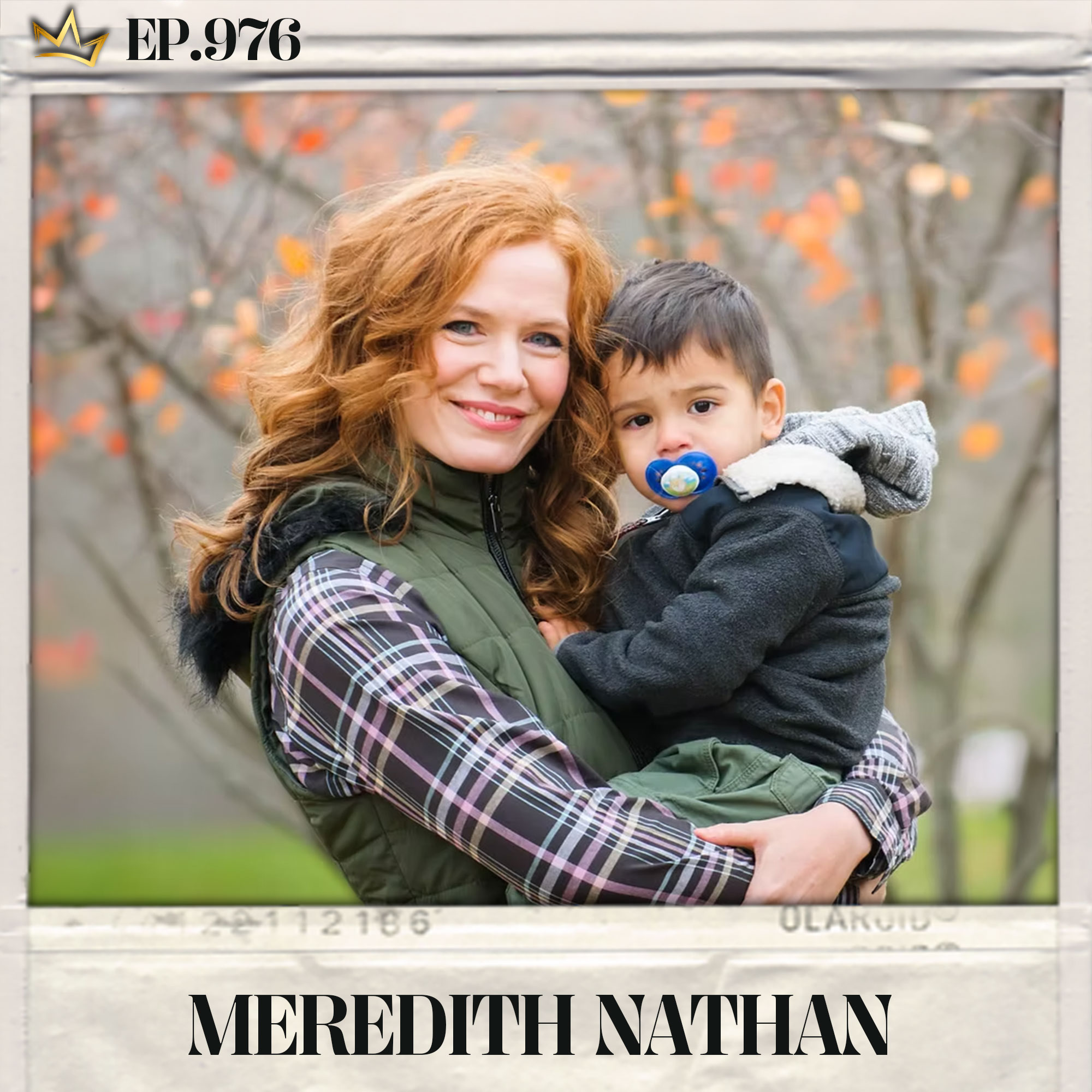
EPISODE DESCRIPTION:
What if the missing piece in your fertility journey has nothing to do with medication — and everything to do with blood flow, lymphatics, what your husband eats, and how you move through your cycle?
In this episode of The Health Revival Show, Liz Roman sits down with Meredith Nathan — Director at Pulling Down the Moon and Co-Founder of the Fully Fertile App — to unpack 20+ years of holistic fertility expertise in one powerful conversation.
In this episode:
- The award-winning Fertility Enhancing Massage (FEM) protocol — what it is, how it works, and how it can improve blood flow, uterine lining, and ovarian response
- Why lymphatic drainage matters for hormone detox and reproductive health
- The truth about male fertility — and how sperm health affects your pregnancy symptoms, placenta, and even morning sickness
- Why BMI-focused advice is incomplete and what actually matters for fertility nutrition
- How carbohydrates, cortisol, and insulin resistance are quietly wrecking fertility
- What to do during your two-week wait — movement, mindset, and self-care that supports implantation without spiking cortisol
- The Fully Fertile App — a doctor-approved, integrative fertility platform starting at $58/month
Whether you're just starting to think about conceiving, actively trying, in an IVF cycle, or supporting someone who is — this episode is packed with actionable, science-backed, holistic insight that most conventional medicine skips entirely.
🔗 Download the Fully Fertile App: https://www.fullyfertile.net
📲 Apple App Store: search "Fully Fertile" 📌
✅ Follow Meredith: Instagram
📥 Get the "GLP-1 Done" Right Guide
***
CONNECT:
🏆 Work With Us: Revive & Thrive Program
🔗 Connect With Liz: Instagram | TikTok | YouTube
🔗 Connect With Becca: Instagram | TikTok | YouTube
🇺🇸 Private Community: FitMom Society
▶️ Have Questions? Ask Here
***
SAY THANKS:
***
produced by: 📣 brandhard
Transcript:
Liz Roman: [00:00:00] Welcome back to The Health Revival Show. I'm really excited. Not only do I have a friend in the studio today that's in person, but just an expert in the fertility space. So we are going to just dive in, get juicy, talk all about her experience, um, with fertility and her journey with fertility too. So Meredith Nathan, she comes from the team behind Pulling Down the Moon, which is a holistic fertility clinic that has been helping patients become parents for over two decades.
I think the cool piece that we were talking off-air is that you, with Pulling Down the Moon, were a pioneer in the holistic space for fertility, brick-and-mortar in the Chicagoland area for 20 years. But now I think it's so cool, and I'm a part of it, she'll share how, but she has co-founded an app called Fully Fertile, which is a platform designed to bring together the integrative science-based approach for anyone anywhere.
So this is really cool. Strap in if you're somebody who is looking to get pregnant soon. I... You don't even have to have fertility [00:01:00] struggles to benefit from the app because I've seen it, it's amazing, and also a low-cost, uh, you know, app that you've built, which I think is fantastic because we know, and we'll probably talk about this, fertility can become very expensive.
Yes, it can. So welcome to the show. I'll let you just introduce your story or yourself and share your story and how you got into this.
Meredith Nathan: Well, thank you so much, Liz. Thank you so much for having me on the show. As you mentioned, we've been friends for several years now, and I have loved and just admired what you have done from afar, and it's been super cool to be able to collaborate.
Um, so a little bit about my background. I am a part of the team that sort of was the founding team of Pulling Down the Moon. Um, I am a director there. Specifically, I work in massage, fertility enhancing massage. We have our own award-winning protocols there that enhance reproductive blood flow and help detoxify the body.
Um, obviously aid with stress reduction and [00:02:00] relaxation and oxygenation, and all those things that are super positive. Um, but yeah, I've been working in that space also for over two decades. Um, during the pandemic, we went through a season where we could not physically get our hands on people, right? We could not touch them.
Um, and then when we could come back, it was, like, so restrictive as to what you could and couldn't do. And so it seemed like a lot of the process of working with people went towards, you know, some of the coaching and the lifestyle tips and the nutrition tips, and then starting to move into what sorts of self-care could they do at home.
Is there a self fertility massage? Are there different things that you can do that can actually improve your fertility, or at least put you at a better chance of conception? At home. And so I would say the pandemic kind of pushed this idea to the forefront. Um, and that was happening a little bit more casually for a bit, you know, just those calls and- Mm
even getting on FaceTimes and showing people, "This is what you do, and this is what you do." [00:03:00] And that did evolve into our app, which is our Fully Fertile app. And so we launched our Fully Full- Fully Fertile app, um, just shy of two years ago, and we have done our best to just download all of our information.
Uh, everything that we know up here- Right ... that could possibly be kind of a DIY type of thing exists on the app now. And so we've really poured our heart, soul, and expertise into the contents of that app.
Liz Roman: I love it. And you know, I think that COVID, very similar in our business, um, you know, we used to own a gym.
Yep. We said, you know, we've... Th- we're gonna take this as a gift, right? Mm-hmm. And, uh, sold that and then went all in online, and that's the practice that we have today, and we wouldn't have it if- Right ... it didn't push us, right, to get out of our comfort zone. 'Cause I think the day-to-day, especially as entrepreneurs with young children, we have these ideas, and they're massive typically.
I know you and I are big players. We don't think small. Yeah. So, uh, it takes time, right? So that [00:04:00] was- Right ... in the pandemic. Now we're in 2026. You launched this in 2024. Tell us a little bit about what you've seen. You know, I know we were sharing too, offline, very much, uh, doctor approved. Mm-hmm. And so how has this really, you know, been going the last two years, and what are people saying in terms of how they've taken this content, this education, they've applied it, and then also taken that to partnership with maybe some of the treatments that they might be needing with their fertility doctors?
Meredith Nathan: Absolutely. Both Pulling Down the Moon and Fully Fertile have always been very integrative, right? I mean, there are some holistic practices out there where it almost feels like you have to pick. Are you gonna do this, or are you gonna do this? And they're at odds. And our philosophy is that holistic treatments, it may be all that somebody needs to achieve a natural pregnancy.
However, I would say the vast majority of our patients probably are working with a medical team as well, and that might look like a little bit of hormonal supplementation. It [00:05:00] might look like full-on IVF, or it might look like, you know, uh, the whole gamut of what is available. And so we have really curated techniques that can work either way.
You know, they're great if you're just a person that's trying to be proactive with your health before you get pregnant. Some people aren't even experiencing fertility challenges. They just want to be in the best possible health for themselves before they start trying. Some may be trying, and they may have an infertility diagnosis, but they may not be ready yet to start down the medical route.
You know, that was sort of me and my journey. Uh, my husband and I struggled to become pregnant and, uh, it took us 18 months to conceive our son. And I felt like I had time on my side. Um, you know, I was 36 when I had my first son. Um, you know, and I obviously had all these resources around me. So we wanted to give it our time in the holistic space first, but we were very open to going down the route of IVF if that's what we needed to do.
Um, now [00:06:00] three boys later, you know, we, we've done that and, um, we were able to conceive them all naturally. But again, vast majority of people that we work with often are doing a bit of both. So really designed to just perfectly complement. Um, I would say something that has really set us apart over the years, both our brick-and-mortar and our digital sister brand, is doctor partnership, doctor approval.
Mm. Um, as Fully Fertile started getting launched, I mean, we actually got the majority of our people coming to visit us through the referrals of their doctors, um, through their clinic referrals. So it's a very safe and supportive practices no matter what kind of cycle
Liz Roman: you're in. Mm-hmm. I love that. And I'd be curious to know in terms of the male side, right?
Yeah. One of my biggest frustrations- Mm-hmm ... from when I was trying to conceive with Ethan was there's no testing, there's no consideration for the male, who is a big part of the equation, might we add here, right? At least 50%. And they're not testing or even [00:07:00] considering that until you're in front of a fertility doctor.
Right. So I'd love to know within this app, from an educational standpoint, are you sharing with them male and female, and then resources for, you know, maybe at-home sperm testing? What are things they should be looking at maybe with their blood work? Is that included in the app as well?
Meredith Nathan: Yes, absolutely. Um, and I can completely relate actually, and I...
Everybody needs a coach, right? Because I always joke, I was in the fertility space as a fertility expert coaching other people. I did not test my husband's levels, or rather, I did not have his levels tested until we had already been trying for 12 months. And come to find out that his levels were, in some cases, suboptimal, and so we had to add him to all of that.
But I just... You make these assumptions. I knew. I'm like, I have, you know, probably only one working ovary. I have irregular cycles. I have really short fertile windows based on my cervical mucus, right? Which is all... I know [00:08:00] it's TMI, but these are all things we have to consider- Yeah ... in the fertility space. So I just figured it was all about me, and that's an assumption, that's a bias that so much of our culture has.
Um, and I was subconsciously bringing it into my own fertility situation because my husband was just, you know, healthy as an ox, strong like bull, you know? Like I just didn't, I didn't think that there could be anything going on there until we tested. And so yes, the app, first of all, is very, um- opinionated and get the information, right?
All you have to do is get the information. Getting the information doesn't commit you to a treatment path. Mm-hmm. It's just information. How can you improve something if you don't know what you're dealing with, if you're not targeted in that? So yes, I mean, information on, one, that it's important to get it, but two, some different options for how to get it.
And it is awesome that today there are so many at-home tests available, right? I mean, it can be, I think, awkward for men, um, you know, to walk into that clinic and have to do the deed and, you [00:09:00] know, just, um, just kind of produce that sample. Um, it is understandably very awkward for them. So now there's some much gentler approaches to that where, um, people can get the information in a way that can feel a little bit more comfortable.
Uh, you know, getting blood work done, I mean, we're obviously not doing that on the app, but if they need a doctor referral of somewhere to go do that, we can provide them with that.
Liz Roman: I love that. And a lot of the things that we do in our practice is very proactive in terms of like you mentioned, some individuals may she know that she has, like, short cycles, or she's got some things that she should work on.
But I am always having the conversation with my gals, we- he matters, too. Yes. And this does not all fall on you. Yes. And it's more of a way that I speak to it in terms of priming. Let's make sure that we optimize. If you're gonna spend all this time, effort, and energy changing your diet, getting testing, maybe going through protocols, why not him, too?
And so we truly believe, again, more from the holistic [00:10:00] space, both of them should be doing it together, especially if he is wanting this result, this positive result, too. So I love that all of that is there because I do find it's very disjointed- Yes ... with how our system is set up, like you mentioned, and I was the same.
So even as a practitioner, I didn't even think to have my husband tested- Mm ... because we didn't have any issues the first time, so it's gotta be me. It wasn't, you know, him. And then lo and behold, doing that testing, it was like, "Oh, actually, we need to optimize." Yeah. Uh, you know? Mm-hmm. So I would love to hear you, I know because your husband has, um, shared with me, are just, I'm gonna say badass, uh, in terms of what you do with massage-
and the awards that you were given. Um, I know that that probably sounds, you know, like, "Oh." But I want you to talk a little bit about what you created from a massage perspective, because I find this very intriguing. And if you can, loop in how did this, you know, philosophy develop and- Where could people even [00:11:00] benefit from outside of fertility?
Let's say they have endometriosis. Mm-hmm. Let's say they have horrible cramping or they're going through menopause and things are just getting really wonky. Some of this massage work that you were doing to improve blood flow, detox, oxygenation. Can you speak a little bit about that? I know obviously without performing it, it might be, uh, you know, challenging for someone to visualize.
But I found that aspect when you shared that with me to be so cool because I don't think again, that's something that's often considered when we're just thinking about
Meredith Nathan: fertility. Sure. Absolutely. Well, first and foremost, I will say, disclaimer, my husband is incredibly biased. So, um, I will receive the compliment.
Uh, but just had to put that out there. But, um, but it was a very special opportunity to do something very unique in the massage space. I think some of the awards that you're referring to, um, the American Massage Therapy Association awarded us the 2018 Pioneer Award, um, for kind of pioneering a massage protocol in this space.
Uh, we've become nationally accredited approved providers of continuing [00:12:00] education in the space of fertility massage. Um, we have off some s- kind of foundational offerings that are available online, and we do, um, you know, kind of really in-depth multi-week, if not multi-month-long trainings with our staff.
So our fertility enhancing massage protocol, or we often just call it the FEM for short- Mm ... right? That's the acronym. So the FEM has five unique sessions that can work either with a different timing in a woman's cycle, or it can work with a different aspect of a fertility challenge. So- Traditionally speaking, our first session is going to be cleanse the core.
Cleanse the core really targets specific areas of the lymphatic system in the body to get a full systemic lymphatic drainage, um, but also very specifically in the pelvic organs as well. So, you know, for those that don't know, the lymph kind of moves through the body, collects toxins and excess hormones, brings them back to the nodes where they get processed and purified.
Everybody knows about the ones right here, right? 'Cause that's what swells up when you're sick. But we [00:13:00] have them everywhere. I mean, lymph really mirrors your circulatory system in many ways, but it doesn't have a, a heart, right? It doesn't have some chamber that's kind of pumping it or energizing it. Lymph gets entirely moved through movement, whether it's through exercise or whether through someone coming in and physically stimulating it externally.
So that's what we do to kind of help empower the body to achieve better hormone balance and detoxification. Now, we blend those techniques with different protocols involving essential oils. Um, now a lot of people think of like, "Ooh, it smells nice," right? Our essential oils are therapeutic grade. They're, you know, kind of more, um, medicinally focused, kinda like taking liquid herbs, but through your skin.
Sure. Right? Uh, now if someone is on a medicated cycle, we're not gonna do that part because we don't want it to interfere. Uh, but we're gonna do that. We have some different, um, kind of organ detoxification massage techniques borrowed from the Chi Nei Tsang tradition, um, which is kinda like qigong abdominal self-massage.
And so we blend a lot of different [00:14:00] things together to create this detoxification, this cleansing, this release. Now, then we will often move into our second session, which is called soothe the senses. This session is a gentler approach. It is more full body, but we do do some very targeted pelvic massage in there as well.
Um, we also do a lot to work with the vagus nerve because the vagus nerve, of course, is going to do a lot to control, yes, sympathetic to parasympathetic in the body, um, but it also really communicates with almost every single organ in your body, including your reproductive organs. So this is a way that we can gently communicate with the reproductive system.
Now, for some people, you know, depending on what's going on with them, if they're in a medicated cycle and they're a hyper stimulator, we might stay with this session 'cause we're not gonna wanna get more intense in case we overstimulate them more. Um, but for most of our patients, especially our clients that are diminished ovarian reserve or they are really just looking to boost blood flow, they're looking to increase [00:15:00] numbers or quality depending on what kind of cycle they're in, we also have two sessions that are considered our blood builder sessions, build the blood and align the abdomen.
And these get much deeper into myofascial pelvic release techniques. We do different, um, techniques to kind of redirect blood flow back towards the reproductive organs temporarily, of course. Um, you know, we do a lot of different things in here. We're gonna do different things with kind of hips and range of motion- Mm
backside, front side, that are really going to help to release scar tissue, decrease adhesion, and really just get the blood flowing. So with this session, we'll often see, especially if they're being monitored, we might see, oh, you know, they had a big restriction on the side of the left ovary, and, you know, they were never getting results on that side, and now all of a sudden they're getting more results, right?
Or they couldn't get a thick enough lining, and now all of a sudden their uterine lining is thick enough for implantation. Um, so we have these different sessions. And then we have a session [00:16:00] that's kind of safe for your two-week wait. It does help to gently encourage implantation, but mostly it's about de-stressing- Mm-hmm
um, safely. Because a regular massage in your two-week wait, it's just, we take a more conservative approach towards that time, kind of treating people like they could already be pregnant. So it's very safe while also supportive of that potential pregnancy.
Liz Roman: I love that. I've never heard someone frame it that way, and I think that's really important in terms of knowing, okay, two weeks wait, right?
Ovulation, that's my, uh, fertile window. We're trying, and now we're just waiting- Mm-hmm ... uh, for the test. And so it is even from, I would say, a, a supplement side, a diet side, a exercise, you know, and we'll get into that in terms of lifestyle. That's a time where we tell people if we know that there's a chance, we just wanna chill.
And it's really hard 'cause then you have, like, the emotions that are coming up. Mm-hmm. I was sharing with somebody very close to me who is in the [00:17:00] conception waiting phase, like- Mm ... try not to think about it. I know for me, I was, like, buying tests and taking tests, and it was like, oh my gosh, you know- Yeah
just overthinking everything. And so I love the way that you just framed that. So let's talk a little bit about, you know, lifestyle, nutrition, stress, movement. How do those come to play? We know it's important for a healthy body in general. Yes. But how do they come to play in terms of improving or- not, uh, uh, fertility outcomes.
Meredith Nathan: I think, um, people don't really understand that these are some of the most important keys to fertility in most situations. Now, yes, you might have the situation where somebody has a blocked fallopian tube, right? There's scar tissue there. It's like no amount of, you know, uh, getting your meditation and your lifestyle and all that in play is necessarily going to be able to, you know, overcome that.
But for many of us, our issues lie in things like hormonal b- imbalance, right? Our issues lie in inflammation. Our issues [00:18:00] lie in being in this perpetual state of fight or flight. Our issues lie in things like being too aggressive with your exercise in the wrong time in your cycle. And, um, I love that you brought that up, and I did wanna say, by the way, that's one of the things we really tackle in the app are what are safe forms of movement.
Mm. Because if someone is used to exercise, being totally still from the point of ovulation for the next two weeks may actually dramatically spike their cortisol levels, which can impact their fertility. And so the goal isn't always necessarily to stop movement entirely, but to focus on movements that are super safe for you, whether it is moderate and gentle resistance training, whether it is yoga.
Um, we have both, and we do a lot of education within the app of, you know, here's what you can do, when can you do it, you know, and also what types of movement is good for you. Well, it, you know, there isn't a one-size-fits-all. Sure. You know, if someone is looking to Maybe lose a little bit of weight to get to their optimal fertility weight.
Um, weight as a [00:19:00] number isn't the only thing that impacts fertility, but, you know, we can't totally ignore things like BMI. So, you know, if that's what they're doing, they may need an exercise program that's a little bit more aggressive. Mm-hmm. But then what should that look like when they're actively trying to conceive?
Someone else, on the other hand, might be, you know, uh, an exercise junkie, and they need to chill out a little bit, and they need to find forms of exercise that are really supportive to them, and once again, aren't spiking their cortisol all the time. So I think we don't realize sometimes how three-dimensional we are.
You know, what we eat, um, can either trigger hormone imbalance or hormone balance. Um, it can trigger inflammation, or it can get our bodies to feel kind of safe and supportive. Also, the pace that you eat at, the size of your meals, all these different things. Um, you know, there's, there is, I think, in general, kind of a right way to do it and a wrong way to do it when you're actively trying to conceive, and that doesn't mean...
There might be [00:20:00] dietary styles that have been extremely supportive for someone for a different type of health journey. But when we're in fertility, you can't always apply the same rules to that stage- Mm ... of life. I think for our bodies, when they feel safe through our lifestyle choices, through what we eat, through...
Sometimes it's even things like get the cellphone away from your bed at night. You know what I mean? These little things sometimes can send our bodies these signals of, "Okay, we can heal now, we can be safe now, and we can conceive now."
Liz Roman: Yes. Oh my gosh, I love you brought that up because we talk about safety all the time.
Mm-hmm. You can't heal an environment that's making you sick, and so that is a lot of the internal, uh, in terms of from the functional perspective, right? Are we removing these underlying infections that are driving inflammation, throwing off hormones? Right. Um, you know, and so we have to regulate. And then, of course, nervous system regulation.
Mm-hmm. I love that you brought up how you eat. That's so important, too. But remember, for those of you listening, if you've [00:21:00] not had this discussion with your doctor, because in conventional medicine, most of the time, there's no discussion about this. And it's just wild to me because it all- When we think of safety in terms of conception, right, your body is about to enter into what I say is the most nutrient demanding time.
Mm. And then on the fourth trimester, the most nutrient depleting time. Mm-hmm. Right? Um, and so if your body doesn't have the calories, the energy, you're trying to lose weight and conceive at the same time, like, that's a mismatch in goals- Right ... from my perspective. Right. And like you said, the exercise junkie who I used to be, like, it's not gonna serve creating safety if I'm constantly upregulating that cortisol going to my HIIT classes all the time, and compiling that with being in a, a calorie deficit.
So we always talk about, and I'd love for your, um, insight into this, carbohydrates are, for most women, now blood sugar regulation [00:22:00] matters a lot here, but carbohydrates are so important for thyroid function, adrenals, hormones. Of course, we wanna have our balance there to keep blood sugar stable with, you know, fiber and protein and healthy fats.
But when you're going through this, let's say, you know, we have a person entering the clinic, and it's the first time that we're discussing. What do you generally recommend them in terms of from here through the times that we're going through the protocol, we want you to eat a well-balanced diet. Is it customized to the person?
Or from that aspect, I mean, there's so much to unpack, but I just know that doctors will generally say, "Well, I think it'd be a good idea for you to lose weight," and at the same time be talking about conception, and I just really strongly feel there's a, a mismatch with that.
Meredith Nathan: I couldn't agree more. You know, you look statistically, and, you know, doctors are looking at BMI, right?
Mm-hmm. Now BMI, I have a love-hate relationship with it- ... right? Because it was designed to be a snapshot of the [00:23:00] population to give us statistical data, and we shouldn't discount it because, you know, especially when you get into the extremes, whether you're on the high or the low end, that can really impact your fertility.
But what you do also see is studies will show that regardless of what number you start at, you know, if it's a, if it's too high of a number, just reducing it by 5 or 10% dramatically impacts your fertility. So it's not necessarily about hitting a perfect number, but I think it's actually, to me, that suggests correlation with what were the things that they did to get their body healthier.
Mm-hmm. And maybe it was the reduction in inflammation, all those different things. Um- Balance is great, but balance, uh, it's such a vague terminology, right? Mm-hmm. It's like what does that really mean? And you brought up specifically carbs, right? And I think a lot of women especially associate a low-carb diet with being healthy.
But what we learn in the fertility space is that there's, you know, a good kind of carb and a bad kind of carb, right? Not all carbs are created equal, and actually carbs are so essential [00:24:00] in moderation as part of a preconception diet, um, and as part of a post-conception and a pregnancy, postpartum. Um, but then you look at, okay, well, the types of carbs that I was eating, right, which might have been a bagel, it might have been a donut, it might have been, you know, pasta or whatever, but if it was refined, it might be spiking my blood sugars.
It's spiking my insulin, which can lead to insulin resistance, which can lead to weight gain, which also, I mean, the interesting thing about insulin is that it's so similar to other reproductive hormones in your body. So when you're producing too much of it, your body can get really confused. It can say like, "Oh, I'm already producing enough of that," and it stops produ- But that's your reproductive hormone.
It got confused, right? Mm-hmm. So but when we eat things that are more complex carbs, things that are more fiber rich, things that are slower releasing and longer sources of energy in our body, that really sends our body signals of safety again. So, um, yes, it's balance. And you know, [00:25:00] everybody comes in with different things.
I mean, some people come to the table and they're vegan or they're vegetarian or they're carnivore or they have a specific way they eat because of maybe a certain ethnic or religious background that they have. So in our app, we have information that kind of covers all of those different scenarios. Um, and obviously there are some things where it's like you might be better served to just talk to a registered dietician, right?
Sure. And so we have those sorts of things available, too. But, uh, we have these more generalized, um, informational protocols of what to do when you're trying to conceive.
Liz Roman: I love that. Well, 'cause we know that it can be really overwhelming- Mm-hmm ... when you are thinking about taking on this journey. For some people it comes very easy.
And I know maybe you're listening right now and you're like, "Yeah, okay, but what about all these people who get pregnant who weren't trying to-" Right ... didn't know it, drank, smoked, did all the toxic things, right? Um, or just, you know, it feels life is unfair- Mm-hmm ... because they are actively, you know, [00:26:00] trying.
I guess, what would you say to that person who's maybe feeling defeated, like, "I've lost hope, and I'm not sure it's ever gonna happen for me"?
Meredith Nathan: You know, um, fertility can often feel like a hallway full of locked doors, right? And, um, you can look at somebody else, and they just, like, open the door right away, and it, there was no lock.
It was like it was waiting on them. They may not have even been trying, right? They might be mad that they're pregnant, and you're just like- I wish I could be in your shoes right now. Um, and I do think that, uh, you know, fertility is deeply emotional for people, right? I mean, fertility, l- uh, the grief levels of fertility patients rival the grief levels of cancer patients.
And a major difference too is that oftentimes they don't have a community of people that they're talking to. People tend to wear their fertility challenge pretty close to the chest. And, uh, that's very different from how, for instance, a cancer patient might be greeted by the world. [00:27:00] They tell people. They get support.
You know, there is compassion surrounding them. And so often, too often, a fertility journey is just between, you know, you and your partner, or if you're going after your fertility dream as a single mom, it might just be you. And so that's also where I think our app really helps people because it is a community where not only do you get information from the experts, but you also have a community of other people that are in the same journey with you.
I do think that it is, um, it is challenging, but I also think that the more you can do proactively to improve your health, to do these things, it helps you feel like you have a bit more control. Um, we do these things that make us healthier, and they're also going to improve our mental health. They're also going to improve, you know, kind of that production of serotonin, that happy hormone in the body.
So you follow the advice for the fertility, and in most cases it's the same advice that's actually gonna give you a little bit more [00:28:00] emotional grounding, a little bit more, um, just psychological support as well to navigate some of those trials on a fertility journey.
Liz Roman: I love that because many people, I think, like you said, they don't talk about it.
And this could be that maybe there's been a loss, you know, a, a miscarriage, and it was early, and then, you know, they're em- embarrassed or ashamed- Right ... or whatever, feeling like it's their fault. Right. And sadly, I mean, I always say to women, just there's nothing that really can be done. Like, you just have to know, other than preparing your body and doing the things that you can control, that your body's gonna do what it feels safe again to do.
Yeah. Uh, sometimes a lot of the clients that I work with, very complex gut health issues or autoimmune issues, sometimes we almost, uh, have a priming discussion for a loss- Mm-hmm ... because we know that the body and the immune system has been so overactive that it's making these mistakes, and sometimes it takes that first miscarriage to- Yes
[00:29:00] then set you s- set you up, uh, for a good, healthy fertility and pregnancy- Mm-hmm ... the second time. And so I'd just be curious, within the app Bringing all of these pillars together, what would you say to the person who... Like, for me, I'm unfamiliar with other fertility apps, because when I was going through it, it wasn't anything that I was using in this way, right?
Mm-hmm. I was using the basal temperature thermometers to see that I was getting outside of just the cervical mucus- Right ... ovulation. I was getting a temperature rise. Now we have Oura Ring, we have Mirras. Mm-hmm. We talked about other things, other tools. But this app really, I mean, it sounds too good to be true, because it's encompassing everything- Mm-hmm
from the lifestyle to the movement, to the emotions, to, uh, that internal health and, you know, really helping that person find that community they can lean into. So for those who, you know, know about other apps, how would you say that, um, this app stands out or is different from others that might be out there?
Meredith Nathan: [00:30:00] Yeah, and I, I mean, you mentioned how you never did it during your journey, um, because it probably wasn't even available, right? Mm-hmm. I mean, or it w- it, you know, not in any kind of mainstream way. And I don't know that there are a ton of other apps that are even trying to do what our app is doing right now.
There may be some others. Uh, but I would say a big differentiation is the fact that you're getting, you know, this 20 year plus, plus, plus brick and mortar expertise that is getting poured into the app, that is trying to support in so many different ways. Now, we don't have a tracking system on our app, right?
That's not something that we, we may down the road. We don't currently have something like that. So there may be other things that are supportive to someone's physical data tracking, but this is more going through, here's the lifestyle, here's the self-care, here's information about how you eat. Are you thinking about, you know, not just your gut microbiome, but your vaginal microbiome, right?
And are you thinking about the connection between the health of that and your ability to sustain a pregnancy, or might you [00:31:00] have some sort of immunosuppression issue if you're, you know, a repeated loss gal, right? Um, so there's a lot of information that is packed into this app, and then there's the physical practices too, right?
I mean, are there things that you can do self-care wise that can improve your fertility at targeted times in your cycle? Fertility self massage. You know, we took everything from our fem that we felt that someone could safely apply to themselves, safely and effectively apply to themselves, and we put it in there, right?
Um, we took some of the other, like, accessory self-care stuff and we put it in there, right? We put some of these different exercise things in there. And, um, and not only, you know, do you have the exercise, but you have the mindfulness to accompany it, and again, the community. You know, you had mentioned, what would you say to these gals earlier about, you know, they may just be looking at other people and be like, "You smoke and drink, and you got pregnant."
Um, I would also say, I didn't say this earlier, but I want to say it now- I think so many women end [00:32:00] up being so grateful for their fertility journey once they're on the other side of it. Mm-hmm. Because it may actually be what taught them how to respect their bodies. It may be what taught them how to, you know, really cultivate health and safety in their own bodies.
And then when you do achieve, you know, that rainbow, so to speak, um, I often see that fertility mamas are the most passionate mothers, right? Because they don't take for granted the miracle. We are such a low reproductive species, right? We don't have a phenomenal ability to re- you see other, you know, mammals in the animal kingdom, and the, you know, they're just producing litters all the time, and, and we don't have that, right?
But when we are able to achieve that, and we know the value of it because we have experienced the disappointments, the loss- Mm ... the waiting, the wondering if you needed to give up hope, you know. Or maybe you get to that building that family on a different path, and that can also be a really beautiful thing [00:33:00] with really happy endings.
Um, but I do think that these make for some of the most passionate mamas after they've had that journey.
Liz Roman: I agree with you, and I would say for both of us, having walked that path, um, it gives us the empathy and the sympathy to speak to these women going through it. But you mentioned something that I think is really important in terms of they're taking care of themselves, right?
They are improving their overall health before they get pregnant because, right, they are priming their body, is kind of what we, we term it. I would say to people, and I'd be curious what your thoughts are here. So from a microbiome perspective and a mitochondria perspective, fun fact, we get zero mitochondria from the male.
It's all from the mama, and we pass it down two generations. Mm. And so for the chronic gut health issues that I deal with and see, I'm always like, "Okay, tell me about your mom. Tell me about your grandma. Like, let's get in the weeds. Were you breastfed, not?" Whatever. Um, and [00:34:00] when you are priming your body to go through a pregnancy, not only is it benefiting you as the carrier to have an easier pregnancy oftentimes, but it's benefiting the baby, too.
Mm-hmm. Because you're setting that child up. Yes. We- there's a lot of things that we cannot control in pregnancy, but what we can know is that, hey, you know what? I spent the last 18 months, or in our case it was 27 months- Mm ... where we were really focusing on Staying low tox, getting the good antioxidant, getting in my folate, getting in my choline, all of these really, really important things just to, again, support that development.
And I always wanna recognize that not always does that go to plan, you know, and there are, um, circumstances that can happen. But I, I agree with you in the way that it h- most women who go through it are very thankful on the other side. Yeah. Because it makes them... It's part of your story, right? Yeah. It's a little bit different.
And, um, children are a blessing. They are also a challenge. And so
Speaker 3: I'm [00:35:00] remembering ... What?
Liz Roman: I'm remembering last night as Ethan had yogurt in every crevice of the chair, of his bib, of his clothes. Like, I prayed for this. Mm-hmm,
Speaker 3: yep. I prayed for this, and we're just gonna let the yogurt be what it
Liz Roman: is today, you know?
So I couldn't agree with you more with that. So, um, as we're gonna start to wrap up here, what are some of the things that you would just share to women who want to join the app, but you want their husband to also come along this journey? And, like, how do we get more, I think, people talking and couples doing this together?
Mm. 'Cause again, going to the OBGYN, like I went and brought my husband with me. It's been about six months. Mm. And the advice that we got from our midwife was, "Have sex every other day between day 10 and 20. Come back in six months if nothing changes." And I'm like, "
Speaker 3: That's what you really have to offer us?"
Like, this is, this is it. Just practice some more and hopefully... [00:36:00]
Liz Roman: Oh my gosh. And so then, you know, the 12-month mark comes. Now we're going to, you know, IVF, and then they're doing procedures on me. They start testing him. Okay, we identify it's more of him issue, but they still want me to go through all these procedures, and I finally said no.
Mm. Because it was breaking the bank. I mean, they... We don't have time for that whole story, but the cost of just seeing a fertility doctor and going through some of that, even with great insurance that we have- Oh, yeah ... can be really, really wild. And so I wanna speak more on the side of, like, preparing and priming and getting the male involved- Yeah
so that we can, you know, get these women to understand this is not just for them. And maybe if it's a mom or a grandmother, maybe you have a son, this app could be for him, too, to realize, like- Hey brother, you're the player here.
Meredith Nathan: Yep. Not just the girl. It's so true. Well, first I have to comment, yes, IVF and all of that, I mean, it is so expensive.
And in Illinois, we are often having it more... We are more [00:37:00] lucky with that than in other parts of the country. We often have better fertility coverage. But no matter where you live, it can be such a cost. People often find that trying holistic for a bit will actually save them money, whether it is because they were able to achieve pregnancy naturally, or perhaps they were able to achieve it with less rounds of IVF, right?
Um, but what you said is so true. You talked about, you know, the importance of as a woman and what's gonna happen with your e- I mean, the lifespan of an egg is 90 days, so people really need to be thinking about this several months before they're gonna start to conceive about where's their health at. But for men, it's 60 to 70 days, you know, the lifespan of that sperm.
So they also preferably would have several months of ramp-up to get their bodies to where it needs to be. You want an optimal egg meeting an optimal sperm to have, you know, the best chances of an optimal pregnancy, a flourishing, healthy baby, um, all of these different things. And, you know, interesting facts that you mentioned about women and the [00:38:00] mitochondria, but men's health, that has so much to do with actually what's gonna go on with the woman's placenta and how she's gonna feel in the pregnancy.
And certain complications that can develop during the pregnancy actually have everything to do with the health of the man. So it would be wise for a woman to want to include her partner. Now I think we're aware that in general, it is going to be the woman that is probably going to go on this deep dive into health first.
Mm. Um, and then she may engage her partner in that. The good news about our app is that we have included extensive information about what's good for her, what's good for him. And often it's actually the same thing, you know? So we look at our Nutrition for Life program, you know, we have information in there that is good for everybody.
Our meal plans that are included in there are good for both him and her. Um, you know, but we do also say, I mean, there's a list of recommended supplements, but there are some different ones in there, right? There are some [00:39:00] supplements that actually are great for women but not great for men, and vice versa, specifically on a fertility journey.
So, um, we do get into the weeds a bit about what's good for both of you, what's not good for both of you, and, you know, it's wonderful when the guy can be just as engaged and so into it. Um, but you know, I know for my husband, when we were going through this, he was so supportive, but what the relationship looked like was kinda like, "You just tell me what to do and I'll do it."
Mm. Right? So I sort of became his fertility coach, which I know i- is natural as a result of what I do for a living, but I think that's a very common husband and wife dynamic as well. And it's like he'll eat whatever I put in front of him, as long as I just put it in front of him, right? He'll take whatever pills I put in front of him.
If I say, "We need to go get this holistic treatment," he'll do it. Um, so you know, I think whether a couple chooses to engage in it and they're really, like, together, together, chewing through the information together, [00:40:00] that's great. But also I think if it looks a little bit more like she absorbs the information and then parcels it out, um, but I think the app makes it very easy for her to do that.
Liz Roman: Okay. I love that. Going back to what you mentioned about the health of the sperm, can you elaborate a little bit more on that? Because we know... So with Marcus, I don't know if... I think you do know this, but I had intrauterine growth restriction. And so- Yes ... he was full-term, but he was born f- Three pounds, nine ounces Mm-hmm.
I was, wanna say four ounces for some reason. It was a wild experience. A fantastic pregnancy. N- I never had the, uh, crazy fatigue or vomiting or nausea or some of those, like, kinda classic- Mm-hmm ... signs. I would say I think girls are, from what I've seen, worse or harder on- Right ... uh, that aspect. But share a little bit more about what you mentioned in terms of the health of the placenta, and then how that mother is going to maybe be impacted with- Mm-hmm
carrying, um, the [00:41:00] child and having the, maybe some of those symptoms. Mm-hmm. Those morning sickness and all of that. Like, what are some of the common things that we see with-
Meredith Nathan: Yeah ...
Liz Roman: less than optimal sperm, let's put it that way. Less
Meredith Nathan: than optimal. Um, so, right, because you can still have a healthy baby, but it may not be a super healthy pregnancy.
Mm-hmm. Right? And so we do see a correlation between what was going on with the sperm and, for instance, how intense was morning sickness, and for how long of a period of time. Now, I don't wanna put that entirely on the man, because that's a multilayered thing. Sure. But they do see a correlation there. Um, you know, with the placenta specifically, you know, how deeply does it implant into the endometrium, right?
Like, that is part of the process of the health of the sperm actually can determine that. Um, and so, yeah, I don't wanna get too deep into the weeds of it without me having a chance to review my notes on exactly how that process works. Yeah. But I will say it is fascinating, [00:42:00] and it is also a shame. Because some couples, not knowing this, just thought that the end goal was to get pregnant.
Mm-hmm. Right? But didn't know that there might've been something about the health of the male partner prior to the pregnancy that led to her potentially having, you know, preeclampsia or these issues with her placenta, or whatever the case may be. You know, also you look at things like, um, drinking or doing any type of drugs.
Um, and I, you know, we think of hard drugs, but honestly even with marijuana and CBD and things like that, for several months in that preconception window, any amount of that can impact the health of the baby, right? And so you do see issues where either there's higher rate of miscarriage or perhaps, you know, the baby might be born with some health challenges when that's the case.
And I think that, once again, this is one of these things where it's like, well, women kinda know, like, "Oh, I shouldn't be drinking if I'm... Definitely not if I'm pregnant." You know, a [00:43:00] more conscientious person that's really thinking about her health beforehand might choose to stop drinking while she's trying to get pregnant or stop, you know, smoking or whatever the case may be.
But it is equally important for the men. Mm. And you know what I told my husband during ours, I was like, "Hey, once we're here, once we're at the finish line and I'm pregnant, you can go back to doing whatever you want, eat however you want, you know, you don't have to take any more vitamins, you don't have to do anything.
I'm gonna have to keep doing it through the pregnancy- Mm-hmm ... through nursing, you know?" And honestly, I, I'm probably just gonna keep doing a lot of it 'cause I wanna stay healthy. But, um, you know, for them, it really is not this indefinite window- Mm ... that they can make these proactive choices to make such a strong, positive impact.
And I so admire the men that are really open to thinking about these things, and really thinking about, "How does my health impact not just our ability to get pregnant, but what's the quality of the pregnancy gonna be like? What's the health of the baby gonna be like?"
Liz Roman: Yeah. And that's [00:44:00] just all the more reason why I would say get all that information, get all of that data up front.
I mean, one of my, uh, late mentors, sadly he passed away during COVID, but we had him on our podcast and we did this beautiful two-part series, and he was talking, you know, 6 to 12 months, right, especially if we're looking at individuals coming from a family line of, you know, uh, just various genetic predispositions, a lot of disease, a lot of dysfunction, right?
Yeah. Let's put it that way. So really optimizing for that 6 to 12 months because, again, of folliculogenesis and the life cycle of the follicles and everything, with the sperm too. So I would say, just kind of wh- you know, we were talking about before, if you're listening to this podcast, get this app, and look, you have resources in there for the at home testing.
They're a couple hundred bucks compared to... I mean, y'all, when I had just the labs for myself, not even talking about anything to do with Art, they billed my insurance $4,200. And I called the office [00:45:00] because they sent me this bill after my PPO insurance, which I paid 1,900 a month for. We've had these conversations online, right?
Like, and I said, "I could have ordered all of these labs for less than this $400 bill that I have after insurance. This is highway robbery. Insane that you're charging..." I remember the vitamin D was, like, $110 or something. Mm-hmm. So crazy. And I said, "I'm not paying it." To this day, I never paid it. I told them, "Good luck."
Like, I could have, again, ordered this myself. This is wild. Yeah. Uh, and so when you put it into perspective about how things can really rack up quickly with the IVF and the treatments, like they were even trying to tell me that we should do, uh, egg freezing, we should try the, um, implantation, all this wild stuff that as soon as we fixed some of the things for my husband, we were pregnant in, you know, just two months.
Right, right. Um, that all would've been extremely costly. So spending I think, you know, even if it is one or $2,000, getting comprehensive labs, [00:46:00] getting sperm testing, you know, maybe really looking at the male side of things- That can save you a lot of money, but it can also save you a lot of headache and heartache- Yep
and physical distress. Yeah. Uh, you know, getting this right, and just again, for me, it's always about peace of mind. I know then that I did everything that I could to get the best possible outcome. Mm-hmm. Outside of that, it's up to God, and, you know, what will be will be. Yes. We can't control everything. So I just love this conversation, and appreciate that you've created such an amazing resource for people that, again, is something that's not a large, uh, cost.
So if you would, just let everybody know where can they find this. Obviously, we'll link everything in the show notes. Um, what is, uh, the cost? Is there a monthly membership, or how does that kind of work with the platform?
Meredith Nathan: There is, and we have options where there's either a monthly subscription, or you can go in a three-month bundle- Okay
which brings the cost down a little bit. You know, obviously, there's a little bit of magic to that three-month, you know, the lifespan of the egg. We have six-month bundles. Um, so currently... [00:47:00] Like, I didn't memorize the numbers off the top of my head. It's okay. Um, I think it's $58 for a one month. It's 150 for a three month.
I wanna say it's 195 for a six month. So the six month is actually where you're gonna see the best value, and we love to encourage people, because here's the thing. The vast majority of what's on the app is still gonna be applicable when you're pregnant. Mm-hmm. You can still use the movement programs.
You can still use the diet plans. You can still use so much of what's on the app-
Speaker 3: Yeah ...
Meredith Nathan: after you're pregnant as well. So even if you do get pregnant quickly, it's not like you can't stop using the information. So we really do recommend for people to just invest in the time. Um, but yes, that's exactly what it was.
We... Our desire at Pulling Down The Moon, at Fully Fertile, is to support people on their journey to that happily ever after, right? And so, you know, our brick-and-mortar does that for people in Chicago, but for all the people all over the country, or for people that perhaps could not afford to go in and, and pay for services, right?
I mean, even though holistic is so [00:48:00] cost-effective when you compare it to some of the medical treatments, um, in some families for some budgets, that's still gonna be cost-prohibitive. So this is a way to take that information, to take some of the DIY magic, and to be able to do it at home for a price that is very, very, um, low, considering the, the industry that we're in.
So where people can find the app is either on the Apple App Store Fully Fertile, or if they're looking at us from a desktop, they can find us at www.fullyfertile.net
Liz Roman: I love that. I love that. Well, thank you for coming on the show today. And, um, if you guys liked this and you know someone, right, who is considering conceiving, maybe they're dating, they're not married yet, or whatever the situation might be, they know they want to start a family, please share this as a resource to them because really, I don't think there's anything like it.
And even from all of the tools, we were chatting a little bit offline, there's so many tools [00:49:00] now that people have to track ovulation, to track their hormones daily with something like a Mira. Uh, Becca, my business partner, talks about Mira all the time. Um, and I do use it with some of the cases for fertility or even for those who are on, like, hormone replacement therapy because when you're going to the lab and you're getting blood work, first of all, hormones are impulses, right?
And so you could have labs at 8:01 be very different from labs at 9:01. So true. And so the, the Mira can be a nice at-home advice. Of course, you have the basal body temperature, you have the Aura, you have all these things that, again, can be overwhelming. What do I do? Where do I start? It sounds like the app has all of that information and a lot of resources that you can utilize as well as ask questions and get feedback from professionals that are, you know, in this industry.
So this is, to me, a no-brainer, and I would just love if you would rate, r- uh, review, subscribe, share the show, tag myself, tag Meredith. I will put her Instagram in the show notes for you, too, so that we can see, um, that you are listening. And then also [00:50:00] just know I would say this for Meredith, speaking for her a little bit here, she is such an open book.
Reach out to her on Instagram, social media, right, like, uh, with questions and any support that you need. So thanks for tuning in. Until next time.
Meredith Nathan: I love that you were able to support us, too, Liz, in some of your expertise on women that are using GLP-1s, um, if they are trying to maybe lose a little bit of weight on their fertility journey before they start actively trying to conceive.
But the addition of your GLP-1 guide is so helpful for people to understand how to take the GLP-1s in a way that, um, is more healthy and works with their body. Um, I think so many women, I have friends that have gone on them, and I've never had anyone say to me, "Oh yeah, my doctor told me that I should be taking these supplements," or, you know, "I could try these different approaches."
Um, they just end up with all these side effects and symptoms, and they don't really know what to do about it. So thank you so much for giving us access to that information. Of
Liz Roman: course. Of [00:51:00] course.