

#925: Ariel Garten - Perimenopause Brain Changes And How to Take Back Control
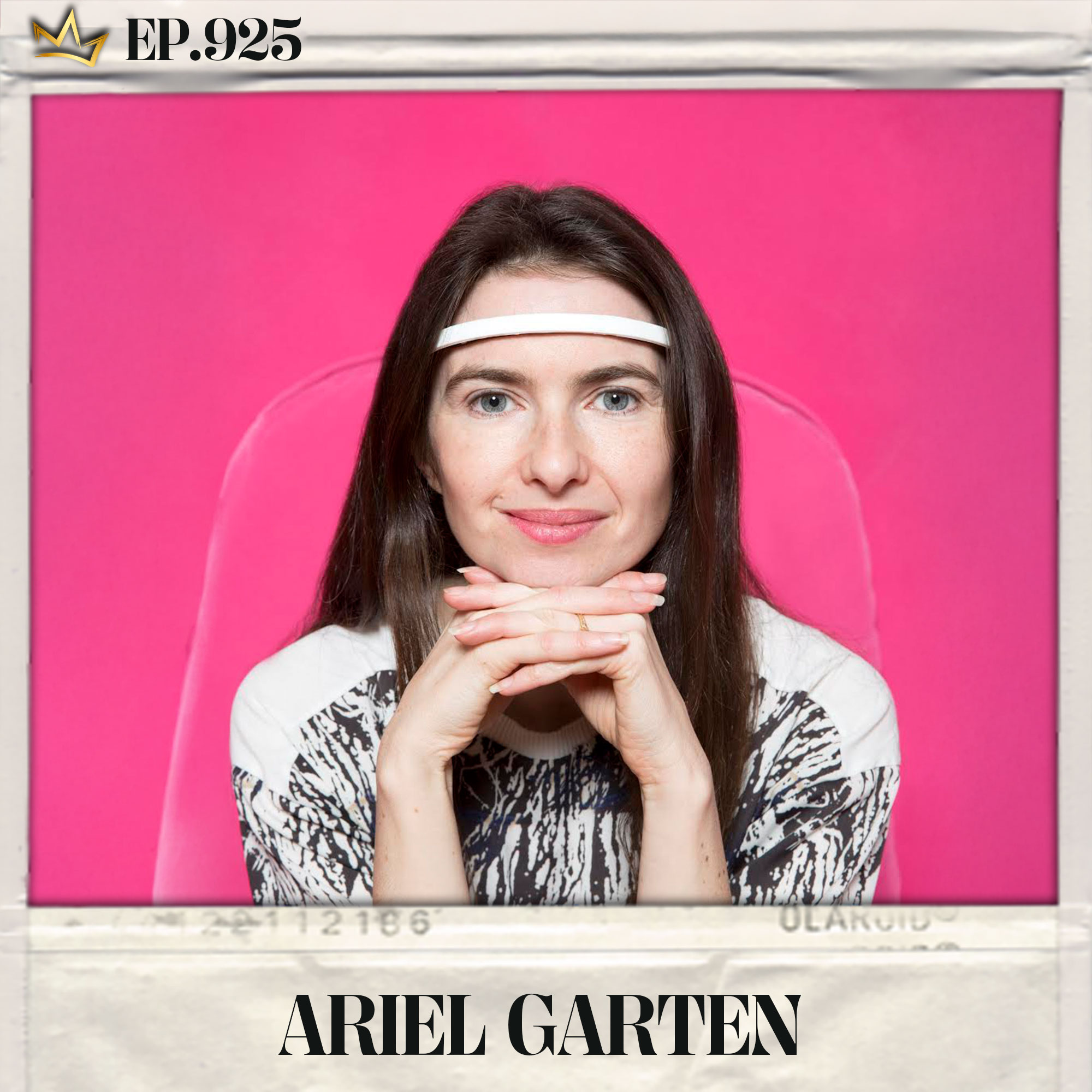
EPISODE DESCRIPTION:
Neuroscientist and Muse co-founder Ariel Garten joins us for a deep dive into the brain during perimenopause and menopause — anxiety spikes, mood swings, sleep breakdowns, night sweats, you name it.
Ariel explains what’s actually happening neurologically, how meditation retrains the stress response, and why real-time neurofeedback helps women get better sleep, calm anxiety loops, and regulate the nervous system.
We also explore how midlife hormones impact cognition, how to break the “sleep anxiety spiral,” and how tools like Muse improve focus, deep sleep, and emotional regulation. Perfect for women navigating brain fog, anxiety, insomnia, and hormone chaos.
Transcript:
Welcome back to the Health Revival Show. Today, we have a neuroscientist with us, Ariel Carton, and she is the co-founder of Muse. If you guys have not heard of Muse, check the links in the show notes, go look it up. It's this really cool device. If you've listened to the show for a long time, you've heard me talk about the fact I am horrible at meditation. This will help you. And it's kind of game for me to see how many birds I can get. So, I'm excited to hear from her today on how this has just been so impactful for so many people dealing with a variety of issues, and giving some real-time bio feedback.
So, welcome to the show. We are excited to have you today. Thank you. It's great to be here. Awesome. So, tell us a little bit about your background. I mean, how did you get into this, the development of
Muse? What led you down this path? Sure. So, I was trained as a neuroscientist, and I was always fascinated by not just how the brain worked, but how we could make the brain, our brains, the brain, our brain, the thing in our head, work for us. So, I went to school for neuroscience. I graduated and was trained as a psychotherapist. And along the way, I started working in a research lab with a professor who had an early brain computer interface system where we could put a single EEG electrode on our head, and by shifting our brain state, focusing and relaxing, we could make stuff happen. So, we could make music get louder and lights get brighter, and ultimately, I took that experience, which was utterly incredible of being able to control stuff with your mind, and created a device called Muse that uses the same EEG technology to give you real-time feedback in sound and visuals to let you know what your brain is doing in order to help you improve your brain health. That's amazing. I mean, brain hea- I- I feel like it's such a complex, just like sleep, there's such a complex still probably so much unknown in the world of brain science and neurochemistry and everything that revolves around our thoughts, and how much is probably changing because of the world that we now live in with technology and AI and constant stimulation and all of the things that are probably what our brains are not supposed to be experiencing.
Um, so news and the ability to work on calming the nervous system and calming the stress system is such an important piece of all of this. So, I would love to dive into a little bit around the population we work the most with, which is midlife women and all of the variations that happen with our hormones and fluctuations and kind of tumultuous time for a lot of women. All right. If you're dealing with water retention, you're waking up puffy, your ankles or your wrists are really swollen, or you can't get your rings off, and maybe you're even dragging throughout the day, no matter how much water you drink, there's actually a good chance that you're not actually hydrating properly. Exactly, because water alone is not enough. You need electrolytes, you need sodium, potassium, magnesium, because those things actually pull water into your cells. Otherwise, you're basically just flushing it out and wondering why you're still tired, you're still bloated, and you're still sluggish. But here's the thing. Most electrolyte supplements out there aren't helping you in any way, because a lot of them contain things like natural flavors, food dyes, and maltodextrin, which can irritate your gut, and these things can also spike your blood sugar when you're trying to heal. That's why we both started using Buoy. It's super simple, just trace minerals and electrolytes in liquid form. No flavors, no colors, no sugar, no sweeteners, and you squeeze it into whatever you are drinking, water, coffee, tea, smoothies, you name it. And it's clinically backed by science too. So, studies have shown that Buoy helps you hydrate better, 64% better, in fact, and that's data coming from key blood and urinary markers, not just marketing fluff. And honestly, you can feel the difference. I've had many clients tell me their digestion's improved. They have less headaches and they're better energy throughout the day. And Buoy isn't just for people that go to the gym all the time and sweat a bunch. They actually offer a
35% lifetime discount for anyone that's struggling with chronic illnesses, things like POTS, Hashimoto's, Crohn's disease, chronic migraines, and every autoimmune condition. They're really committed to making better hydration accessible to people who need it most. I actually throw it in my coffee every morning because it's such an easy upgrade. You don't even taste it, but you're definitely gonna notice if you miss it. If you're tired of playing hydration roulette and want something that actually supports your body, you've gotta try Buoy. It's honestly one of the simplest ways to feel better faster. So, I would love for you to talk a little bit about the brain during that time, 'cause we see a lot of ADHD development, a lot of anxiety, depression come on, a lot of these things that happen kind of seemingly out of nowhere for women. So, I would love for you to talk a little bit about the brain in that time of life and what seems to change. Sure. Let me begin by introducing myself as an owner of a brain in that time of life. I am a 46-year-old female whose hormones have started shifting. My period has become irregular and life is changing bit by bit in ways that we are told to expect, but don't realize until they start happening to us how fun and exciting they really are.
So, our brain changes as we go through perimenopause and menopause, uh, because our hormone shift, and we intuitively feel what it's like to have our hormone shift while we menstruate. It's amazing the variation that you felt during your regular menstrual periods, at least for me, as somebody who would feel totally normal for the first three weeks, and then in the week before my period was supposed to come, as my progesterone levels started creeping up, up, up, up, up-... I started to feel anxious, irritable, and frustrated. And it's incredible the tiny amount of hormones that are circulating in your body and in your brain, and the significant impact they can have in the ways that you feel and think. And so, you know, having gone through those cycles, we can look back and say, "Oh, yeah, hormones really do affect how we feel." They really do affect how bloated our stomachs are or how bulgy our breasts are in the two weeks before... In my case, the two weeks before my period. And as we go into perimenopause, it's then not a surprise that as the hormones start to disregulate and are no longer regularly bathing our brain in the same way, how some of those sensations that we might have had, anxiety, depression, irritability, et cetera, now come not just for the few days before our period, but for a more lasting time. Uh, one of the big changes that we all know that we experience is sleep. Uh, it turns out that progesterone is really good at helping you sleep, and as your brain starts to move into perimenopause and then menopause, that drop in progesterone not only affects our sense of calm and anxiety, but it also affects our sleep. And so we can find it harder to fall asleep and harder to stay asleep. And for some of us, you get nice sweats in the middle of the night, which
I'm sure we'll talk all about in a minute. Um, so I'm gonna pass that back to you for a second with that, uh, setup. Yeah, absolutely. So I mean, with the brain and the nervous system obviously, we know that there's impacts to thermoregulation and all of the things that we start to experience as females going through that transitional period. So what have w- you seen personally in the research and/or in your own personal experience with kind of training of the brain in certain ways and how it can affect those symptoms? 'Cause I- from what we've seen on our end, you know, when you improve detoxification systems, when you improve the gut function and the ability of the gut to clear hormones as it should, you can actually improve a lot of these symptoms without necessarily going immediately to HRT.
Not saying HRT is not helpful or amazing, we use it often, but how much the body can regulate those things on its own ultimately when you start to bring systems back into balance. So I'd be curious for more, like, the brain and nervous system side, what you see with improvement of function and how it starts to affect, you know, the symptoms that come along with the fluctuations of the hormones. So I'd say some of them are easy to impact and others are not. So, night sweats, for example, is something that is not easy to impact with brain training. You're still gonna get sweaty.
But one of the things that you can shift is the way that you respond to it. So with night sweats, for example, when I initially woke up covered in sweat, it was the grossest thing in the world and all I wanted to do was change my clothes and, like, dry off. And through a lot of meditation training, all of a sudden, one night when my night sweats and my meditation training sort of collided in my brain, and the fact that I'd been training myself to equanimity, to simply accepting what is and not fighting with it, one night it just sort of clicked. It's like, "I'm sweaty. Who cares? This actually isn't a problem. I'm creating a problem in my own mind. I don't need to fight with it. I can simply accept it. I'm sweaty. Does it matter? No." And literally, honestly, from that moment on, I let it go and
I fell asleep, and I wake up with sweaty thighs at 2:00 in the morning ever so briefly. I turn over, I don't care, and I fall back asleep. So, you know, one of the things that we can shift if we can't change, like, our actual hypothalamic response to the sweat at this time of the night, like, the sweat is still gonna happen, but we can change how we react to it. Another thing that we can somewhat shift is our anxiety and our nervous system. So as you find yourself getting more anxious because you feel irritated because you have different chemicals floating around in your brain and your body, you have increased tension in your body that generates more anxious thoughts, and then those anxious thoughts feed forward and generate more anxious sensation. And so although we can't necessarily go in and shift the chemicals in our body, what we can do is we can shift the way that we react to our thoughts and feelings.
So many of us, when we get anxious, tend to feed it forward. We get anxious, it makes us feel irritable, we feel out of control. It then becomes more anxious, we then yell at our kids for something or do something that we then get more irritated and upset at ourselves about and it ramps up. What we want to be doing in those scenarios, though, is ramping down. As soon as you start to feel your body get anxious, and we, you know, we know that sensation. There's a tightening, there's an irritability, there's a feeling, there's some thoughts that generate with it. As soon as you feel those things, instead of saying, "Geez, here it comes again. I'm so annoyed," you instead say, "Okay. Ah. I'm gonna take a deep breath. You know, my body's ramping in this direction. I'm gonna actively work to calm it. I'm gonna actively work to relax my shoulders, to try to downregulate my cortisol, to take deep breaths, to downregulate my vagus nerve, to downregulate my thoughts. My thoughts are pinging all over the place. It's okay, I'm not gonna get sucked in. I'm gonna calm down, um, and then focus on moving forward." So, the way you explained it sounds very simple, right? So the person listening is like, "Yeah, it's easier said than done," 'cause I know in those moments, right, once you're ramping up, you're ramping up. For many people, then they're, like, spiraling and they're like, "Man, I just don't know how
I can get out of this," or, "I just get stuck there," right? Like that, commonly say the fight flight, but freeze state. So I'd love for you to explain how these practices, specifically with using the device, can help in terms of the, the neural training, the neural feedback in restoring balance. Also, in... C- w- what I kept thinking of is how they experience these feelings. Like, I was chatting with someone this morning and she's talking about anxiety and a lot of what she's writing or she's saying, I'm trying to help her reframe because listen, it's the holidays. Everybody is, air quote here, a little bit anxious. I don't believe it. I think it's just we have 1,005 tabs in our head, you know, open instead of 900, and so we're feeling these...... emotions that are normal. It's, it's common, but yet we label ourselves so much because of society and
I would love to just kinda hear from you on the science side, how this could help us implement what you just talked about in a way that is simple, because I think so many people over-complicate it. Sure. So
Muse trains you to calm your mind and body. So this is Muse, it's a clinical grade EEG device. It's thin little thing that slips on just like a headband, a and it tracks your brain and gives you real-time feedback to help you meditate. We all know meditation is incredibly good for us, and in those moments where we feel super ramped and calmed, we should be meditating, but it seems impossible to do. So Muse trains you to bring your brain into that state of calm by giving you real-time feedback during your meditation practice to letting you, so that you know when you're focused and calm, and so that when you are in that ramped state, you're able to re-enter the state of calm instead.
So it's very, very simple. You're, all you're doing is you're focusing your attention on your breath, and you're training yourself to get out of your anxious, wandering, frustrated mind and just stay on something calm and focused, which is your breath. And as you take deep breaths, you're actually training your nervous system to down-regulate, so you're giving your body signals of calm. As you focus on your breath instead of focusing on your spiraling thoughts, you're letting those thoughts go and you're bringing your attention back. And so with Muse, you train for a few minutes a day, five or 10 minutes. It teaches you these skills that overall quiet your mind and body for the rest of the day, and give you a tool that you can use in the moment when you are ramped in order to bring yourself back down. I love that. I know when I was doing it, 'cause it's been a while, I was telling Becca, I was like, "Oh, I'll have to get my
Muse back out." The birds. Tell me a little bit more about the birds. Because I, when I was using it, I really did enjoy the gamification of it, feeling like I can visually see that I've gotten better. I got more birds today, or I got more minutes in the calm state or whatever.
Um, I don't remember all of the fine details, but, uh, tell us a little bit about that, just the user interface, then we'll obviously talk about, you know, how important this is for healing overall and how it can help so many people. But the gamification that you guys have into the app, and I'm sure it's changed since
I used it, uh, what is someone going for? What are we looking for when we're using it? Sure. So you slip on the Muse device, it connects to an app on your phone, and what you're doing is that you're actually hearing the sound of your mind while you meditate. When your mind is wandering, you hear it as stormy, and as you come to quiet attention on your breath, it quiets the storm. And then if you're able to stay in focused attention for five seconds or more, then you hear the little birds chirping. And so that becomes reinforcing to your brain to say, "Yep, you're in calm focus, this is the right state, you're here, stay here, stay here." And then after the fact, you're gonna see scores of charts and graphs that show you what your brain was doing, and let you track your progress session after session. So we have introduced a gamification with the audio that we've actually found has been incredibly successful at teaching people to either start or enhance their meditation practice, and then to stick with it. Because instead of, like, just sitting there with your brain wandering around and not knowing what you're supposed to be doing, the Muse really guides you during your re- meditation, like there's a little coach in your head, um, and then lets you see and re- rewards you for the progress that you're making session after session. That's awesome. Yeah, 'cause I know most people struggle to calm their mind. Most people that would utilize something, or need, I should say, need something like this, are very type A, high stress, don't want to take the time. But when it can be something that gives you real-time feedback, myself included, I love things that give me data and give me hard evidence of this is what is going on in your body. 'Cause when
I'm just trying to meditate or sit there or do something, I'm like, "Is this actually helping? Is this doing anything?" But having the ability to track the data and show you're getting better at this, your body's getting better at this, it's truly benefiting what you're trying to benefit, right? So much more applicable and probably something that speaks to a lot more people versus just go and sit in a corner and try and quiet your mind, right?
It's, it's guiding you through that, which is what all of us probably need with our short attention spans these days. So what I'd love to talk about too is how things like this, or developing skills like this, can ultimately help with sleep, because I know sleep is a huge pain point for a lot of women in that time of life. A lot of our clients come in with years of insomnia or developed insomnia that hasn't been touched by medications or anything like that. So I would love to hear a little bit about the mind and how sleep gets impacted. Sure. So we all know that sleep is incredibly important, and there are actually lots of studies that are done with Muse in various conditions, and one of them is a study at the Mayo Clinic with, uh, women in menopause who have difficulty sleeping. So the Mayo Clinic, as we speak, is using this in the middle of a study to help menopausal women sleep better. And we have a few different tools with Muse that help you sleep. One is the meditation tool that I described that teaches you how to quiet your mind and body, um, and was instrumental to me in recognizing that I could just sleep despite my seriously unpleasant night sweats. We have other tools that actually help you fall asleep and fall back asleep. So one of them is called the digital sleeping pill, and you put on your Muse device and you listen to guided audio, so whatever you choose, it can be a meditation or a soundscape, and the Muse actually starts to change the audio in a way that is designed to help your brain fall asleep faster. And it's been shown to improve time to sleep by 55% and improve overall sleep quality, including falling asleep, falling back asleep, better dreams, by over 20%. Awesome. So, yeah. So there are things that you can do to improve your sleep. Yeah. Absolutely. And things that, that aren't taking a Xanax or clonazepam or any of these, you know, pretty strong drugs, and what we always try to talk about and remind people on is, when you are taking these, you are sedating yourself. You are not actually getting good, deep sleep that is...... detoxifying the brain and allowing for the glymphatic system to cleanse the brain, and so it's really not restorative sleep. But obviously people get desperate and, I would be too. I have not yet, knock on wood, encountered poor sleep. And so I'm sure if I even get, like, six and a half versus seven and a half hours of sleep, I'd feel like a dead person walking. So I am terrified for, you know, the fact that it is possible to end up with much less sleep than that. 'Cause some of the clients that we work with are like, "I haven't slept more than two hours in a week and a half." Um, and so, you know, being able to retrain ultimately, 'cause I think that's what a lot of this comes down to, right, is we start to have learned patterns and behaviors. And you can develop new pathways in the brain because of that, that need to be then retrained and unlearned ultimately.
So I love the fact that that is what this is ultimately doing to an extent, correct? Like, you are retraining your brain to be able to relax.
Yes. To be able to relax, to be able to sleep. So one of the big issues that we have in sleep is once we are sleeping poorly, it creates anxiety around sleep. And so you're lying there, you're not sleeping, you look at the clock and you're like, "Oh no, I'm not sleeping." And then your brain goes into,
"I'm gonna do badly on my thing tomorrow. I'm gonna feel like a wreck. Oh no, it's 2:00 AM, I'm still not sleeping." And that anxiety that you're creating about not sleeping is part of what's keeping you up. And so then your circadian rhythms get out of s- whack. You feel exhausted through the day so you have more coffee, then you aren't falling asleep because now you've had caffeine too late in the day, and the cycle continues. And so when you're able to reset your system, to train your body into calm, to retrain your brain to just fall asleep when you're on the pillow rather than lying there and rolling, when you're able to train yourself to let go of all of those thoughts that you may not sleep and what it might mean, and blah, blah, blah, blah, blah, you can ultimately reset your sleep. And your sleep may not be exactly like it was before. Our brain does change as we age. You know, our deep sleep may not be as deep when we're 65 as when we're 35. Um, but you can maintain the kind of architecture and the general construct of how your brain sleeps, stays asleep, and wakes up again nicely. And so the more that we can put good habits around it and retrain our brain to be more like the things, you know, the way we used to sleep, the better we can be and the better we set ourselves up for the future. Yeah, I see so many people going in that spiral where they have anxiety that they won't even be able to fall asleep, so then they're not ever falling asleep, right? Because it's, uh, been an ongoing issue for them. And very interesting when you're talking about, you know, obviously things change because of hormones, things change because of age, but I think ch- things can also change in times of high stress. As we're going into the holiday season, I'd love for you to just touch on that in terms of maybe how you guys are working on the Muse side to coach people through. Like how there are different things that you recommend during, you know, higher seasons of stress versus not.
Uh, is this using it two to three times a day? Is it, you know, putting it at specific times of the day? How would you recommend for individuals who notice that their sleep patterns, but also those anxiety loops get worse? And this could be a tax accountant, right? Like heading into tax season in April. It doesn't have to necessarily be the holiday, but just in those higher times of stress. Yeah, so when we look at the data, what we see is at higher times of stress, and we actually did this, we looked back during things like the George Floyd riots, um, and times when societally we were stressed, at higher times of stress, there's a bifurcated reaction. Some people double down and use it more, and some people just don't use it at all because they're so stressed they freeze. And so what you want to be is not one of those people who in times of stress loses all of your tools because you're out of time and everything's crazy. You wanna be able to keep the important pillars that you know keep you grounded and sane. You know, don't stop going to the gym or don't skimp out on sleep just because you're running out of time. You know, keep the pillars.
And so what we find is in times of extreme stress, if you've managed to establish a good meditation protocol and using Muse regularly, you will sail through that stress more effectively, um, and you might add another session or two. And so the most important thing you can do is keep up with your good habits and take time throughout the day to down regulate. So, stress ramps throughout the day. So if you're a little bit stressed, then it'll generate stressful thoughts and feelings, which will then make you a little bit more stressed, which will generate more stressful thoughts and feelings, and it'll ramp. What you wanna be doing regularly throughout the day is taking a moment to down regulate, taking a moment to take a deep breath, to bring yourself back down to baseline, to down regulate your heart rate, to focus on your breathing. Do a five minute Muse section or two minute Muse session if you need to, to just take that time. Um, and then you will have reset yourself so you'll be more resilient to the next bouts of stress that are gonna come your way. And it feels counterintuitive because when you're ramped like that, all you wanna do is keep going because that's what your body is yelling at you to do. Your body is saying, "Oh my God, there's too much to do. We just have to go as fast as we can to make it all work." We are tuned to try to respond to that stress with more activity. Um, and what you need to do is fight against that temptation and actually respond to that stress with periods of less activity, with down regulation, so that you can then have the resilience and resources to do what you need to do to get what you need to get accomplished. And during the holidays or tax time or these things, a lot of the stress is not just about things that take time that you need to do, but about all of the emotions around it. So around the holidays it's, "Oh no," you know,
"what are the expectations for my gift? Who am I gonna see? Do I have all the preparations that I need? There's a... Is the house clean enough?" Um, and all of this secondary thinking creates a lot of stress and anxiety that's not really required. And part of the skill that you build with meditation is being able to observe your own thoughts and then make choices around the thoughts that you're thinking. "Okay, this is the third time
I've worried, you know, is my house clean enough?" And actually it is. Actually it doesn't matter. Actually I don't need this thought again. Thought, thank you so much, you can move on. And so it's important during times of stress to tune into the...... Those thoughts and actually stop the ones that are not that helpful and focus on the ones that are. And you can realize that you can actually gain a lot more control over your own mental space than you realized. Yeah, I love that. We talk about that a lot. I actually heard this morning, someone was talking about that same situation. She called it her "so what" rule. She's like, "Okay,
I'm having this thought. So what? It doesn't mean that it's real, it doesn't mean that it is factual. Even if it is factual, so what? Like, is this helping me in any way, shape, or form to think that I look fat in this outfit or I'm having these crazy thoughts," or whatever it might be. Because we see it in our clients. I've personally gone through periods where, like, I have manifested a very negative situation simply from my thoughts. It has not been real things that I'm thinking, it is things that I am making up, but then become real because of how, how much I truly believed what I was thinking. And a lot of times our thoughts are just little inputs of information that we can either take or leave, and you get to choose what you take or leave, you know? My mother-in-law's coming for the holidays. My house is a mess. Okay, first of all, is my house really a mess? Not really. Not really. If my house really was a mess, so what? Did she... She judges me for that? So what? Is my husband gonna leave me because his mother thinks my house is a mess? No. So what?
Yeah. Yeah. And you know, and it's so funny 'cause she brought up her husband. She was like, "I have all these crazy thoughts and finally I just told him, 'I have all these crazy thoughts.'" And he was like, "I don't think it's gonna change how I feel about you. You're still cute."
I agree. And I, I've also heard that a lot of times it's a them problem, what they, you know... Or a them thing, what they choose to feel about your house environment or how messy or clean it is.
Like, that is not at all your problem. That is something that they hold internally and maybe standards that they have for themselves, but that does not mean that I have to have those standards for myself. It's, you know, what I feel good about and what makes me happy can be very different than make, what makes someone else happy, you know? And so... Also... Yeah. Also, your house is probably clean enough.
Don't worry. Also, I have two small children, so I get, I get a pass at all times for what my house looks like, regardless of what my husband thinks it should look like. Like,
I tell him all the time, I'm like, "We have a four and a seven-year-old." Our seven-year-old collects baseball cards like it's going out of style. They are everywhere in our home right now. I don't know how they keep accumulating, but... Anyways, coming back to, you know, application of using not only this device, but things, you know, to help people. What would you say is, like, a good starting place? Like, if someone is totally new to this device or meditation or any type of stress, you know, work for themselves, what would you say to that person in terms of where they would start or benefit from starting? Start small. So there's a few misconceptions. People sort of think they're gonna sit down and meditate and their mind is gonna go blank and maybe they'll levitate. It's far more likely that you're gonna levitate than your mind is gonna go completely blank. So, don't worry about any of that. What you're really gonna be doing is you're sitting down, you're gonna put your attention on your breath, your mind is gonna wander, 'cause that's what all of our minds do. You're gonna notice that your mind has wandered and then you're gonna bring it back to your breath. And you're gonna do that for maybe three minutes the first time. And if you've done that for three minutes and your mind has wandered a bunch and occasionally you noticed that it was wandering and were able to bring it back to your breath, like you thought about your breath a few times, phenomenal! You just succeeded! You just meditated! That was amazing! And then you just wanna do that again the next day. And bit by bit, doing that, you practice the skill of bringing your attention away from your wandering thoughts and onto your breath. You practice the skill of breathing deeply and downregulating your nervous system. And over time, what you're able to do is separate yourself from your thoughts. And you're able to, over time, have a stream of thinking that instead of grabbing every thought and just following it, you can observe and you can just let go. And so all of the garbage about your mother-in-law and the house and the baseball cards can just go away, 'cause it doesn't matter. So what? You can become the so what. And when I talked initially about equanimity of my sweaty thighs, the... You know, that really is the ultimate so what that you get at the end of meditation. The meditative concept of equanimity is, you know, things are what they are, and I do not need to get ruffled by it or bothered by it. I'm the flagpole in the wind. The wind will come, the wind will go, and
I will still be there. It is what it is. My thighs are sweaty, so what? Don't need to do anything about it. I can go back to sleep. And that is what ultimately develops out of this practice, along with some really cool changes in your brain, like the strengthening of your prefrontal cortex, the downregulating of your amygdala, and the increase in the, uh, growth of your gray matter. So there's a lot of amazing neural changes that happen when you do this exercise continuously over time. I love that. I think the brain is so cool. It's so fascinating. But it's also so complex, and I love your approach to it. Again, you just simplified it.
So what? Okay, cool. This is the situation. My child just spilled Oreos on the floor for the 18th time, or milk, or whatever it is. Very good. Okay. So tell us a little bit about, as we wrap up here, you know, where people can go learn more about Muse. Obviously we'll link things in the show notes, but are there other things that you would recommend or maybe specific... Maybe if we can just speak to a specific population, people who feel like they've tried it all, right? They've tried the Calm apps or they've tried, like, some of these things that are free on Spotify.
Why bring it into a device? And then I know one thing that we will get is, what about the EMFs, right? Because it's a wireless device. So if you could speak to a couple of those things just for people who are like, "Yeah, this sounds cool, but it's also an investment." How might one really benefit comparative to, you know, again, just some of those free things that you get- Sure. ... on YouTube or Spotify? Awesome. So there have been a lot of studies that have been done with Muse. There's over 200 different studies from places like Harvard and Stanford and NASA and, and, and. There's like seven studies that the Mayo Clinic has done. Um, and then one of the things that was studied in some of those studies is the impact of Muse with its real-time neurofeedback.... versus just meditating on your own. And what was found is that people who use Muse to meditate not only were able to really establish a meditation practice and continue on with it, but they also had brain states that were associated with focus and calm throughout the day that the people who meditated without Muse didn't have. So, it really is not just helping you in that moment, but it's actually training your brain and making it more likely that you will be in a state of focused calm throughout the rest of the day.
By giving you real-time neurofeedback during your exercise, it really makes a lasting impact. Some of the other fun studies with Muse, so breast cancer patients, uh, awaiting breast cancer surgery used Muse and improved their fatigue and quality of life during the cancer care process. That was a Mayo study. They just finished a study on long COVID patients, and there they saw patients with long COVID using Muse decrease their stress, anxiety, improve their cognition, and overall improve their symptoms using Muse. We had another study with Mayo Clinic doctors used Muse, and these are, like, the busiest, most stressed people you could imagine. These were the ER healthcare professionals, and they decreased their burnout by 54%, improved their sleep and their cognition. So, lots of, like, really amazing changes that you can see when you train regularly with something that's giving you biofeedback that can actually show you your progress and, and keep you stuck to the habit. Yeah. So you would recommend doing this in the morning time, and then would you recommend again in the evening before bed for those struggling with sleep? So, if you struggle with sleep, for sure use it before you go to sleep. People talk to me about doing it in the morning, and I say do it when it works for you. So some people are just not morning people. Don't worry about it. Do it in the evening. Uh, if you are a morning person, it's great because it then sets your brain up for the rest of the day. Okay. Very cool. Anything that you guys are working on at the company that you... Anything fun coming up soon? All sorts of fun stuff. So we's talked about, uh, deep sleep and the importance of it and how that decreases as you age, the amount of d- c- deep sleep that you get. So, we have a new tool that we built with labs in the US, Canada, and
Spain. They asked us to build a deep sleep stimulation 'cause they wanted to use it with their patients with mild cognitive impairment to improve their deep sleep and hopefully improve their cognitive function. So we built something that actually stimulates your brain on the upswing of your delta wave in your deep sleep in order to deepen your deep sleep. So it's not just getting you more deep sleep, but actually getting you deeper deep sleep. And we are about to release it to consumers in the new year. So- Nice. ... it's quite amazing that all of the stuff that we get from our research partners, we're able to actually give out to the world, and so there's more cool tools and techniques. There's also another technology that I didn't talk about at all. It's fNIRS, functional near-infrared spectroscopy, and that's in our Muse Athena device, and that allows you to train the, your prefrontal cortex and the oxygen that perfuses your prefrontal cortex. So we have multiple different modes of being able to track and train the brain. And so would that be a device that you would recommend for somebody who's dealing more with migraines and headaches? So there's actually a ton of... There's, uh, two cool studies that just came out with Muse use with migraine patients, and they found significant decreases in migraine symptoms. I know several migraine doctors, neurologists that recommend Muse to all their patients. Nice. Um, so you can actually use... We have two devices. So we have the Muse
2, which is the less expensive device, and this does the, like, meditation and focused attention training. And then we have the Muse Athena, and this one does meditation and focused attention training, plus sleep, plus fNIRS. So this is premier one. If it's in your budget, just go for this. Um, but if not, even the Muse 2 is sort of the something that's recommended even for migraine patients, um, and anybody who needs stress relief. So, both great devices, and when you get one, you can use it with everyone in your family as well. So everyone can make their own accounts, um, and use the same device. And would you recommend, then, I'm assuming, for children? You mentioned that. I was wondering if you're familiar with like
PANS, PANDAS. We have some of those kiddos in our practice that, you know, they have some different behavioral outbursts and things that they're working through, and so one of our practitioners is always recommending neurofeedback. And obviously there's different techniques for everything, but have you also used this in the children or youth? Yeah. So there's a, one study by Kansas State University. They used Muse's meditation with kids in grade seven and eight, and they saw a
72 to 74% decrease in kids being sent to detention. So, that was really exciting. We, because we're GDPR compliant, we can't have data from anybody under the age of 16. Okay. Uh, so you choose your date of birth when you log in, um, and it won't let you access it if you say you're under
16. Okay. Um, we do have parents who do set up an account for their kids and choose a different date, but that's not something that we can endorse. And just make sure that you, your, your account is only for you and everybody's brain data is separate because baselines to you based on your previous sessions. Got it. Okay. Very cool. Well, thank you so much for coming it on today, and I know I'll have to get mine out. I'll charge it this afternoon. I have the 2 or whatever because I know. I have a six-year-old and then he'll be an... Nathan's gonna be one the the Muse day after Christmas. So it's been a busy year for us, but certainly something that I should go back to doing. So thank you for that reminder today.