

Alex Kikel - The Peptide Boom Is Getting Dangerous (Here’s Why)
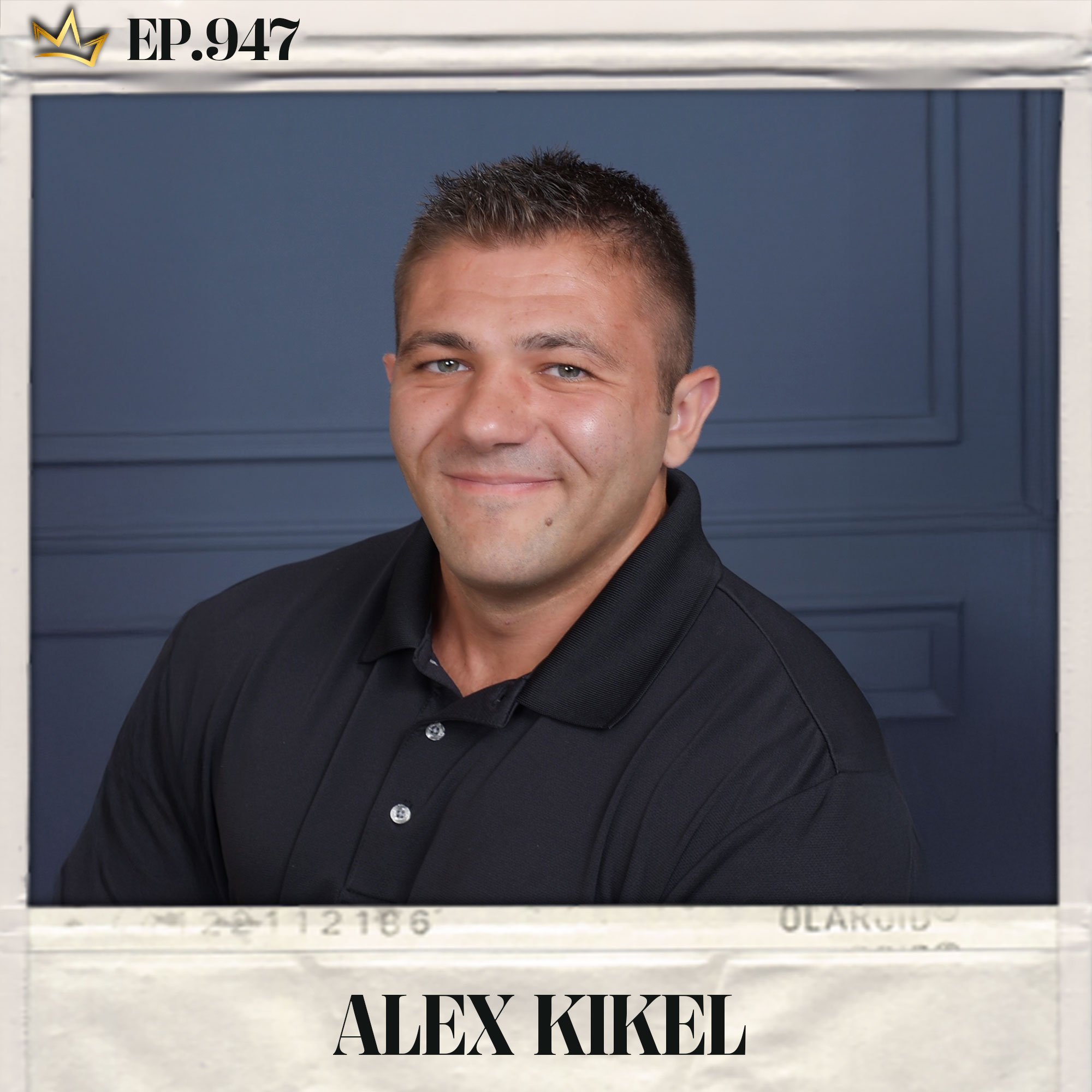
EPISODE DESCRIPTION:
Peptides are exploding in popularity — but most people are using them completely wrong.
In this episode of The Health Revival Show, we sit down with peptide expert Alex Kikel to break down:
• The biggest peptide mistakes destroying results
• Why mitochondria determine whether protocols work or fail
• How peptide overdosing can backfire metabolically
• The real way to introduce advanced therapies safely
• The future of regenerative compounds and healing biology
If you’re using peptides, considering GLP-1s, or deep in biohacking — this episode is required listening.
Connect with Alex: Instagram | Web
***
CONNECT:
🏆 Work With Us: Revive & Thrive Program
🔗 Connect With Liz: Instagram | TikTok | YouTube
🔗 Connect With Becca: Instagram | TikTok | YouTube
🇺🇸 Private Community: FitMom Society
▶️ Have Questions? Ask Here
***
SAY THANKS:
***
produced by: 📣 brandhard
Transcript:
Becca Chilcz: [00:00:00] Welcome back to the Health Revival Show. We have in the flesh someone that we have mentioned, not in the flesh, he is on Zoom, but someone that we have mentioned many times on the podcast as one of our mentors. Alex Kele, thank you so much for joining us. We are so excited to have you on the podcast. Can you introduce yourself a little bit and tell the audience.
What you've taught us in terms of general like education around, you know, all the things, peptides, all the things really complex clients, um, and how you got into this, which I think is fascinating because, you know, you didn't go the normal route that I think a lot of people probably would expect.
Alex Kikel: Yeah. So first, obviously thanks for having me on.
Always love talking girls. It's like another mentoring call. So super comfortable. So started, actually I'll start with a concussion. So again, in hindsight, 2020 at that time was the worst thing of my life. 'cause lacrosse scholarship, like that was my future. College is the only thing I thought about, and that was the best thing that ever happened to me because that concussion couldn't walk, talk, or eat for six months.
So I remember [00:01:00] waking up in bed afterwards and looking in the mirror and I felt my ribs and I was fairly muscular playing lacrosse at that time. I look in the mirror and I had like a, you know, a little beard going on. This is in, you know, high school. So it was a big deal. I'm like, like what happened? And I had to be told what happened.
So at that point it got me into like nutrition, dietetics, and bodybuilding just to learn how to heal myself. That led to essentially working at Chipotle where I met my wonderful wife. We now have four kids, four dogs. So they're the light of my world. During that process, got a master's, was gonna go for PhD.
Uh, business just took off online. Was working with traditional strength, power hypertrophy athletes in body boom.com forms. All started there. Then it was word of mouth to fixing CKD and heart failures. And I helped one old lady with her, uh, liver and kidney failure. Her son turned out to be a big name in the NBA.
So then from there, worked with him. It was word of mouth, the NFL nhl, and it just blew up from there to actors and cancers and kind of everything. And that was roughly 14 years ago. I have to kind of think back as like whenever you have kids, you like, you forget about time. Right. It was [00:02:00] roughly about 14 years ago.
And, um, that's how I started. And honestly, everything I learned, I learned out of school with application, reading books and research. But the process of learning how to learn, how to find information, like from going through university, I think that was like what I learned the most from college. And so learning how to learn was big.
And then after what you find your passion, you just. Go crazy and dive in. So that's kind of what got me to where I'm at today. And I say I fix biology because I don't know what else to call it. It's kind of like whatever the problem is, I kind of fix it. You know? With humans, with animals, it's turned into a bunch of different stuff with vets, clinics, things like that.
So a little bit everywhere.
Becca Chilcz: I feel like you're one of those super learners. Like I think that there's certain people in the world that. They just comprehend and take in knowledge at a different level than the normal population. Um, because the, the things that you spit out at us sometimes Liz and I both are like, slow down.
Like it's just the way that your brain works is just on another level and [00:03:00] it's amazing. Um, it is, it is very special in a good way. Uh, but so you essentially. Learned so much of what you know and apply now through your own research and through your own, you know, methodologies of application. Correct?
Alex Kikel: Yeah, exactly.
And so that's why I think I talk so differently than everyone else. 'cause a lot of other people will say that are doing the same thing in different demographics will say the exact same thing or similar, but it'll be different terminology. 'cause I didn't like, we're gonna talk about all the stuff in the quantum world in things with, you know, non-coherent, coherent EMF mitigation.
And like I, I'll talk to these guys and we're saying the same things but completely different terminologies because I've never had a mentor. I looked forever. I tried to find people to learn from. I just never did. And so I took the mindset of, okay, if I can't have that one mentor, I'm just gonna learn from everyone.
And so every conversation I have, I try and pick up something. It could be about being a better person. It could be about some hairstylist tip, it could be a cardiac surgeon. Like no matter what it is, I try and pick up things and learn from them. So [00:04:00] I turned into learning from everyone, honestly.
Liz Roman: I love that.
What a great philosophy. And one thing that we have talked about too, so, so many people is just the heart that you have. And I think that us, it sets you apart, right? We've always, I love your emails and I've started to do it even more with my clients of like, always my honor, or just all caps, have an amazing day, you know, just my heart and your passion and your friendliness and just genuine, right?
You're just genuinely a, a great person and so. We are attracted to that more than anything, right? Because other mentors could be fantastic, but they're kind of jerks. And so like, I don't wanna like learn from those people. So plus you've helped us with some very complex cases and just really taught us how much there is to continue to learn.
And even though we say, okay, slow down. It's so helpful because we'll go back and watch those calls and then I'll pause it and like dive into, okay, what did he say here that maybe I need to expand and learn more from? So anyways, um, because of your zone of genius being more so in the peptide [00:05:00] world, exosomes, plasm, all of these things, what we would love to kind of talk about, and hopefully this will resonate with many people in our audience, is what do you see in terms of the peptide world that's kind of exploded?
Being a concern or maybe some red flags and more so speaking on how we say peptides are a privilege. They are super, super cool. We love them. They are powerful. They're amazing tools that we use. But we also know that mainstream media has really exploded with. Popularity, right? And then people are just out there buying all these things.
Like I even have clients that will be like, oh hey, by the way, I bought X, Y, Z and A, B, C. I'm like, why did you do that? We don't need that right now. So I'd love to hear from you, 'cause you were obviously in the trenches working with some of the biggest names out there, N-F-L-N-H-L, all of that. What would you say to the person who is interested in [00:06:00] peptides and might be.
Considering starting or has purchased a lot of things and maybe don't exactly know what they're doing, what are the things that you would say are kind of, uh, your foundations to starting peptides?
Alex Kikel: So I would actually, so the best advice would be obviously, get your nutrition, training, sleep, stress, like get all that managed.
That's the right answer. But the applicable answer, what people will do is change from that. So, although that's still part of it, I would say pick one of everything. So pick one supplement. Pick one peptide. Pick one new thing to learn about training. One new thing about learn about nutrition, and slowly do all of these together and keep detailed notes on what's going on.
I have like thousands of notebooks in my office here of just notes I've taken on myself, on clients and everyone, and I think that's the best way to introduce it. Because the whole shiny object syndrome is very real and like we all are accused of it. Like I have like four things come in the mail today.
I got four more things coming later on. Like it's cool, but I'll do them one at a time, right? I'll slowly layer these things in. [00:07:00] So I think if everyone getting introduced to the peptide world could just do one thing at a time, give it a week, like. Ideally longer than that, but even one week should tell you what is or is not happening and 'cause it could be a dosage problem.
So ideally, we start low and build up from there based on the compound we desire. And then from there, if you're not feeling effects, like there should be effects, like if you're taking TB 500, like affecting neonatal gene expression, healing, you should feel healing like your joints, your brain, your biological tissue.
Things should start feeling better and moving better. S sleep should be deeper. If you're not feeling that it could be a dosage problem or it could also be the fact that you don't even need it yet. Maybe like you don't have a stressed life. Maybe you're barely not even training. Maybe that's something for later on.
So I think introducing one thing at a time for every category is kind of the middle road now. 'cause I don't think anyone's gonna not take the peptides that, like, again, they'll come to you and they'll have 20 things. They're not not gonna take it. So instead, if you can have that cool relationship, like, okay, let's start them.
Let's do one or maybe two things at a time. While we also change all the other lifestyle [00:08:00] habits, I think that's the big thing to do. 'cause it's not really sexy to say, Hey, let's go get electrons and go stand outside. Let's get more photons from the sun. Like it's not sexy if you just say that, but let's say, oh, let's potentiate how our mitochondria traps the light from the sun by taking something like motzi.
So we get more action out of the sun, out of grounding. But at the same time, you can do something and take something. It's more fun for people. You get better results. And generally that's kind of the middle goal.
Liz Roman: Hmm. You just brought such a great point up. So let's go back to the conversation here around Motzi and how it can help us get more out of the sun.
You had to say for the person who wants to just feel better, maybe it's not like a specific digestive condition or specific part of their body where they're experiencing pain, but they just generally wanna feel more vibrant in their life. What would be your favorite peptide for them to start with? And what would be the other benefits that mainstream media maybe doesn't discuss?
[00:09:00] Because that, for example, with Mott Sea, someone could just be taking it, but they're not grounding, they're not getting sunlight, and then they're not maybe getting the full benefit, right?
Alex Kikel: Definitely. Yeah. So I would actually start with Mott Sea. If we have a completely blank slate, there's no major dysfunctions, no tons of edema, inflammation, organ failure, like completely blank slate.
I think Motc might be the best option. So look at the name mitochondrial open reading frame of the 12th S RNA C. That means internally within mitochondria, it is spinning out the short open reading frames and causing what's called MIT nuclear communication. So it literally connects mitochondria. So Ty, actually not really tying this back to the universe, but kind of if you look in neurons and in mitochondria, they're in cells.
There's all these cables, right? So in cells, in mitochondria, there are these cables that exist between them that connect them. In neurons, it's called quantum tunneling, and they carry those. There's these little cables again, that carry electrons and protons, uh, in the universe, in space between planets.
There's these actual quantum tunnels, same thing, but they're more caring ether and [00:10:00] plasma. So you can go from universe to neurons in the brain to mitochondria cells. They all have these same principles and they're all basically exchanging information. So I would think best place to start is improve communication systems, the body of via mitochondria and cellular cascades.
That'd be mod Z. And you pair it with your outdoor sun exposure. So what you would wanna do. First thing in the morning, you'll have to figure out, uh, what time your sun rises. Um, and then there's also solar noon, so just, you know, type into Google. It'll pop up like here. It's about seven 30 solar noon's about 12 ish 30.
Then we kind of, lately it's been, uh, sun's been setting around 5 45 ish. So you kind of know those times day to get different photons from the sun. But know what time it's rising. It's rising. Take your mutt, start off as low as a hundred microchips, just subcutaneous. Nothing crazy. You can always take more, but start off low.
Go outside barefoot ground. What we're doing with the ground is if you look at the bottom of our feet, there's these huge pores that sock out a lot of endotoxins. That's why when you sweat, your shoes stink because it's just pulling out all those toxins, right? So you can pull the toxins out [00:11:00] into the ground, but at the same time, that Schumann resonance, so the way the earth actually spins outta resonant coherence level, it pushes electrons through your feet, through the rest of your body.
So it basically connects through the water fascia mitochondrial network to the bottom of the feet. It goes from big toe to opposite glute, to opposite cortical region to pineal gland to consciousness. That's the way it kind of moves, and while it's doing that is carrying these electrons. Electrons are anti-inflammatory, electrons are fruit, like it's all the same word, and all it doing is trying to balance out oxid.
So while you're doing that, you're also getting the photonic exchange from the sun, right? So as the Mott C is not only fueling mitochondria, the bottom of the foot to pull more stuff out, put more good stuff in, it's also then allowing those photons to be stored in your mitochondria better. So your mitochondria will trap that infrared light, it'll hold onto it later, and then spontaneously uncouple it.
And that's, you'll get these bursts of cellular energy. So if you wanna talk about like fixing basic circadian patterns, health driving energy, driving a PK, some of my polish, some beta oxidation, some mTOR, like a little bit of everything. Motzi [00:12:00] with grounding and sun exposure first thing in the morning. I don't think anyone can really go wrong with that.
And the nice thing about motzi is, uh, negative, negative side effect profile is very low. So with all these mitochondrial peptides, you can what's called hyperpolarize, or I call it over spinning. So if you look at mitochondria, ideally you're looking at like negative one 50 to negative 200 milligrams. So that's kind of the range you wanna be at.
Higher end, healthier, right? If you are hyperpolarizing so too low, say it's like negative 75 millivolts, it'll spontaneously combust if people just blow. Dysfunctional dead mitochondria. If you hyperpolarize go say negative two 50 millivolts, negative three 50, whatever, then you over spin, kick out too much ATP too fast.
What happens with that? You slip protons. Electron slip causes oxidative damage. So we don't want that hyperpolarization. What we want is that mid range where, right about the top of mitochondrial functionality, but not too high. That also keeps your own mitochondria producing its own endogenous water. So H three two, if you overspend that process, you can text use that to deplete [00:13:00] deter, but that's a different conversation with later on.
But we wanna stay right there, right? So the problem that people run into with MOT Z is if you take too much and you're corresponded to that dose. Now dosage ranges can be multiple milligrams, they can be high. I'm, I'm a very weird responder to Motc where 500 micrograms does the same thing as five and 50 milligrams For myself, that's not many people.
I've slowly worked up over time, whereas SLUP 3, 3, 2, 200 micros is all I can take orally. Like that is way too much because I, I'll hyperpolarize, I can only do it Monday through Friday. The problem with saying that though, is everyone responds so differently. So with everything, start low and build up. Find your own reference range, just like on blood work.
Reference ranges really don't matter. It's the same thing with doses. We need to know where to begin. So Nazi a hundred, 200 micrograms work up from there. We need to find your own number and not just follow what everyone's saying to do because that might work for them. You have to know what lens, like how are they metabolizing it.
Becca Chilcz: And what would you say are [00:14:00] some symptoms for people when they are in this like over spinning space? 'cause. I, I think sloop iss a big one. Um, unfortunately a lot of standard dosing on things that I've seen have sloop at like two 50 to 500 micrograms. Um, and so then people obviously go and take that on top of maybe being on a GLP one on top of being on, you know, a tesser and ilin or whatever it might be to try and optimize body composition or weight loss.
Now they're more tired, now they're actually gaining weight or swelling. Like, what would you say? Brain fog. What are you seeing in terms of symptoms of this? The body cannot handle this level of, you know, mitochondrial stress ultimately. Like it's trying to, you're asking it to do too much at this point.
Um, and that could be bioindividuality or it could be that there's other stressors going on that. Are not address. Correct.
Alex Kikel: Exactly. So that's the tough part. Your HRT potentiates mitochondria, your sun exposure, potentiate mitochondria, you he food that is more coherent and healthy for [00:15:00] you. Potentiates mitochondria.
So you really have like a thousand things potentially working against you if you don't do thi white thing at a time. And with these peptides, they're so chemically strong, they can easily throw you off. Hyperpolarization over spinning. What you'll see, first of all before you see things on blood work is you will start to get wired and tired.
So you will feel wiped out by like two to 3:00 PM every single day. Like you'll be like, you'll never be able to feel this kind of tired again. You'll be like, what happened? You like you ran a marathon, you're back in high school. Like you can't put your finger on it, but you're just super tired. That's always the first sign of Hyperpolarization.
So you'll have good energy in the morning, then you just kind of crash the afternoon. If that happens for a couple days on end with no explanation, hyperpolarization, if you heat that up long enough, what will happen? And there are some positives there. Um, you can potentially hyperpolarize mitochondria to kick off more, uh, uh, fluid production to then actually kick off deuterium.
So I'll do like plan periods for people for maybe like four to seven days, once every couple quarter or every two quarters. But that's not [00:16:00] what we're talking about here. Um. On that, let you'll start to see H-S-C-R-P start to increase. 'cause remember you're throwing up a bunch of oxidation. So HS. C rrp, inter interleukin six is usually gut inflation goes up pretty high and then brain fog, right?
Because once you have that dis arrangement gut bacteria, then neurons don't fire and connect the same. So that shuts down neuros to your junction, and then all of a sudden your training goes to crap too because you can't contract a bicep. Because your MJ can't find, so it literally starts with that lethargy, that feeling, and then it kind of just goes to inflammation, gut, brain, and you'll notice because you'll be like, what am I doing?
Like I did, I'm doing everything right. If you ask yourself that question, it's always mitochondria, overp,
Liz Roman: and walking back from that beyond just obviously taking a break from whatever stimulus or peptide that you're doing. What are some of those foundational things that you're putting in more on the repair side to get the system to calm down?
Alex Kikel: So normally you can layer in a little bit of SS 31. Most people will not hyperpolarize on S 31 because it's gonna clean up electrons, basically. Some people can So [00:17:00] trial that out beforehand. Um, there's also that new, uh, SBT, um, or SGT 2 7 2, uh, which is gonna be like the replacement for SS 31 since now that's prescription.
Um, it works almost stronger than S 31 so far, by the way. So that's, that's like a cool replacement. Should be hitting the market hopefully soon. Those kinds of repair agents help a lot, number one. But number two, the traditional, I hate saying like the detox methods, right? But a good infrared sauna, sun exposure, getting your grounding work in.
If you have something like a, like a real pimp technology, um, so something like arc pimp where it is so strong, you're actually having those stacked polar lipids or hydrophilic and electrophilic on cells. You can push electrons and flux them back and forth. That's, that's actually causing cellular resonance in coherence.
You can't get from traditional PE technology that's more superficial, still beneficial, but not actually getting those deep cellular changes. I might say those would probably be the best ways to kind of blunt, uh, an over spinning issue.
Liz Roman: Okay. From there, when we're thinking about, you know, again, peptide peptides being a [00:18:00] privilege and you have somebody who is really optimizing, right?
I would love to hear your thoughts on cycling and yes, you can, you know, maybe stay on certain things longer term if you're not. Doing, you know, every single day, or let's say five days a week. 'cause most of the things that we look at, it's either Monday through Friday, Saturday, Sunday's off, eight weeks on, eight weeks off, right?
Type of a a situation. But if you have somebody who's on more of that chronic illness side. How would you basically recommend that they, and I know that you have a private community and people should join that and obviously learn from you, your YouTube channel, all of that's amazing. But if there is something more just kind of like general, the way that you think about, you know, when you're writing protocols or how I might plan someone's year out, what would some of those tips be for kind of cycling.
Alex Kikel: So death, so goal oriented number one. But on the timeline rotation, a lot of them can be used until the goal is accomplished. So that could mean literally [00:19:00] boluses of BP, C and T being multiple milligrams weekly for years on it. I've had some of those people with chronic, chronic Lyme, tons of mycotoxins, child to boost.
Everything you could imagine that has them 30, 40 years of this destructive, damaged cells. Like those people, you know, long time on these compounds. Right? Um, but if it's a longer duration. In some, we usually have to reduce the frequency, so the BOLs has come in. But normally I like doing a goal dependent, right?
Because if you have like a fat loss goal, right? 12, 20 weeks, like that's a good, good timeframe. You're trying to drive more. Now in 20 weeks, if you're trying to drive a dysfunctional change, that could be like 20, 40 weeks. Like that could be a little bit longer. So I try and set up milestones and timelines so that every week in our check-ins, you're trying to make those shifts and change to see what's happening, what's not.
But generally, you could go with the traditional abouts. Two to three months. So that eight to 12 week range is usually pretty good. At that point, you need to either know, okay, is this compound actually working or not? So that's kinda like the general overarching principle of how to periodize those peptides.
Now in reality, again, [00:20:00] you could be on these things long-term. You can also use them one time, never use them again, right? So I think there's kind of this thought like you have to take them every single day or it has to be done this specific way and you can do these bolus amounts, uh, for like a longevity aspect side of things.
So you could do that one shot one time per month, just get enough healing on that day to not waste the other days of the month. Right. So in this whole dysfunctional community, it's definitely usually higher dosed over time, in a longer duration. So peeling back the layer of that onion a little bit more.
If we take glp, we talked before the call in this whole conversation. Um, if you look at what they do to the prefrontal cortex, um, that interior, uh, mid singlet cortex, and then on the dorsal lateral prefrontal cortex, those are all areas involved in basically willpower, resisting temptation. What can happen is people that have been on them for five, 10, you know, 15 milligrams for years on end, they start to aphy those cortical regions and then all of a sudden it's not just, if they come off, it's not the willpower to not binge, right, because [00:21:00] they also stop working at that point.
So you're taking that much, but stilling, it's the willpower to train hard. The willpower to be a good spouse, the willpower to learn like willpower, to do uncomfortable things. So the way around that, I think a lot of people are already doing, but there is a subset of people that are dosing them crazy high for way too long is first of all, unla to dosing.
So this is where it could go anywhere from microdose daily to one bolus dose every two weeks to going from five milligrams to one milligram. Like you can angulate a bunch of different ways. You can also switch between different compounds. So if you look at the orientation of these molecules, they'll chemically and ly bind differently in their receptor.
To tirzepatide, to ide, to cag. Like you have all these different options. If you're rotating them and changing the dosage, then ultimately you'll not run into the same with the brain problem At the same time, if you are taking any kind of GLP and doing any basic neuroplastic work, like any basic neuroplastic work, using your brain thinking, educating yourself like you girls are, like, you're probably never going into that problem.
But I think this is more for the [00:22:00] mainstream people that are just taking that, not doing anything else to where they are literally at being centers in their brain that will cause willpower to be lost over time. Those, those areas just aren't big enough.
Liz Roman: Yeah. You mentioned the large doses and um, we see this a lot in terms of people being not responsive and so they think the answer is more.
I'd love to hear your thoughts on that too.
Alex Kikel: So you could do an exosome or SS 31 reset that usually can do a pretty good job. Um, again, exosomes are more expensive, so most people won't go that route. But you could do like a, like trying to hyperpolarize with S 31 for like a week or so, or it could be like five milligrams a day or high or something of that, depending on how you respond.
Um, but that usually is a good job of stopping receptor decay. So I don't think it's a receptor desensitization problem as much. It is killing off receptors. Kind of similar to how acetaminophen works. Lys receptor kills it off, goes somewhere else. Goodbye. It almost seems, I have no research behind this, but you just see this des effect.
It shouldn't happen with these receptors 'cause GP stimulation, [00:23:00] like everyone's in a GLP deficit these days. Unless if you get extremely healthy and coherent then it's not a problem. But that's like what 5% of people. So 95% of people are in some way because we're not having bitters anymore. We're in some way GLP deficient, G-I-P-G-C-T, so less stimulation.
So to me, you could do these kind of resets. Um, you could again, because once you do desensitize, you can usually cut the dose in half to switch out to a different compound. Going back to confirmation, how the shape of the molecule fits in differently, have just enough change to not kill off as many receptors in the kind of value time.
But normally with glp, it's definitely a dose and duration problem. And this is where also like the C curbs or the, what's it called? Ha. Hey Aussie. Is that what it is? Um, the drink, right? The natural GLP products. And you can rate, rotate those in and out as well. And they work super well because we're talking about super physiological activation with injectable, more pharmaceutical compounds versus their natural counterparts.
Natural ones you can basically take, not really have problem. It's only at such. Certain stopping point at a physiological, [00:24:00] expressional level chemical. Right. Um, but the other ones, they're just, they're so chemically strong. There's gonna be more after that. Like, you know, the four stages with, um, IGF ones and all these other ones coming out, like they're getting stronger and stronger and more is not always better.
The same thing exists in the pharmaceutical world. Yeah.
Becca Chilcz: Just a random thought, just 'cause I was thinking about this the other day and with like the atrophying of the prefrontal cortex. For people that maybe go through periods of extreme intense training, like people that have been through prep of bodybuilding or like, I used to compete in CrossFit at a really high level, and I was training at just the most extreme of extremes.
Um, and I feel like now I struggle to push hard in training, like I lift heavy and so forth, but like mentally, it's hard for me to wanna go there because it's almost like I, I did it for so long that. Like, I can't even imagine going back and doing the type of pain cave workouts that I used to do and like is that a [00:25:00] thing or is it really just more with, you know, outside exogenous peptides and medications and things that can cause atrophy?
Alex Kikel: It is a thing. I mean, if you look at like the social media, the blue blood exposure, the dopamine dump from all that stuff, like a lot of bad things are seen because they're actually in the prefrontal cortex. So a lot of things in society do atrophy them. And that's why you can have a six, a 70-year-old male or whatever yelling at you in the grocery store.
'cause you took his, I don't know, canned sweet peas or whatever he's trying to eat and like that's an immature response. And so what happens is the back of your brain, that lizard brain goes to the limbic system, goes to the prefrontal cortex, and then we make a decision and we, we act. Right? So the faster that process happens, the more basically immature you are because you'll just make those snap decisions.
Versus if you have a more hypertrophy pre cortex, it slows that chemical process down. So by the time the signal gets here you go, it's not that big a deal. They stole my can of food, whatever, like I'll just gonna get another one. And so a lot of things are slowly atrophying, multiple cortical regions.
This is not even talked about the pineland. How [00:26:00] that extension, that antenna to connect with our consciousness to drive that universal change energetically, literally, um, is just slowly getting worse and worse in a lot of people. And so if we can either per the prefrontal cortex, like do something simple, um, literally get puzzles.
Get puzzles, and start doing puzzles, because that decisionmaking process, the memory formation, that'll start to hyper that p ffc pretty fast. The whole cursive writing to connectable chemis of the brain, the Elevate app, like all these things we already talked about, right. Those basic neuroplastic drills and games on top of backing that up with driving like BDNF and GDNF, all neutropic compounds, like that'll start to re hyper your brain.
Um, did we talk, have we talked about the newest compound VD 11, or No?
Becca Chilcz: I don't think so.
Alex Kikel: So, so really quickly then, um, so I was the first human being I believe to take it. This was like a couple months ago. So I was super proud to say that uh, we already the LD 50 test on it, by the way. So there's no lethal ghost or anything, but this is the one I found out doing my work in the zoo vet work.
So Salama is regenerate their spinal cord basically over [00:27:00] lifetime, right? What molecule does that? We found the oosh Maery frog research. We found VD 11 as the molecule that basically does that. So listen how cool this is. First of all, it's starting more so on like the microglia and astrocyte side effects.
So we have some microglia astrocyte changes, which if you go down through like protein kinase B and C and PLCY to drive neuroplasticity cell survival, you start seeing, okay, all things in the brain, spinal cord, they can regenerate. Then you sidestep to the right, the fibroblast changes and the keratinocyte changes, which also ate the immune system.
So now you have skin healing, muscular healing, soft tissue healing, and then it cross stimulates the immune system as well. So this molecule on paper was like, oh wow, this is gonna be like the new TB 500, PC 1 57. So we had it synthesized. I tried it out. Right now, I believe we have like a hundred or so people doing it in the group, in the school group and with clients and we're seeing some crazy things.
The one girl who's really big in the whole gut world, we're seeing as being one of the only compounds that really regenerates that single cell lining of the gut because a lot of things regenerate, [00:28:00] okay, not that chemically strong. They'll pull down inflammation or tighten loose junctions. This is actually regenerating.
Entire single, entire single cell layer. And so VD 11 is coming about to also then hypertrophy the prefrontal cortex. So we're still figuring it out. We found some, uh, like I had some weird experiences early on because working up the dose, trying to figure out the dosing paradigm, and uh, I got heightened senses, which was very odd and I didn't think anything of it.
But like I was in the kitchen, my kids were in the other room and my middle son starts peeing his diaper. And I didn't know this, but I just smelled urine. I'm like, what's going? Like, I'm like, ADA, are you peeing your diaper? He looks, he goes, yeah, dad. I thought, I didn't think anything about it. I thought that was weird.
But then the next I went outside, take my normal morning walk. It was only like 20 degrees, right? Um, but I literally, like my body kept pulling me inside. I couldn't tolerate that temperature. Then I went into my sauna only 130 degrees. I couldn't tolerate it. I had to get out and turn it off. And so my senses for those are starting to be heightened in the wrong way.
Because if you're hypersensitive to certain things, that's not gonna be a benefit. Right. I was hoping [00:29:00] maybe we could see some like cryptochrome modulation in the eyes. So then you could like literally see people's like, uh, electromagnetic fields and waves, which would be super trippy, right? But obviously we didn't get there yet, but I'm hoping like we could find a way long term to have that kind of work or do something with a molecule with that.
But that either way, dose goes too high, you'll start to retain fluid. Cytes will get a little more inflamed, but low dose, longer term. So far, it seemed to be a pretty cool. But especially going back to the prefrontal cortex one hypertrophy, that it's compounds like these that are regenerating those micro clears and astrocytes to allow your brain hypertrophy at, at just faster than normal rates.
Liz Roman: That's amazing. Can we go back to what you mentioned on the gut side of things? 'cause obviously that's what we deal a lot with in our practice. So let's stair step this, right? So we know that we have things like immunoglobulins that can be really great for secretory iga, supporting the immune system. All things in terms of mucosal barrier.
Then we have eptide, right? Or BPC 1 57. So walk us through that sequence. If you're saying, [00:30:00] let's take for example, ulcerative colitis and I know that I want to help or diverticulitis either one of these, right? More inflammatory bowel conditions. Where would you go first? 'cause my thing would always be kind of like, you know, obviously calm the system down as much as possible.
Obviously diet's gonna be very important here. Maybe some medical foods putting in some of those, uh, compounds for healing. But in what you're seeing with this, uh, you know, most recent therapeutic, would that be more a last resort if the person had done. The three things that I already mentioned in terms of maybe the BPC or let's say even like a, a bio gut pro or a ultra GI repair.
Some of those blends that have, you know, those compounds and they say, I didn't feel anything. I didn't notice a difference from this at all. 'cause I've had those cases too. And then on the flip side, I've had people say, man, I can't go without this. I want to take this regularly.
Alex Kikel: Yep. So you could do this a couple ways.
First of all, from what we've seen so far, and this is all preliminary, this is a couple months, only a hundred people or so, [00:31:00] but I, I feel like VD 11 is trending in the direction of like the s and the Dadas, the things that, like I brought about years ago and had that gut feeling, they turned out to be like the biggest things.
I, I just had that gut feeling. What we're seeing so far that this is gonna be that. So as of now, I'm saying VD 1150, a hundred micrograms daily, subq, nothing crazy, could put it before bed. You see RV changes and things like that. But I think if we have that the first of all, repair the gut lining, like actually at that single cell level, then I think just in case like the, the LoRa tides of the world can never really hurt people because if we can make sure that those junctions are a little bit tighter, we don't have any kind of slipping of electro um, of additional inflammatory proteins.
So we can repair and we can tighten, keep everything in the gut. I think then that is a good place for the oral BPCs and things like that to pull out inflammation. But to me, this is also where you have to really look at NMT and CD 38 levels, right? Because a lot of these people have high trimethylamine oxide levels, high hs crps, like high, high amounts of inflammation in the gut.
And so if we can start fueling NAD down their right cascades. We [00:32:00] start driving cellular repair, it's like, uh, stabilized oxalate. The benzine. That's an amazing one for that 'cause you're literally getting ox into that grab cycle. You can start stimulating and modulating those NAD to NADH ratios. So now you have the cellular energy to keep repairing the gut and to keep biting inflammation.
I'll assume for this conversation, by the way, you've already gone through a process of either it's a ki off phase or repopulation or like whatever, whatever people are doing. 'cause there's so many different things in the bacteria world. Um, we're actually working on making a, uh, and basically genetically modified, uh, rosis.
Um, a couple different ones, but also have some different epigenic changes, but that's for later on. Um, so either way you start going down this route and then you would also potentially layer in the little things like the hydrogen waters, right? The hydrogen waters of the world are so amazing because the kind of like the adaptogenic component, right?
Because they're gonna fuel your peroxide, Disney taste in the gut, but then also cause a slight amount of stress to the system to cause another adaptation. So things like the VD 11, the bena genes and like hydrogen waters can be massively [00:33:00] beneficial. Hydrogen water would ideally place like throughout the day, two or three times depending on the product.
Um, we would want, by the way, be drinkable because that's more gut liver, whereas the inable products are more like neurological, biological, lung based tissue. The Betaine probably starting off with like a hundred to 200 ish caps per day, but you have to be careful. If you work it up too high, it'll weaken that esophageal sphincter.
You could have a, a little bit of gerd, little bit of acid reflux. Um, you can get around that by strengthening that, that sphincter, by having a decent sized meal and then going on aversion table because Inver, you have to close it. It'll slowly strengthen that sphincter over time. So just learning that process.
But I think those three are usually, it's a good introduction after the basics. Already met with food, with probiotics, if there are kind any kind of biofilm problems or anything like that. This would be kind of the next step.
Liz Roman: Yeah, that makes sense. I mean, 'cause a lot of the cases that I've helped in terms of reversing, yeah, we were identifying what's the root cause of this.
You don't just come up with IBD, right? It's because of bacteria and things that are driving this. And then, you know, really honing in on what is triggering [00:34:00] their immune system. So these would be, in my mind, more end products of that gut healing phase where we're coming after the eradication to really heal seal repair, rebuild.
Or would you be bringing them in earlier on with some of their eradication agents at the same time?
Alex Kikel: I'd bring them in earlier on actually, because now we're diverging away from basic biology, so we have, these compounds are so chemically strong. You can literally do multiple biological processes at one time and have no interference effects.
Like that's the cool thing, like even the INE for example, right? Because you can literally fuel a PK to make it feel like your cells are fasting 24 7, but you're not. You read it. So you can technically biochemically get away with that because we have such high, uh, high tier compounds, chemically speaking.
So for me, I would rather bring these in now than the beginning because they're only gonna make what you're doing faster. So maybe a gut reset overall face takes you 12 weeks or whatever. This would cut that time down to six or maybe eight weeks, depending on how bad the problem is, who they are, how they respond.
But, uh, it would, it would potentiate the [00:35:00] process for sure.
Liz Roman: Okay, perfect.
Becca Chilcz: Yeah. So last question, what about the concerns? A lot of people talk around. BPC, you know, because of the cell proliferation aspect of it, and red blood cell recruitment and, you know, with the teres and IPAs and the growth factor hormone, the concern around cancers.
Right. Um, 'cause I know we've talked about this at, and I would love for you to kind of share your side of things when it comes to the concerns. You know, and I, I think it's, uh, it's from not understanding it. I could see where people are coming from. Right. But once you truly understand the mechanisms around these and know how to read the research and know how to, you know, sift through some of that, um, share your thoughts.
Alex Kikel: Definitely. So if you look at the difference between healthy cells and cancer cells, it's a difference between a six degree and a nine degree angle, architecturally speaking. So if you look at the meta [00:36:00] process, it's all starting with the glutaminergic stool. So you're seeing the shell, uh, cell morphology, and then the storm that happens after, and how these things actually grow in proliferate.
But cancer in and of itself is a state of cellular incoherence, meaning it's not ing, it's not spinning the right way. So we'll again, that'll have to be another podcast you guys are talking with I later on, so then he can explain coherence and everything. But if we kind of step back to the cancer PPC world and everything like that, if we can go ahead and, and look at how these compounds are working and the environ being introduced to, and kind of tell you everything.
So all the growth factors. First of all, actually figure out if you even have cancer. So go to, I think it's uh, cancer Check labs or cancer. Check on kid check labs.com, and they check for circulating tumor cells. So that'll say if there's a tumor in circulation, it's gonna be throwing off these CTCs. So first know if you have a tumor, right?
Get that test. I think it's like two grand. So expensive, but you know, at least you know. Then after that, you know if you can or cannot push any of these things. Now, in the growth hormone world, any growth hormone peptide, [00:37:00] exogenous growth hormone will proliferate cancer. If it's there, if it's not there, it, it can't cause it to grow.
But if you're taking these growth hormone products and living a pretty oxidative bad lifestyle, you develop a tumor, then it makes it worse. So the growth hormone world, be cautious and know exactly what's going on, but if you're healthy and coherent, it's not a problem. The BPC world, it actually drives mitogen activated protein kinase and a couple other cascades to drive Cancery apoptosis pretty well and pretty reliable.
So it's never like if I work in the oncology space, I do a good amount of work now and I have, I would never bring this as a first line of defense because it's the best apop coded player. We'd have other players before that, like NK Drive exosomes or Band 15 or PNC 27, like it would be like a third tier option.
So BPC actually does not cause the growth of cancer cells, doesn't growth rate them. If anything, it actually causes them to slowly die off. It doesn't do that good of a job, but it definitely doesn't make it worse. Check CTCs, then you kind of know where to go from there. And like everything else with these growth hormone products, it's start low and build up over time.
If you acquire a bigger dose than [00:38:00] your friend, that's cool. That's your response. If you get a dma, like a hundred micrograms of IAM both down to 50, still edema, you also just might be a poor metabolizer. That might not be a compound for you.
Liz Roman: Similar to what we've talked about a little bit with VIP, you know, in terms of people not being able to handle that, even at very low doses, 25 micrograms, it's like, okay, you're not a candidate, but it's,
Alex Kikel: yeah,
Liz Roman: we need to stop.
Alex Kikel: Right?
Liz Roman: I think that's problem too, and I'd love to hear, as we wrap up here, what would you just say to someone who's like, well, I'm just gonna push through because we've talked a lot about this mitochondria overspend and some of those symptoms, but. Right now we are seeing a huge increase in surge in histamine responses, right?
Where people are getting like welts or stinging or whatever it might be. And my response to them always is, you should be going low and slow, number one. Number two, it should, if it's a clean peptide, right, it should subside re within a few hours reasonably. But if it's not, and you know, we've [00:39:00] had. Some people message us on Instagram where they're like going to the hospital and they're getting, you know, huge doses of steroids and medication because they've just welted up all over their body.
Like that maybe is a cause for concern. And again, you're not just like pushing through this. So any final thoughts on, as people start to explore the world of peptides? Again, we would always recommend they're working with someone you are using, you know, strategy and guidance and low and slow approach.
But we do see that happening and I think it can be scary for some individuals and it doesn't necessarily mean that you have to avoid all peptides, but it does mean that, you know. You either need to test whatever you just took, or you need to really back down and take a different approach.
Alex Kikel: Almost three different responses, right?
So you can have that immediate immune response, which could be, it's never like the LPSs, like a lot of people say it's not, there's not pre negative bacteria in there for most people. Um, but there could be like purities, like 90%, the other 10% are unfolded proteins that would cause immune response. If that's the product problem, then you [00:40:00] need a new source and you do need to trust where you're getting things from.
You have to third party test things. But even at that. Aren't looking at other bit innature.
I'll say the technology isn't really widely available yet to know that for sure, but still at least get your basic C of a check, the purity check for any dimer formation thing, like check for those basic aggregates and things of that. The problem though is if you have that taken care of and your product's good, and you have the second response, right, where it doesn't have to be the product that's bad, it's how your biology responds to it, so you can unfold these proteins once they're in your body, so it could be perfectly fine.
You take it, your body unfolds and you get a different type of weak response. So at first, from your response, from a bad product, you do go to the hospital for, you normally have a bunch of NSAIDs and things like that to pull in inflammation. Fever goes to like 1 0 3 to 1 0 5, heart rate will go up like 20 points.
Like that's a chronic problem. If you have kind of a, a little bit less of the immune response, but you still notice it, you start to welt, get red [00:41:00] for days on end, you get a fever for days on end. That's where your biology unfolding the proteins improperly and then that can cause problems. So usually that's your a poor response, right?
Then the third option. Is really the one where people are getting negative side effects more because they almost need to, meaning like the VIP example, right? If you're liberating mycotoxins and changing that whole killing, die off effect. If it's a hearts response, that's kind of a good thing. You might wanna pull it back and, you know, slowly ease into that more.
That would be a scenario where maybe you push through it or bring the dose down or something like that. But I think that'd be the only scenario where I would actually go ahead and push through it. Uh, otherwise, in general, I think the rule is you should be having negative side effects. It's a negative side effect.
Then you're either taking too much, it's a poor compound, or you're a poor responder or stood slower. So those are usually the three or four reasons, um, that I would give. But normally, again, rule of thumb, you're taking these things to be healthy. And unless if you're very dysfunctional, you usually don't have to go through sickness to get healthy.
Now, those extreme health cases though, they will, like, as you guys know with the [00:42:00] mycotoxins, anyone in the cancer world, uh, TBI like all those people, you almost have that staggering type of success approach, right? Where it's, you're a little better, then your work's a little bit better, a little worse, just like in the PFS community.
And so those situations are different though. For normal people, you shouldn't have side effects.
Becca Chilcz: What about people that develop them over time? They handled it first and then six months, eight months in, now they're getting welts. Now they're getting a response.
Alex Kikel: Yep. Normally, number one, double check the sourcing.
If that changed, if that did not change, people can develop some different kinds of immune response to that compound over time if their biology was not meant to accept it in the first place. So the hard part, this conversation, this is the enzymology based world where your own enzymatic system will release and cleave these compounds once they get at that site of action.
And that can either be good or bad, right? So like for me, I can't take certain, like I can't take oxytocin at all. I get terrible responses every single time. Um, I used to be able to take it though for like, probably, and this is Jack. I could take oral and intranasal, but I used [00:43:00] to be able to take it for probably eight months to a year or so.
Then all of a sudden just a corresponder to it. And so that definitely does happen. It kind of makes sense, right? Like if you are becoming more cellularly efficient and more coherent and healthier and these things are working right. You could might, you might not respond well to them, might not need as much of them.
And that's a really big thing in like the whole mitochondrial peptide world. If you're using them properly and your mill voltage is already proven in your mitochondria becoming dense and strong and more vital to communicate better, then over time you need less. I used to be able to take. Close to a milligram of SLU, now I'm down 200 ish, I gram, something like that.
And everyone have a different range. So it's starting low buildup, but understanding over time, the response could definitely change. So it's that kind of a, that's what makes it fun. It's that ongoing process of always thinking, you got it, figure it out. And then one day you're like, Nope, can't take that anymore.
Like I took testosterone for years as my HRT. I responded bad the entire time, but I was a poor responder. I got acne, poor libido, all the oil, the hair loss, like never good. And I've switched to my [00:44:00] angell HRT since 2020, and it was like a light bulb went off. So like I was never made to process exogenous testosterone for whatever reason, enzymatically, chemically, whatever, I just can't.
And so I think. I think like not sticking to anything. Everything I say like I don't think anyone should think anything is gospel. Take it all with a grain of salt and see how you actually apply to it, because it's always gonna change for the person.
Becca Chilcz: Yeah. Because if something doesn't work, it doesn't mean that something's wrong with you.
It might mean that it's just your physiology. Everyone is different, and that is why this all needs to be individualized and learn and you know, experiment and find people to learn from. So to wrap this all up, can you tell people where they can find you and your school community and what you teach in there and give people the goods?
Alex Kikel: Com is the main website and school.com TPC Army. Um, we have it down pretty good now where I released one seminar a week, about four other videos, and maybe a protocol every week as well. So there's drops on Sunday. We'll do a [00:45:00] 90 minute live q and a about every other week, and we got some really cool people on that board.
We have awesome high ranking professional athletes. Some high coaches like people from everywhere, which is kind of crazy. Uh, it it's super cool. It's really grown. The vigorous rule on there is no drama. It's all positive. No one's negative. We kicked one person off only 'cause there was too much drama activity.
Love him. Nothing against him, but like, I wanna keep it pure, happy and just positive. So everyone's there to help each other and no one's like getting each other's faces or getting negative or mad. So it's, it's a very positive place to be at.
Becca Chilcz: Love it, just like you. Very positive, very happy. I always get, I love getting emails from Alex.
They always brighten my day. Thank you. We'll have to do a part two. Obviously there were so many things that we could have rabbit hole down, so thank you for joining us and I'm sure you might get some new people in your army.
Alex Kikel: I appreciate you having me on. And for all the parents out there watching this, if you see the name down there.
I used to reading that book a lot. I wanna see how many [00:46:00] parents actually got that while they're watching this. But again, seriously, thank you so much for having me on.