

#922: Alex Tarnava - Power of Hydrogen: The Hidden Key to Healing Inflammation & Fatigue
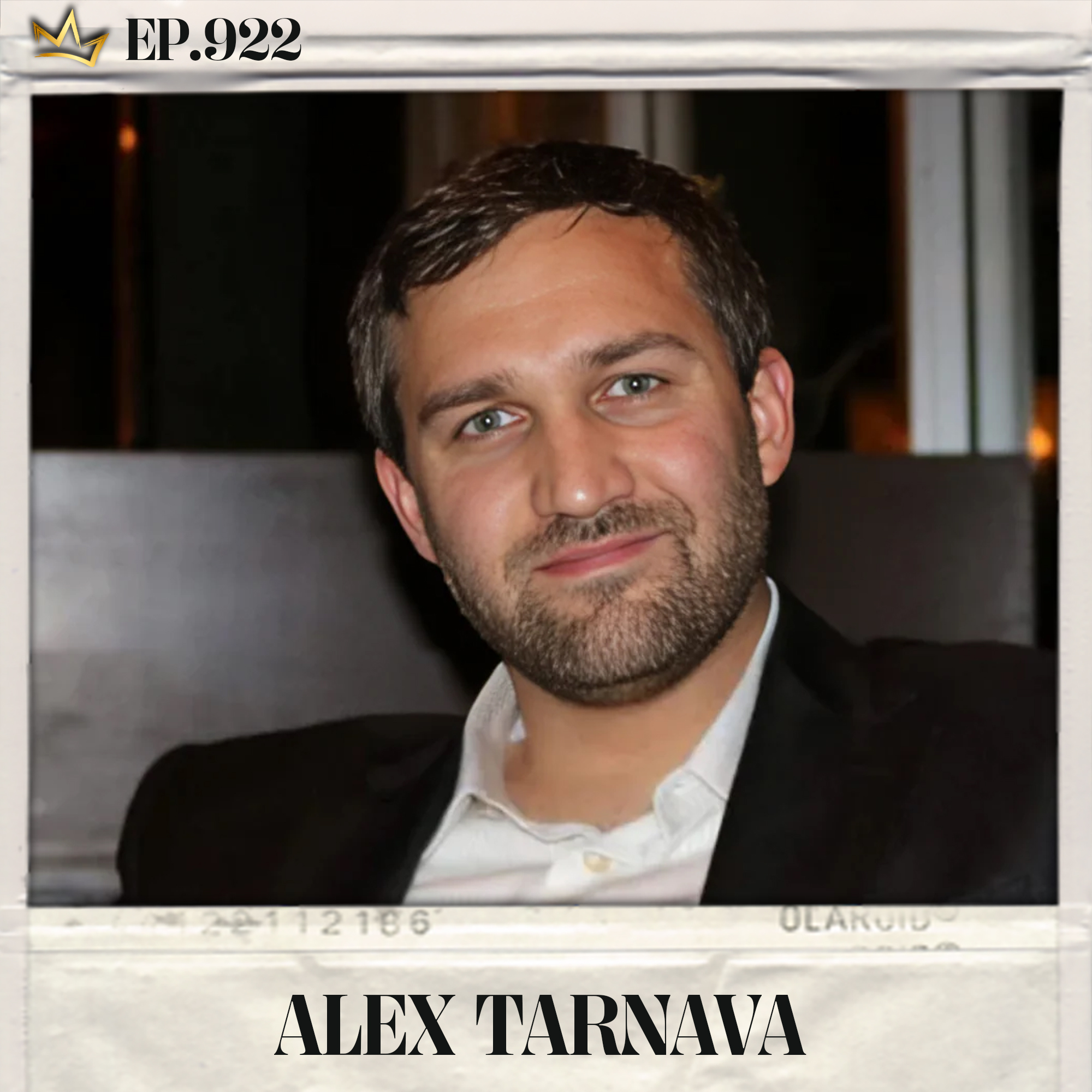
Liz & Becca sit down with Alex Tarnava, the inventor behind the world’s most clinically validated molecular hydrogen technology. After his own health crash, Alex uncovered the truth about inflammation, chronic fatigue, and the science of hydrogen therapy.
You’ll learn what molecular hydrogen actually is, how it affects the gut, mitochondria, and metabolism, and why most “hydrogen water” devices don’t deliver the results they claim.
This is a deep dive into the future of healing — where science meets critical thinking, and wellness gets a much-needed reality check.
Transcript:
All right. Welcome back to The Health Revival Show. We are so excited about this conversation. We have Alex Trnava, who is an inventor, and an inventor of something very, very useful in this world known as molecular hydrogen. So after a personal health crisis left him without answers, he took matters into his own hands, which ... doesn't that seem to be everyone in the functional and holistic health world ? Developing the world's most clinically validated source of molecular hydrogen via his patented OpenCup hydrogen water tablets and pioneering a new standard in wellness technology. His work has sparked over 20 published clinical trials with more research currently underway than published, and his tablets have been studied in more clinical trials than all other commercial hydrogen water technologies combined. He has no formal scientific education, which I think is just amazing. He has carved his own path.
All of the great inventors, I feel like, have come from that. Like, they weren't, you know, bred to be it. They just had a huge passion and a huge desire to find answers for things and an obsession maybe? We can talk about that. Um, and so he ultimately has helped with, you know, exposing the myths and failures of modern health culture today. He is driven, obviously, by this one mission, to bring critical thinking back to the wellness world and empower people to take control of their own biology before it's too late. I love it all. So let's dive in.
Alex, can you tell us a little bit about this health crisis that you went through? Yeah, um, so going back about 10 years ago, um, at that time, I had a different business. I, I'd innovated on a different technology that I, I found interesting at the time, and it gave me a lot of freedom, um. I was competing in CrossFit, uh, training in martial arts, helping a lot of friends get prepared for their fights and such like that. I was training four to six hours a day, six times a week. So I was training as if I was a pro athlete, but I was doing it as a hobby. I got really sick. Um, they couldn't figure out what it was.
My roommate at the time, who was a competitive athlete, also got really sick. It hit him different. Um, with me, I developed, uh, sudden onset narcolepsy, um. I was sleeping 16 to 18 hours a day. If I sat down for more than a minute or two, I'd fall asleep. Uh, my C-reactive proteins were at 34 milligrams a liter. I was just e- extremely inflamed, like 100 times abnormal, you know, for what I'd been before. Um,
I was anemic. I had central nervous system fatigue. I went from a 54-inch plyometric box jump and being able to string together 20 bar muscle-ups to I couldn't do a chest-to-bar and I couldn't get airtime jumping off the ground. But my strength wasn't affected, so like my deadlifts and bench press and squat were the same, so it was really bizarre. Uh, after a few months, you know, a- and this could have been gut-related too, uh, you know, uh
... A few weeks before I got the virus, I had food poisoning and I went to a CrossFit competition anyways, and then I got really sick and I got gastroenteritis. So there's a- a lot going on in this short period. But, uh, basically when the dust settled, I was left with polyarthritis. Everywhere that I'd had a previous injury, I'd developed early stages to moderate stages osteoarthritis, and I was still super inflamed. I didn't have a GP at that time, but the walk-in clinic doctor basically put me on 1,000 milligrams of naproxen a day, prescribed me cortisone injections. I went on my way, tried to continue training. He, by the way, told me that
I should never exercise again, which was great advice, I should say. But, uh, I just basically threw everything at the wall. I, I was an extremely skeptical person. I wasn't into the supplement industry or anything all health. But I was in a crisis and I had money, you know, from my last business, so anything I could, I was trying. Everything that I w- had said was hocus pocus before, I'm trying just in case it works. During that time, I, I'd read some publications on molecular hydrogen, bought a machine purporting to make it, and was just adding it to the 100 other things I was doing. But about nine months after this occurred, I was at the gym and I fainted, and then it happened less than a week later,
I fainted. I fainted a few times in like a week or two at the gym. Turns out I had developed like multiple ulcers from the naproxen, and I wasn't processing my nutrients, so I had to stop that. My joints all completely froze again. Um, I was back to square one. I couldn't, uh, put on socks or a jacket or anything like that. I just went back to PubMed and I started spending six to eight hours a day just reading study after study, and some more papers on hydrogen popped out. It, uh, pissed me off because I had this $5,000 paperweight that clearly wasn't doing anything, but it just dawned on me, how do I know this is making hydrogen? What's the dose that I'd be needing to get? And so I found a reagent, I tested it. It was like 0.03 parts per million of H₂O, or milligrams a liter. For context, the tablets get 12 parts per million, or milligrams a liter, in 500 milliliters of water, so like a several hundred times concentration differential. Uh, but that gave me a bit of hope.
dose All right. If you're dealing with water retention, you're waking up puffy, your ankles or your wrists are really swollen, or you can't get your rings off, and maybe you're even dragging throughout the day no matter how much water you drink, there's actually a good chance that you're not actually hydrating properly. Exactly, because water alone is not enough. You need electrolytes. You need sodium, potassium, magnesium, because those things actually pull water into your cells. Otherwise, you're basically just flushing it out and wondering why you're still tired, you're still bloated, and you're still sluggish. But here's the thing. Most electrolyte supplements out there aren't helping you in any way, because a lot of them contain things like natural flavors, food dyes, and maltodextrin, which can irritate your gut, and these things can also spike your blood sugar when you're trying to heal. That's why we both started using Buoy. It's super simple. Just trace minerals and electrolytes in liquid form. No flavors, no colors, no sugar, no sweeteners, and you squeeze it into whatever you are drinking, water, coffee, tea, smoothies, you name it. And it's clinically backed by science too. So studies have shown that Buoy helps you hydrate better, 64% better, in fact, and that's data coming from key blood and urinary markers, not just marketing fluff.
And honestly, you can feel the difference. I've had many clients tell me their digestion's improved, they have less headaches, and they're better energy throughout the day. And Buoy isn't just for people that go to the gym all the time and sweat a bunch. They actually offer a 35% lifetime discount for anyone that's struggling with chronic illnesses, things like POTS, Hashimoto's, Crohn's disease, chronic migraines, and every autoimmune condition. They're really committed to making better hydration accessible to people who need it most. I actually throw it in my coffee every morning because it's such an easy upgrade.
You don't even taste it, but you're definitely gonna notice if you miss it. If you're tired of playing hydration roulette and want something that actually supports your body, you've gotta try Bluey. It's honestly one of the simplest ways to feel better faster. You know, i- in- in- in buying the full papers, reading the material and methods, I realized you needed the higher concentration. That's what all these studies were saying. Um, or in the rodent studies, maybe it's a bit lower, but then you have to do the conversion, you know, to consider rodent metabolism and everything like that, um, and, and body weight and everything, and how much water they drink. But I started self-experimenting. I was getting magnesium in, tried to make hydrogen and, uh, you know, it, it went all right.
I was making a couple liters a day and I started loosening up, but I just had a, a, a bit, uh, of skepticism on myself and I'm like, "I'm a fast learner and I know enough about the chemistry, but
I don't want to be poisoning myself. What if there's a side reaction that I'm not aware of?" I'm dealing the metal magnesium. It's the white in fireworks, it burns at thousands of degrees. Add hydrogen gas, of course the with
Hindenburg, I'm like, "I don't wanna blow my house and myself up." So I found my founding partner, he's a
PhD chemist from the pharma industry. He called it the w- worst pseudoscience he'd ever heard in his life, gave me a long r- list of reasons why
I shouldn't do this and I should save my money. I had read every paper on hydrogen as a therapeutic at the time, and I rebut everything and said, "All right, you know, I'm shocked and I don't believe it, but it seems there's evidence, I'll take a look." And just, I kept sending him a new paper every day as he was reviewing my chemistry and the work I'd done.
Serendipitously, I sent him one on a certain disease model that he was the lead chemist developing small molecules for, and he messaged me and said, "Hey, do you wanna meet up for lunch? I wanna talk a- about, like, what we're doing here." And he had printed out that paper and he said, "Listen, the rest of the papers,
I just had to look at the methodology, the results, accept the conclusions. But I am a subject matter expert here. I have to be, 'cause we're developing, trying to develop drugs for this. And unless this is right, it works. Are you sure you just wanna spend all this money to have it for yourself and you don't wanna commercialize this?" And so I thought long and hard. Um,
I wasn't a fan of the industry, as I mentioned. I didn't know how I could enter the industry and still feel good about myself. But I mulled it over. I had been doing all this work and, uh, just thought, "There's gotta be a way to do this that's different than how everyone else did." Um, first step was getting the product to work. Um, so we spent 16 months, thousands of iterative adjustments, 15 failed attempts. We got our... finally got our first production-ready tablet to work. It, it's not in the same universe of difficulty to make 20 in a mortar and pestle and hand press or make millions at high speed. Then it came the question of, can I look myself in the mirror? Can I sleep being supplementing? And, uh, yeah, I, I believe in it. There's some cool research here that seems to be working at night for me. For context, like, it didn't regrow my joints, but I was able to work out again, I was able to sleep at night, I was able to put on socks and, and, you know, shirts and, and jackets again. I'd made some for a few dozen friends and family members and, and people from the gyms I went to that were all reporting good benefits. So, I had enough reason to believe that it could work, but I wanted to really know that it would work. So
I emailed every single first and corresponding author on every single human publication on, on hydrogen water at that time, and I offered product, to design a placebo and, no questions asked, funding, you know, to, to help with, with trials. So what that means is usually when a private company funds research, there's a contract that the private company owns the data. They decide if it's published or not. So, in countries that don't regulate it or don't enforce it properly, most data gets thrown away 'cause it's not what the company wants to see. And we don't discover what works through a model like that. If we're only publishing what we want to publish, w- we don't know if it worked. It could have just been a fluke, right? Or, or just, they could run it 10 times and find the result they want, and then it's just a money game.
So, I thought to myself, "If this doesn't work, this isn't how I wanna make my money. If this does work, then why am I in control of the data?" And so, I found some teams to start trials. Luckily, basically every trial has panned out to varying degrees so far, so it was a good gamble. But I'm not aware of anyone else who has done research in this way.
I could only do research in that way 'cause it's a private business that I own and run. Because it's such a risk, there is no public company or company with investors that could ever do that, because they'd be violating their fiduciary duty by the rest of it. But that, that's kind of how I, I got into it. Uh, as you mentioned, I, I think we're up to, like, 25 clinical trials now. We got two clinical trials that came in with results just last, you know, as I was at a hydrogen conference. We have more studies at various stages underway and planning than we have published. And again, most companies with supplements, they, they stop at one paper, two papers, three papers. It's enough for marketing. But that's not how I wanna do things. I wanna continue building the evidence. Years ago, I used to say, "I wanna treat this like a pharmaceutical," you know, even though it's a supplement. Uh, now I say, "I wanna treat it better than a pharmaceutical." Because as I'm actually diving into the pharmaceutical arena, I'm learning so much more about the laws, the regulations, how they've been built to protect the pharmaceutical companies, how evidence is researched. Everything from the, the, you know, shift from our journals, our academic journals being not-for-profit societies of, of researchers and intellectuals until the late 1950s when they shifted to for private. And, and by the way, that co- corresponds perfectly with the transition to our current pharmacological understanding of medicine being one molecule for a single pathway or receptor.... driving a single change. And that's the same time that it shifted from looking at holistic nature of what it was doing to us, the organism, to single markers with statistical significance, which are very easy to use a single molecule to, to drive and get a statistical change. That all corresponded at the same period of time when one guy bought a lot of journals and started pushing that narrative. That guy was Robert
Maxwell, so Ghislaine Maxwell's father, who was a Mossad agent, eventually was known as a fraudster. Anyways, I, I go down a lot of these deep questions. And how do we get better evidence? And how do I design the trials? How do I work with these universities to seek evidence that can help me and help others? I mean- Sorry, that was a bit of a tangent. ... it's how it should be done. No, I, I love it and it's how it should be done, and it's this big problem today that we try to uncover and expose and try to get people to understand. A lot of people don't wanna understand what is to each their own, but
I appreciate and respect how you run your company and how you want to have the right evidence to support something that, like you said, it's important. It's important the dose and how it's being used and, you know, you came up with amazing science, you should get compensated for it. I don't know. Don't keep that for yourself. Yeah.
You should get, get it out into the world and let people know. So what I'd love to start with, 'cause I think a lot of ... We talk about hydrogen tabs. We've utilized them in a lot of cases. I think they can be really amazing for a lot of inflammatory GI cases. But what I would love for you to explain, in layman's terms, um, what is molecular hydrogen? Like... Yeah, and as you do that- Yeah. ... can you also, like, share why your delivery is so much better? Obviously, you have a lot of research. We get so many questions around,
"What about this device?" I saw- Yeah. ... I won't name names 'cause we work with a lot of them, uh, but they're promoting this $600 bottle. And should I buy the $600 bottle versus the one that I got an Instagram ad for for our $120 that's claiming to give me hydrogen water? So if you can somehow, layman's terms, wrap all that in together, that would be helpful 'cause I've always said just buy the tablets versus these devices. Yeah. So there's, there's a few things. So
I'll, I'll tackle what hydrogen and hydrogen water is, then we can talk about why, why dose and different technologies are important. And then I, I'd like to get into explain why hydrogen is important in general. Sure. Um, molecular hydrogen i- is just so two hydrogen atoms bound together. It, it, it's very stable. Um, it's the smallest molecule, the first molecule that existed, you know, after atomic hydrogen. Um, people think, "Well, doesn't water already have the H₂H₂O?" But that's a totally different compound, right? So that H₂ and the H₂O isn't available to us, right? It, it's something new.
Just like, uh, you know, sodium metal is explosive and chlorine gas is poisonous, but you put them together and it's table salt, sodium chloride. Um, when you put the H₂ and the O together, it's a totally different substance.
It's water. So hydrogen water is just water with hydrogen gas dissolved into it, right? Or, or suspended in it. So this is the same as, like, sparkling water with CO₂ dissolved or suspended into it. So that is what hydrogen is and what hydrogen water is. Now, different technologies have different levels of hydrogen concentration and als- also different levels of regulatory oversight. One, one, uh, thing I like to, to say to people is with tablets, we're producing these in the US. We're producing them in California, actually. We have to be compliant to California Prop 65, which is the strictest laws in the world for contaminants and something going to humans. Most of these bottles and machines are made in China. They're consumer devices and there is no oversight, so you don't necessarily know what you're getting. Um, then the, the method in how you're making hydrogen differs. They're all using electrolysis, which can work. When it does work, they're using pressurization. Maybe some of the better bottles are, are getting to five parts per million or something like that, in
250 milliliters of water, usually. Well, they get that at the start, but because they're requiring pressurization, the gaskets break down in fairly short order over time. And you don't know if you're still getting five parts per million. You might be getting one part per million or 0.6 parts per million. Now, hydrogen, like any other molecule on the planet, is working at dose- and concentration-dependent manner, right? So we have to ask ourselves, what dose are we looking to get for what benefit? And if you're getting five parts per million, which is milligrams per liter concerning hydrogen, in a quarter of a liter you're getting 1.25 milligrams of H₂. If that drops to one, well, of course now you're only getting 0.25 milligrams of H₂. With a tablet, if you prepare it how I instruct and how
I in- instruct the brands to instruct their consumers, you are getting above 12 parts per million or 12 milligrams a liter in half a liter, in 500 milliliters. So you're getting a six milligram dose of H₂. So that can be substantially different. Now, one milligram might be enough to start seeing some benefits i- in athletic performance. Uh, it's gonna be enough to maybe interact with microbiome. But it, it doesn't seem to be enough to, say, get into the liver and drive liver homeostasis. In fact, the research is trending that you may need several tablets, you know, tablets worth, so maybe 20 milligrams, to start seeing strong benefits in liver homeostasis. So it comes down to, what are you using the hydrogen for, right? Because you can start seeing a physiological effect, but that doesn't mean it is the peak physiological effect. 'Cause typically i- in pharmacology, whether it's a, a natural substance like hydrogen, or exercise, or a immunosuppressant, or cold exposure, heat exposure, or, or a drug, um, there's gonna be, like, a minimum therapeutic level where it peaks in people and then where it starts doing harm, and the plateau might be long. Hydrogen has a pr- very long plateau fr- from what we've been able to discuss. So typically, it seems more is better.... and the tablets are delivering the highest concentration and dose of any technology on the planet. Um, the, it's replicable, so if you, you prepare it properly, it's the same every time, you know what you're getting, um, and they're convenient in they're portable. So that would be my arguments in, in why to use the tablets, um, higher dose, higher concentration, more clinical evidence, every lot is tested to California's Prop 65 levels, uh, the list goes on. I love that. And so I know for me, I've primarily used them when I was flying and traveling, and taking it maybe two hours before I'm getting on a flight, that, to help with oxidative stress and so forth. Yeah. And I'd love to hear your just kind of instruction into the way that I was doing it is obviously just dropping it into the glass, waiting it, for it to dissolve, and then you're drinking it pretty quickly to get the most benefit. Yeah, rapidly. You want to chop it down. So this gets into kind of how hydrogen's working, and I have an, a hypothesis on this. So there's, there's a number of mechanisms. One, we know that it's driving liver, liver homeostasis, uh, metabolized in the liver in a yet-to-be-understood manner. Two, we understand it's something called a mitohormetic effector. It's a slight stress on the mitochondria that drives adaptive changes. That seems to potentially be the most profound benefit. And third, it, it can work as a direct antioxidant.
Maybe in vivo, we haven't been able to show that yet. It's in vivo very, very weak. In vitro, it's still very, very weak. But fourth, it is definitely interacting with our microbiome, and it's driving pretty substantial changes in the microbiome, and also i- in various gut hormones, you know, like ghrelin and GLP-1 and, and such. But to, to, i- an understanding of why it's important, it has been with us since the very beginning. Our last universal common ancestor, the single-celled organism that all life on this planet evolved from, consumed hydrogen as its fuel product. Even our mitochondria came from eukaryotes, which was sort of a handshake deal between two organelles, one which expelled hydrogen. So it's been with us in several steps before mitochondria. It's carried with us in our mitochondria. We evolved to produce tremendous amounts of it, so we carried it through us in evolution.
The way we produce hydrogen gas is by fermenting fiber, and throughout our hunter-gatherer days, we would have consumed 100 to 150 grams of dietary fiber a day. Even raw food vegans don't hit those numbers. We, we have dramatically altered our food through 10,000 years of horticulture. It's also why we have crooked teeth now,
'cause we're not gnawing on fiber and chewing it down. We have weaker jaws. But bacteria is like any living thing. When you stop feeding it, it will die. So slowly, with these lifestyle changes, dietary changes, the hydrogen-producing bacteria have died out, moved out, and methanogens have taken over. So methanogens and methane gas are linked to all-cause mortality. They're linked to ve- basically every chronic disease. And we know that methane rises as we age, and hydrogen in the breath drops. Uh, there's also interesting research that shows, say, i- in, uh, studying centenarians in Okinawa, that these people who are over 100 have higher breath hydrogen than the average young person, even their direct descendants, which showed that it was lifestyle-based, that they kept these hydrogen-producing bacteria with them into old age. So there's some really interesting correlations there. Now, I think the reason why you'd want to take hydrogen before a flight or any stressful event like this is I think that it's not... doesn't completely make sense as hormesis, like exercise, or cold, or heat. And the reason for that is it is such a small stress, barely registers as stress, with an outsized response. You know? So what typical hormetic agents is, it's a pretty substantial stress that, that leads to positive adaptation. Hydrogen leads to substantial positive adaptation with no real risk o- of any harmful stress. I think it's more of a signal that we're about to be in stress. And if you go back to these hunter-gatherer days, there would have been times where we couldn't hunt and kill food, where we couldn't hunt an animal, and we would have started starving. And what would we have done? We would have shoved as much plant food down our throats as we could to stop starvation. And so instead of 100 to 150 grams of fiber a day, we might have gotten hundreds of grams of fiber a day. We might, we would have made tremendous amounts of hydrogen gas in a short period, which would have been followed by this famine that we may have survived from. And I think our bodies remember this signal, that when we take hydrogen, stress is coming, and I think this signal allows us to adapt and start responding to stress before it occurs, in a corrective role. And I think that's also why hydrogen activates most of the same stress pathways that fasting and caloric restriction do. Mm-hmm.
Uh, that's fascinating. And we, uh, we talk about all the time how, in the past lifetime, like the amount of fiber and the amount of stool that we used to have in a day is also drastically declined because of the lack of fiber that we now take in as humans. But I would love, obviously 'cause our, our listeners love like the applicable, who is the best person to utilize this? What symptoms can cater, you know, what does it seem to improve? And all of the application, you know,
FYI in terms... Yeah, um, so what I'll say i- is hydrogen can help with a lot, but it's not magic. Right? You, think of it- Mm-hmm. ... like a, a lifestyle improvement, like a better diet or exercise. And, and this is one of the issues that I mention, like, uh, statistical significance, because you, you show any, say, practitioner two charts of like patient changes and say a metabolic panel of 20 markers, and on the left, you know, graph, it shows that all 20 are adjusted in the right direction slightly.... right? And on the right, one single marker has massively moved. Now, basically every single doctor is gonna say the person on the left is getting healthier and the person on the right started a drug. But our entire conception of what is effective in science is based on the right. And I think we need to start reframing that, and we need to start looking at what lifestyle interventions have modulatory roles, and how we can use statistical analysis to look through a panel of 20 markers and see that it's adjusting everything in the right direction, rather than just hammering a single marker up or down wi- which might have deleterious downstream effects. So with hydrogen, it's like that panel on the left, like starting to exercise or cleaning up your diet. It's gonna start slowly changing a lot of things. So it might work better o- on, say, inflammatory response for one person, and that might not have any effect on the inflammatory response for the next, i- if they already have a healthy inflammatory response. Same thing with oxidative stress. In most models, hydrogen is reducing oxidative stress because most people have an excess. But in some models, it's acutely raising oxidative stress for a beneficial adaptation. In fact, in conjunction with things like exercise, hydrogen can acutely spike ROS while working out. So it's potentiating exercise's stress response, but then it'll drive back to redox homeostasis faster. So it's like you worked out harder and recovered quicker. So kind of every person with every model is gonna a different need protocol. A- and I know no listener likes to hear that, but it's the same kinda idea as you wouldn't tell your 80-year-old grandma to do the same workout as an Olympic athlete, right? Hydrogen is a lot more forgiving than exercise, but still there i- is a window, and it depends on, on what your goals are. So what
I tend to recommend is if you look at one tablet a day, and one tablet a day is maybe, if you prepare it properly, six milligrams of H2, start there. Say, i- if you are in your 20s and you're relatively healthy, maybe only take a tablet on days you get a bad sleep, or you had a really hard exercise, or you, you had a late night, something like that. Now, say you're in your 30s or 40s. Maybe you wanna start taking it daily, once or twice a day if there's nothing actually seriously wrong with you.
Um, up your dose whe- when something is wrong. Now, if you're getting a bit older, if you're really metabolically impaired, that's when you might wanna buckle down, where you might need that increased signal, where you might wanna go up to two doses, three doses a day. Same thing if you're, you're getting into older age. You might not be able to drink 500 milliliters of water. So you might only be able to drink 250 milliliters of water, so maybe you need to do that three or four times a day if you're 70 years old, 80 years old. We do have a, a six-month double-blind RCT in the elderly, in a 70-plus population, where we improved DNA methylation, we lengthened telomeres, we, we doubled, almost doubled
TDT2 in the blood. That's what's linked to young blood, what the vampire research, you know, shows that that raz... and TAD2. We improved, you know, the Senior Fitness Test a- and some quality-of-life aspects, like reducing, you know, pain scores and such. But I would say start lower, because there's no reason to take extra of something if you don't need it, and ratchet up until you cease to notice a difference. With me, I have osteoarthritis in 11 joints. I travel over 100 days a year. I think it's increasing probably more. Uh, I try and do my best to eat healthy and get a good night's sleep, but dramatically changing in, in humidity, in barometric pressure, and time zones takes its toll. I also still exercise five times a week and try and stay as fit as I can. I find if I don't take four or five a day, I start seeing stuff. But that's not going to be true for everyone. That doesn't mean everyone should take four or five a day. And that's why I say start lower and work up, and try and stay in tune with your body. If you use wearable tech, follow your wearable tech guys. I, I think actually for lifestyle interventions, wearable tech is the future. In the next five to 10 years, we're gonna be able to get enough data to create personal protocols for each person. I mean,
I think that's a great starting advice. We always say low and slow, obviously. You know, some people... I think this would be a... To me, it's like, okay, it's a stressor, but it doesn't act like a stressor, right? And so, we work with a lot of chronic illness cases, you know, mold toxicity, the post-COVID sicknesses, chronic viral activation, overac- you know, immune systems that are just completely dysregulated. And it's, it's a tool that
I think it can be very valuable, and that's how we've used it, right? It's not the only thing that you put in place, but for someone that's really sensitive, for someone that can't tolerate potentially more aggressive interventions, something like this- Yeah. ... can be really great place to start at, right? Um- 100%. A- and it could help them enough to slowly start something else. A- and this is what I, I have talked to so many researchers a- and people about. I look at hydrogen as kind of a jumpstart small victory that helps you start piling on other wins. Um, our first decent trial, our first good trial was on metabolic syndrome. It was a six-month double-blind RCT. And some of the professors on that paper were not wanting to publish the data on the weight loss, 'cause people lost about a pound a month. They lost about six pounds in the hydrogen group, where there was a bit of weight gain in the placebo group. And in talking to them, you know, a- and obviously it was their final decision, they were like, "Well, there was a confounding variable.
In the journals, the people in the hydrogen group, after a few months, for some reason they were going for walks, they were eating healthier, they were doing all these things." I'm like, "No, no, no." I'm like, "You guys don't get it. That's not a confounding variable. That's exactly how hydrogen should be working. They're feeling better, they have more energy, and they're taking initiative to do more things. That isn't a confounding variable. That is the story. That is what we want to see." Right? And so they, they did...... publish it, you know, a- and I'm glad because that is what we see. We see it as kind of a helping hand that helps lift people up. But if you don't take that hand and use it to start other things, to start trying improving your health, it can't lift you all the way up. You, you have to take that hand and still lift yourself up with the extra boost. Yeah. Are there any contraindications, like anything
... I'm sure not because, I mean, it's, it is- Yeah. There- ... based ... there, there's no known contraindications but the tablets are made of magnesium. So check to make sure if you're on a drug because that you don't wanna be taking too much magnesium, that you, you keep the dose sufficiently low. Another good point, our magnesium is very highly bioavailable, so magnesium supplements have, have big bioavailability issues. Our reaction is literally leaving Mg2+, so free magnesium ions in the water.
That is the exact form your body needs. Your stomach doesn't have to do any work to liberate the magnesium, so this is a very highly bioavailable form of magnesium. So you probably don't need to take a magnesium supplement. Awesome. Love it. Yeah, very cool. Makes it easier. So I think we got the benefits. Yeah. Dosing is gonna be dependent. Start low and slow- Mm-hmm. ... like everything we always say. Share
... I know we gotta wrap up here in a few minutes. Just in the interest of time, share where people can get your tablets, number one, and what you have upcoming. Anything on the horizon that you are working on in development? Yeah. Um, so with the tablets, if you go to hydrogenwatertablets.com, I don't sell direct to consumers. I license and manufacture my tech to over 100 brands. Your, your viewers probably will recognize a lot of the brands you see on the list. We have a scrolling bar of the brands you can go to. Be aware there is roughly 100 counterfeit brands on Amazon that all come from China and India right now. Amazon, it is impossible to get them to take down counterfeit ads. Hm. You know, it, it ... they just do not play ball because they're making money off of this, and you have to go through this long process. And by the time you get through the process, these people who set up a fake store just start up a new store, and they're back- Yeah. ... online a day later. So it, it's just, you know, whack-a-mole. I do have a, a hydrogen inhalation unit that myself and Dr. Tyler LeBaron, who's, uh, runs and likes the Hydrogen Institute, he's leading research from the Western world, we've spent seven and a half years developing this machine. We had, both of us, me from a commercial side, him from a research side, had deep concerns about the machines on the market either being unsafe, ineffective, in some cases, both unsafe and ineffective. Using a nasal cannula, you cannot regulate the concentration you're getting on your inspired H2, um, because obviously you're breathing in from the air around you and it's diluting what's going in. Uh, moreover, some of them are, are leading to a- an explosive concentration and there are more and more case studies of them exploding on people, facial fractures, burning lungs, a lot of bad things happening. Um, now, that is rare. I wanna say that i- that is rare but it is happening and it's growing. So we developed this machine that controls every breath you take no matter if you're a 300-pound
NFL player, or a bodybuilder, or a 90-year-old grandma. Every breath you take is a precise fraction of H2. So the exact concentration that you set the machine to, and since we're keeping it below 4%, it's never explosive. And so we're able to exactly match what the actual research says, both the pre-clinical and the clinical trials, to get the result for each population group that the data is suggesting that they want. So we are in pre-sale right now with that unit. Actually, they are finished, so we just need to get them freighted to our warehouse and they're gonna start going out. And then I have my first book. I have written eight books right now. They're gonna be coming out every four months. So I am a very obsessive person in a lot of different ways. But this is my first book, it's called Stress Hacked: How to Get Stronger in a Civilization Designed to Break You. There's one half, the Body, the other half is the Mind. So you can start at either end, they meet in the middle, because our mind and body are connected. In interludes, talk about how it's not just about a strong-minded body. We need connection between both and we need to connect them to a purpose, because if we don't have all of them, strong body, mind, and purpose, the strength we have will inevitably get weaponized, either inward, in terms of insecurity and depression, and then eventually outward, attacking those around us.
So- Very cool. ... my book will always be free as a PDF and audio on my website, and if you purchase ha- hard copy, Audible, Kindle, anything like that on, on Amazon or anywhere else, it goes through a no- non-for-profit and all funds are used to advertise the book, because at the end of the day, I just want knowledge to be spread. Awesome. Very cool. Well, yeah, thank you for all you're doing and I'm happy that you're in a much better place in terms of the health journey that you went down. CrossFit, man. We know all about that. Becca knows more than I on the aspect of-
Yeah. ... you know, a lot about the overtraining and just tearing your body down and the stress, and we talk about that a lot on our podcast. So this'll be great for our listeners and, um, glad to know all the brands that I've used for the hydrogen tabs are your technology, so I'll keep using those. Awesome. And, uh, I guess my last question would be who would need the inhalation device? Like, what population would that be for? Yeah. Um, some of the people I work with in terms of mold, mycotoxin illness, or maybe those with cancer, but just see if you can give us like a two-minute summary of that, who that device is gonna be. Yeah. So i- it's not a ... I wouldn't call it a one or the other, but one might be better than the other depending on the person. So what differs between hydrogen water and hydrogen inhalation is distribution, right? So when you drink hydrogen water, it's getting into the gut, you know, and the small intestines- Mm-hmm. ...
and the liver. It's interacting with our microbiome and second messenger, you know, the ... in the gut. That, that's s- say, for instance, the, the response from the brain is very different between hydrogen water, which is mostly driven from ghrelin into the brain, as opposed to hydrogen inhalation. That i- is rapidly saturating your blood and distributing through the whole body. So it does get to the brain in a higher concentration, but you're not getting those secondary messenger effects from the gut. It's not really interacting with the microbiome or the liver as much as hydrogen water, but it is getting into the other internal organs, and the brain and your skeletal tissue and your muscles better than hydrogen water. So I'd look at hydrogen water more kind of gut health, metabolic health, liver health- Mm-hmm. ...
and the brain benefits that come from the gut, whereas hydrogen inhalation is for everything else. Makes sense. Yeah. Okay, cool. Well, thank you so much, um, for being with us today, and we'll put all the links in the show notes so people can connect to you, connect with you, find your books, buy some tabs, and all the things.